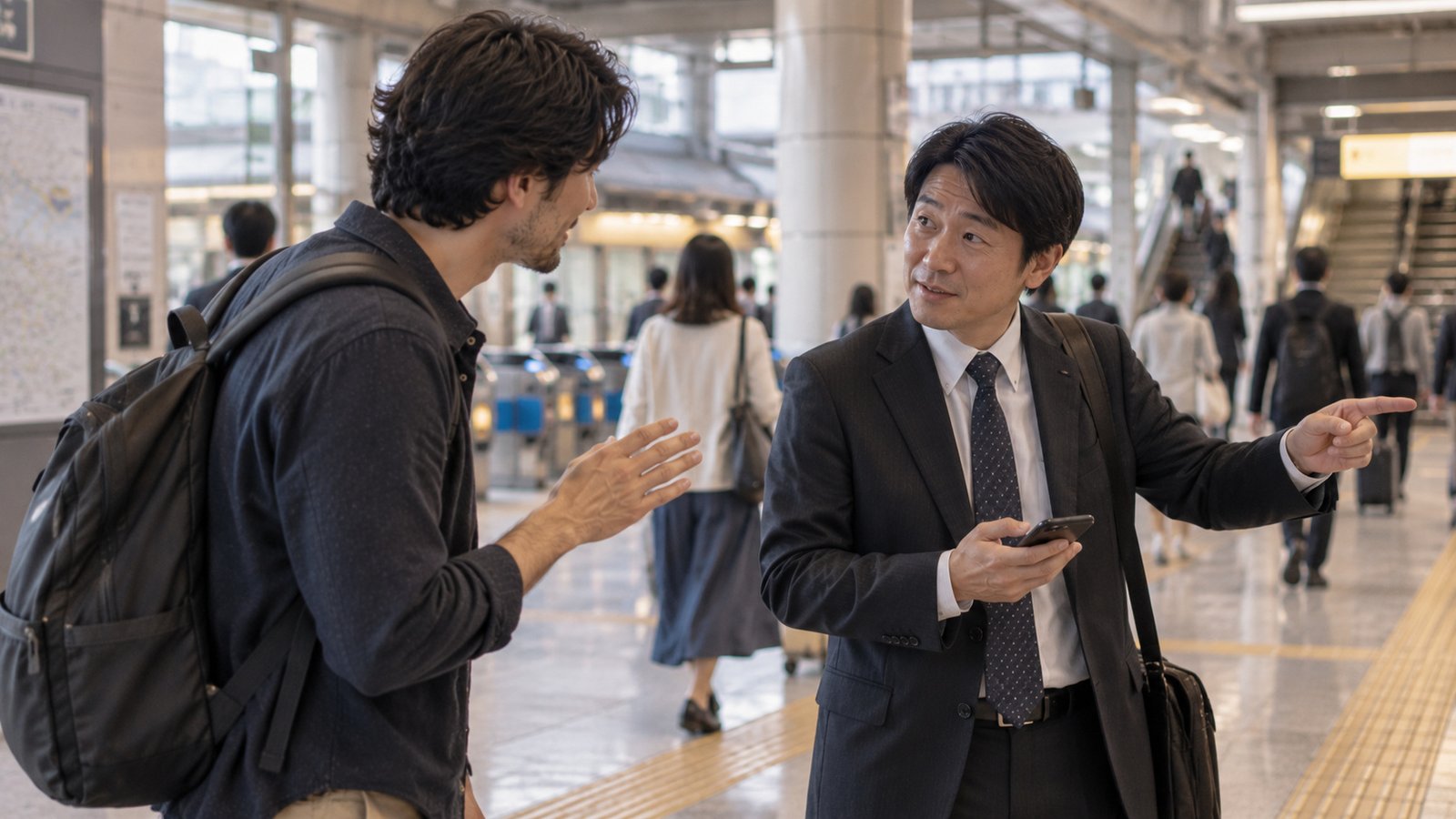
Open a request
すみません。新宿駅はどこですか。
Excuse me—where is Shinjuku Station?

From your first こんにちは to N1 and beyond, learn the language as it actually lives—in stations, homes, workplaces, shops, seasons, stories and the spaces between people.
There is no single doorway into Japanese. Some people arrive with a suitcase. Some with a job. Some with a new apartment key. Others simply want to learn the language properly. Your route can be different without becoming a different language.

Move, ask, order, understand and connect.
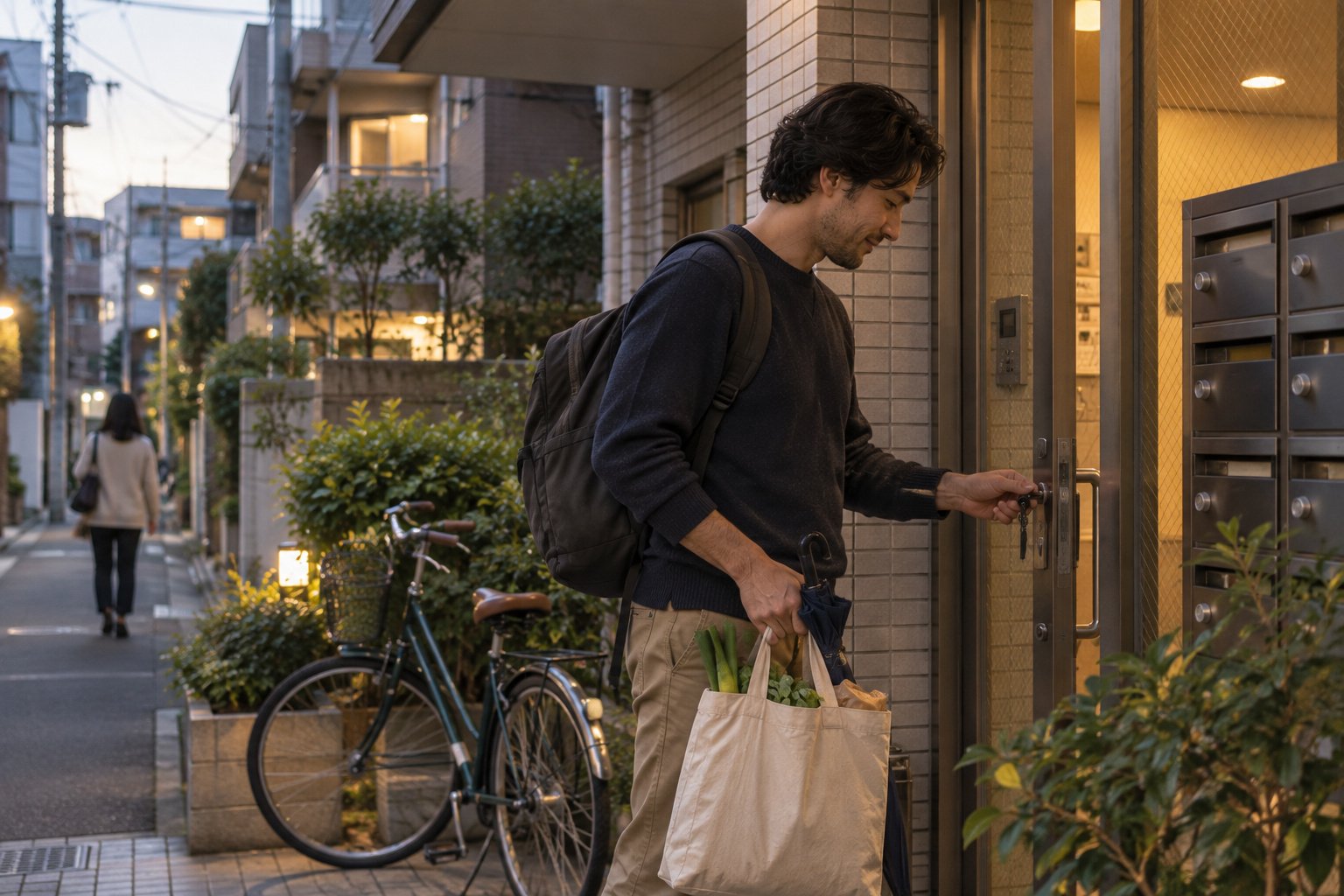
Turn arrival into a working everyday routine.

Language for neighbours, errands, systems and relationships.

Hear what is said—and what the situation asks of you.

A complete path from zero to advanced independent Japanese.

Japanese writing can look impossible when everything arrives at once. We introduce each system as a tool with a job—not as a wall you must climb before you are allowed to communicate.
First enter the moment. Hear the Japanese. Notice what happened. Then reveal the reading, meaning, grammar and cultural logic underneath it.

It can open a question. Make space. Carry apology. Carry gratitude.
Vocabulary lists give you a translation. Life gives you a situation. Indomura teaches both.
Excuse me—where is Shinjuku Station?

A gentle “excuse me” when you need to get past.
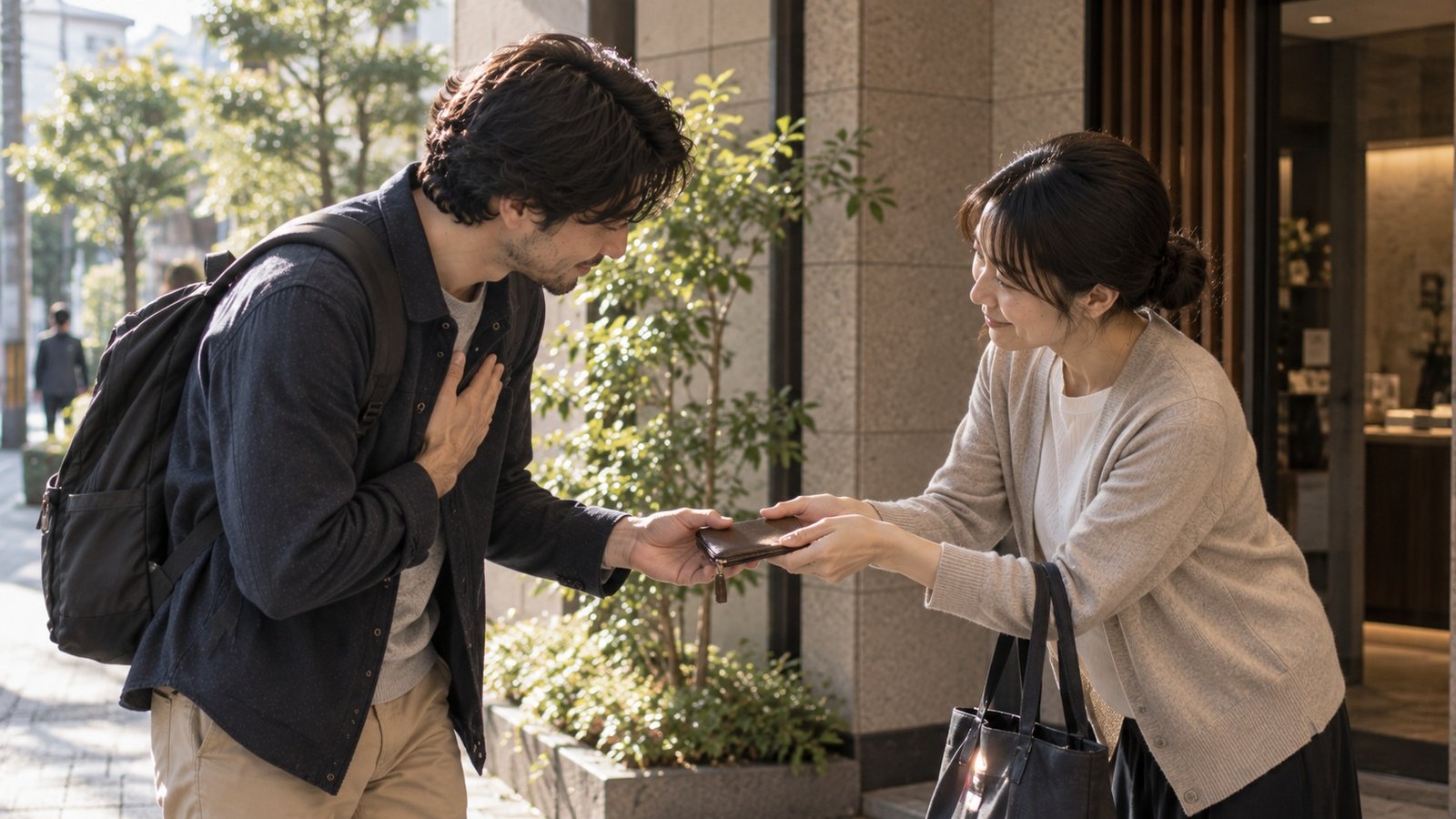
Gratitude with an awareness that someone took trouble for you.
Listen first. Then reveal only the support you need.

The destination is not a certificate. It is the ability to live, read, listen, work and think with increasing independence in Japanese. JLPT preparation sits inside that larger journey.

Sometimes you do not want another chapter. You need enough Japanese to handle the next real thing in front of you. Your structured course keeps progressing; practical routes bring the right language forward when life needs it.
Hear an announcement. Ask staff. Confirm where to go.
Clarify, check understanding and respond naturally.
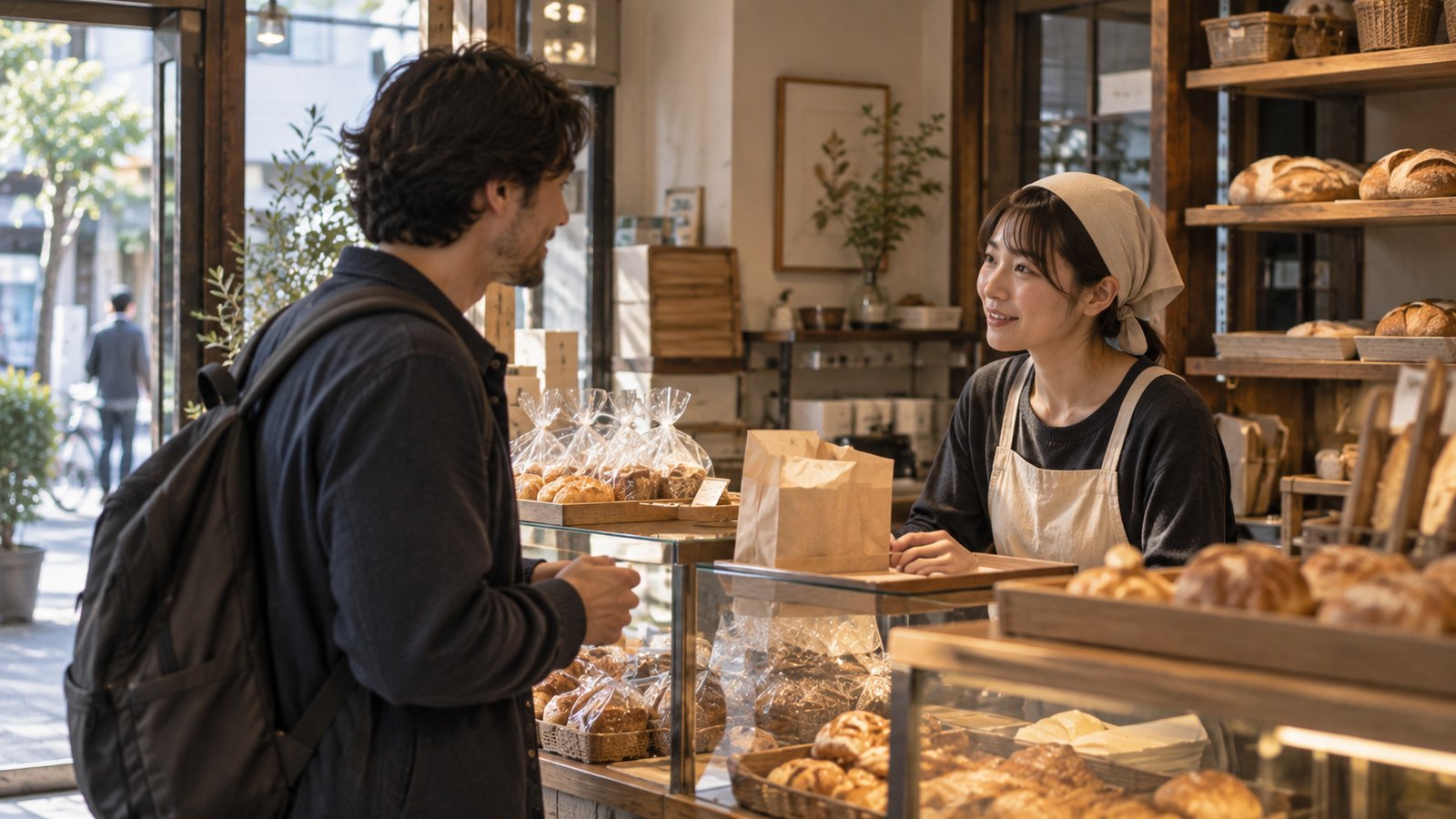
Choose, ask, modify and pay without rehearsing a speech.
Explain a simple problem and understand the next step.
Japanese comes to your own front door.
Progress is strongest when listening, speaking, reading, writing, grammar, vocabulary, kanji and pronunciation keep meeting each other.
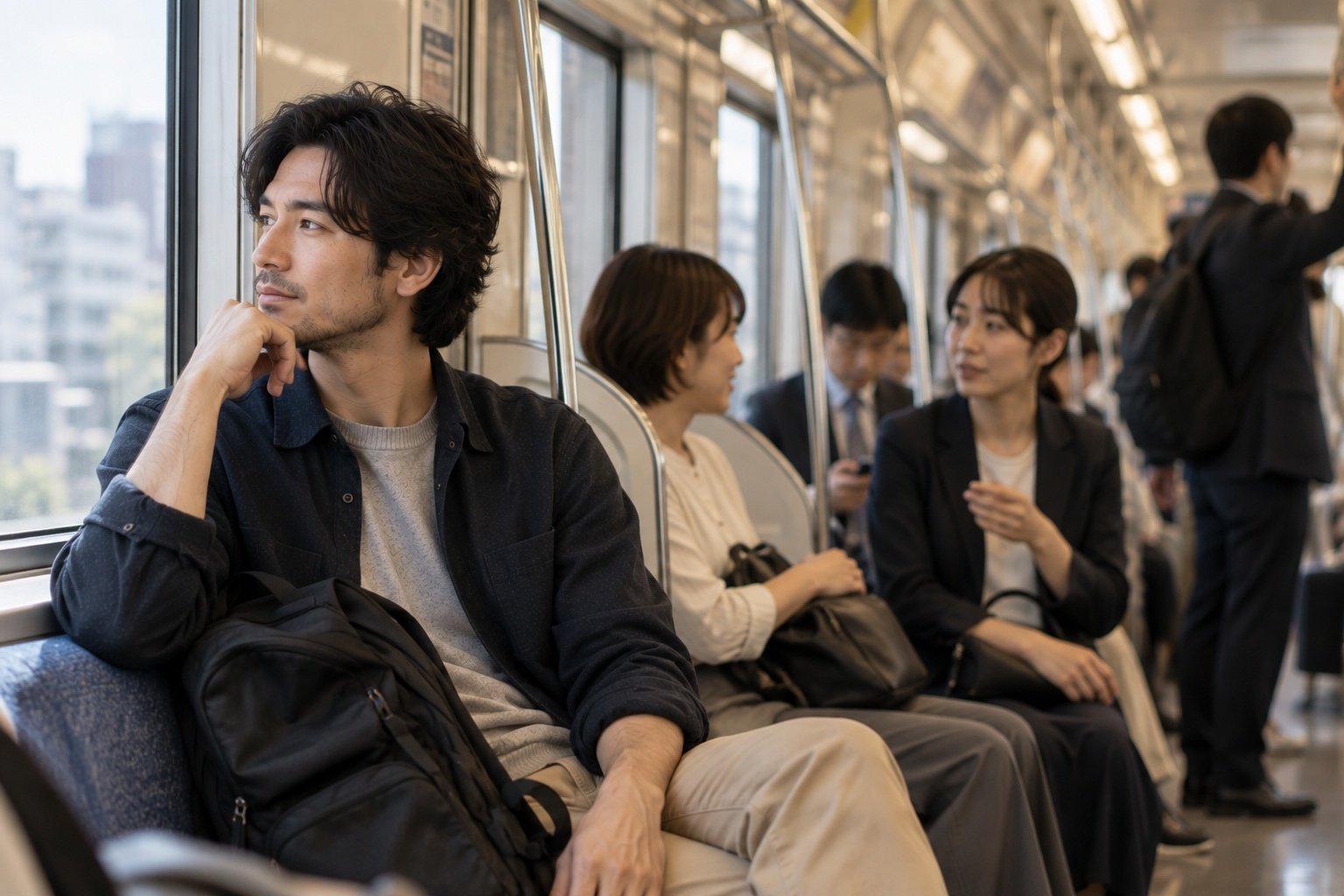

Food, seasons, objects, clothing, craft, relationships and contemporary life give Japanese its texture. We open those windows when they help you understand the language—not as decoration.
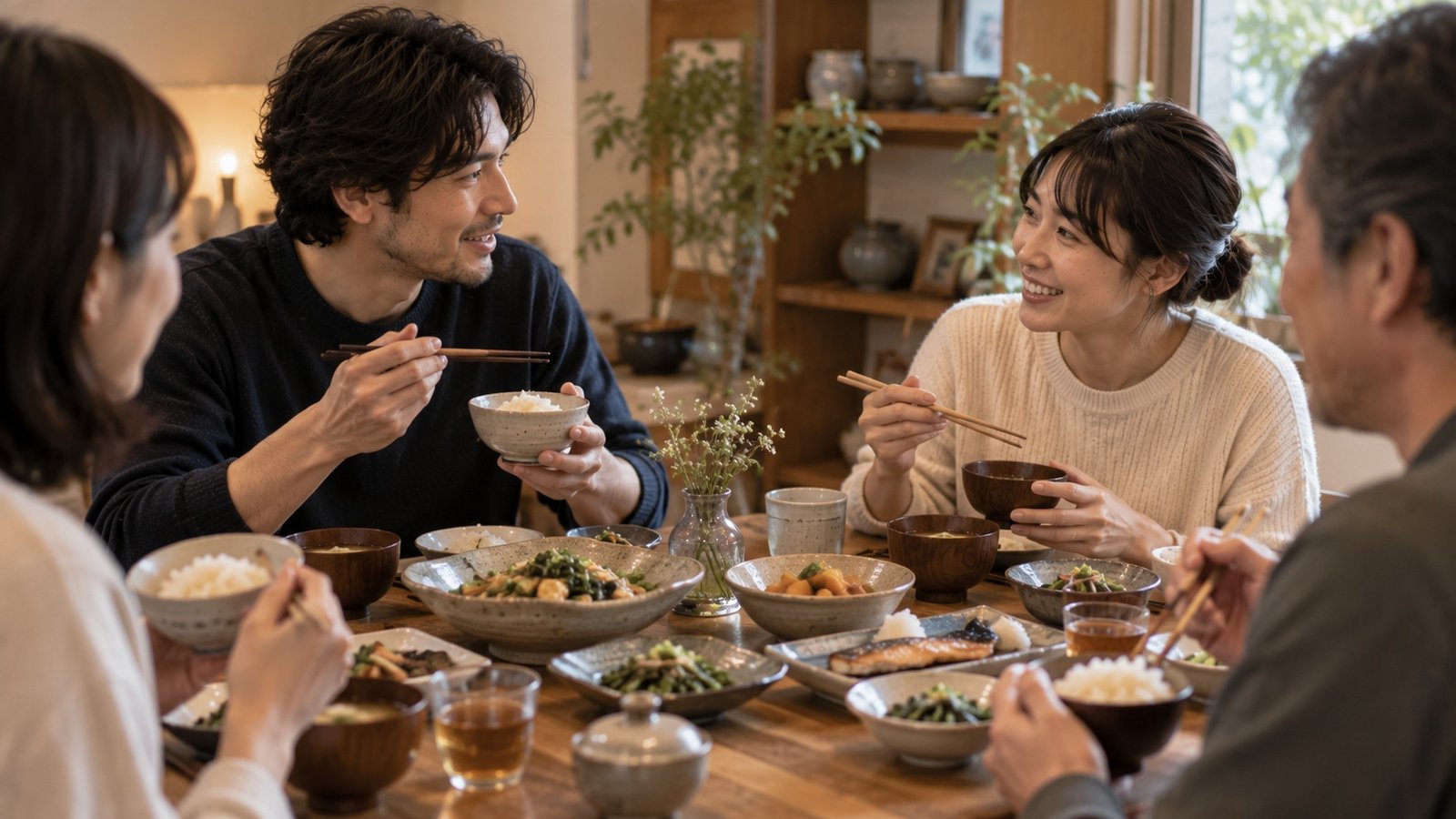
Food, manners and memory give everyday Japanese another texture.

Craft carries the vocabulary of material, process, place and patience.

Weather and seasonal life change what people notice, say and share.
The homepage only opens the door. As your Japanese grows, history, regions, food, seasons, craft and contemporary life become reading and listening material—not decorative trivia beside the course.

See how the past remains visible inside contemporary life.

Regional landscapes, lives, words and ways of doing things.
The milestones become less visible as you improve. At first you remember your first greeting. Later, you realize you have just solved a problem, followed a meeting or read something difficult without translating every line.
The goal is not to sound like a textbook. It is to become increasingly able to live, think and connect through Japanese.
You can now say what something is and was, ask when, tell the time, describe a span, name the days of the week, and move naturally between yesterday, today and tomorrow.
These are not isolated grammar points. Together they form the language of appointments, workdays, plans, memories and ordinary schedules.
A calendar is really a collection of human hopes disguised as boxes. Some contain meetings. Occasionally one contains Sunday.
Continue the Foundation →
Choose the situation that feels closest to your life. You can change routes later. Your progress still belongs to one Japanese journey.
Follow a level, strengthen a skill, prepare for JLPT, solve a practical need, or enter Japan through the language. The detailed Learning Gateway brings journeys, missions and focused study together without duplicating the homepage.

You do not have to understand Japan today. Learn one phrase. Notice one thing. Return tomorrow. A language becomes part of your life slowly—and then, one day, you realize it already has.
You can give dates and years, talk about age, count people, and choose useful counters for general things, flat objects, long objects, small objects, machines and vehicles.
The important change is not that you memorised more numbers. Japanese has started teaching you to notice what kind of thing is standing in front of the number.
You began by learning numbers. Somewhere along the way, Japanese taught you to notice people, shapes, objects and the small architecture of ordinary life.
Complete this Foundation milestone →The first part of Foundation taught you to recognise sounds, words, time, numbers and the small structures around everyday life. Lessons 71–90 make a different change: verbs begin carrying your day. You can say what you do, do not do, did, where and when you act, how you travel, who comes with you, how often, how long, why, what you want, what you have experienced, what is happening now—and finally ask another person to act.

A traveller, a new resident, an engineer, a student and an N1 candidate should not be forced through identical navigation. They can enter from different doors while sharing the same canonical Japanese underneath.
Build the language carefully from its first sounds and sentences.
Serious learnerJLPT · N5 → N1A complete academic road toward advanced Japanese.
Short stay15 Days in JapanArrival, transport, food, shopping, help and human encounters.
New residentYour First 90 DaysTurn unfamiliar systems into an increasingly familiar daily life.
Long-term lifeLiving in JapanNeighbourhood, health, home, city hall, banking and belonging.
ProfessionalWorking with JapanLanguage, roles, workplace context and professional relationships.
Build a skillListening · Speaking · ReadingReturn to the language through the skill you need most.
Learn through the countryJapanese Through JapanCulture, history, seasons, food, regions, craft and Japan today.
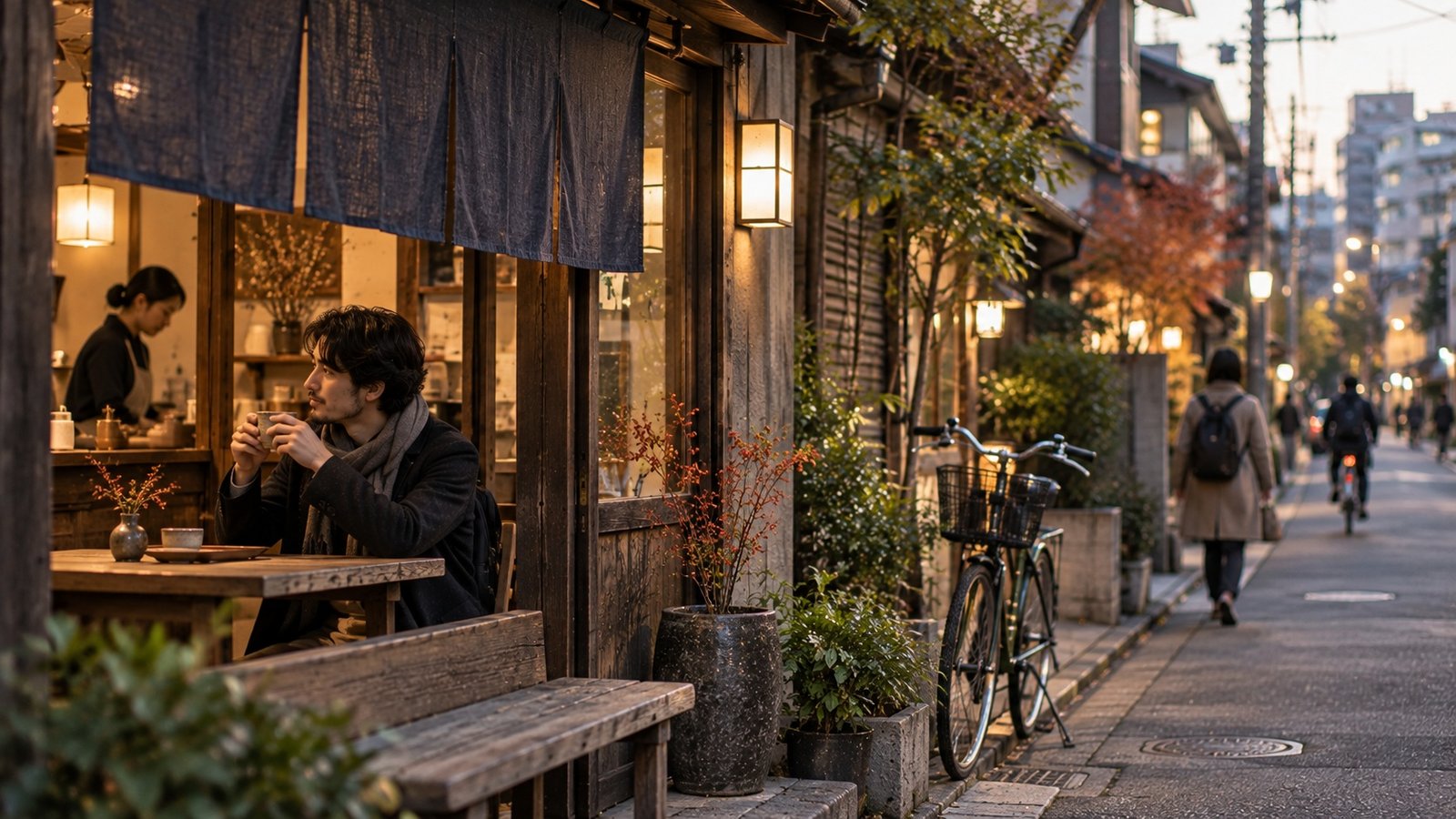
It is inside the language: in what is said, what is softened, what is left unsaid, how space is shared, how seasons enter conversation, how food carries memory, and how ordinary courtesy keeps millions of small encounters moving.
This is the newest completed Foundation arc. For consultants and milestone review, every page is visible below. For learners, the sequence tells a simpler story: Japanese is becoming capable of carrying an ordinary day.

A wet station platform. A convenience store after work. A bicycle under an umbrella. A form at city hall. Someone saying すみません before asking for help. This is the Japan the language must prepare you to enter.
Indomura Japanese is being built as one continuous system: from someone who knows nothing about Japanese or Japan to the learner preparing for advanced JLPT study and life beyond the examination.

Foundation has reached its 90-page milestone. The next gate is integration, review and QA: making sure navigation, audio, reading support, dialogue, mobile behaviour and journey reuse work as one platform before the next production block begins.