A Day Is Made of
More Than One Action.
We wake. We eat. We leave home. We walk. Japanese can now begin connecting those separate moments into the movement of a real day.
One action.
Then another.
The て-form lets an action connect forward. Instead of speaking only in isolated sentences, we can begin showing how one thing leads into the next.

Eat breakfast.
Go to work.
Now connect them.
Two separate sentences
become one flow.
Notice that the first action changes shape. The final action keeps the polite ending and carries the sentence to completion.
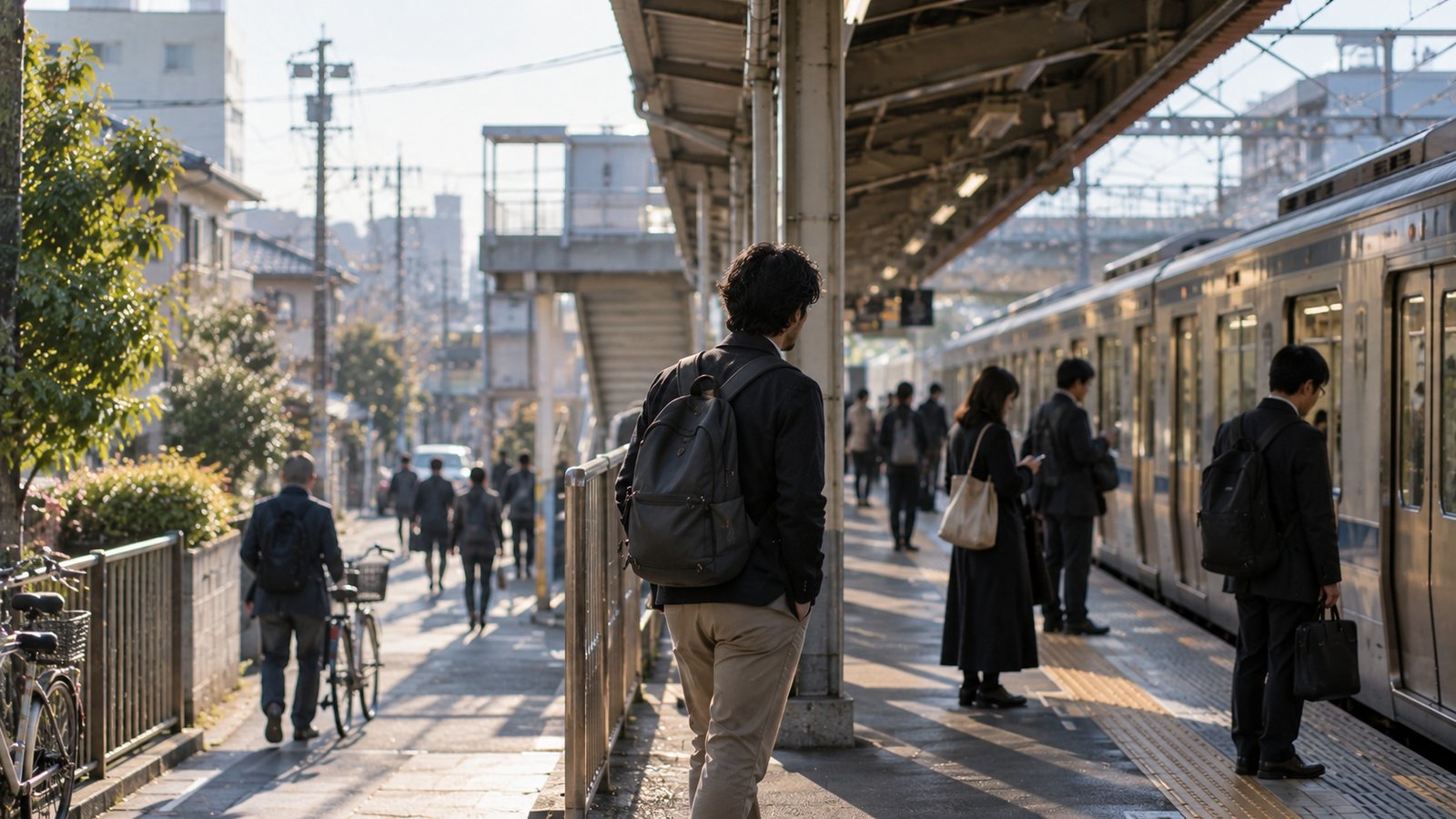
Wake.
Eat.
Walk.
Ride.
Weekends move too.
Connect actions
with what you want.

Experience can contain
more than one action.
Earlier grammar does not disappear. It begins combining. That is how the learner moves from patterns toward real expression.
What do you do
after that?
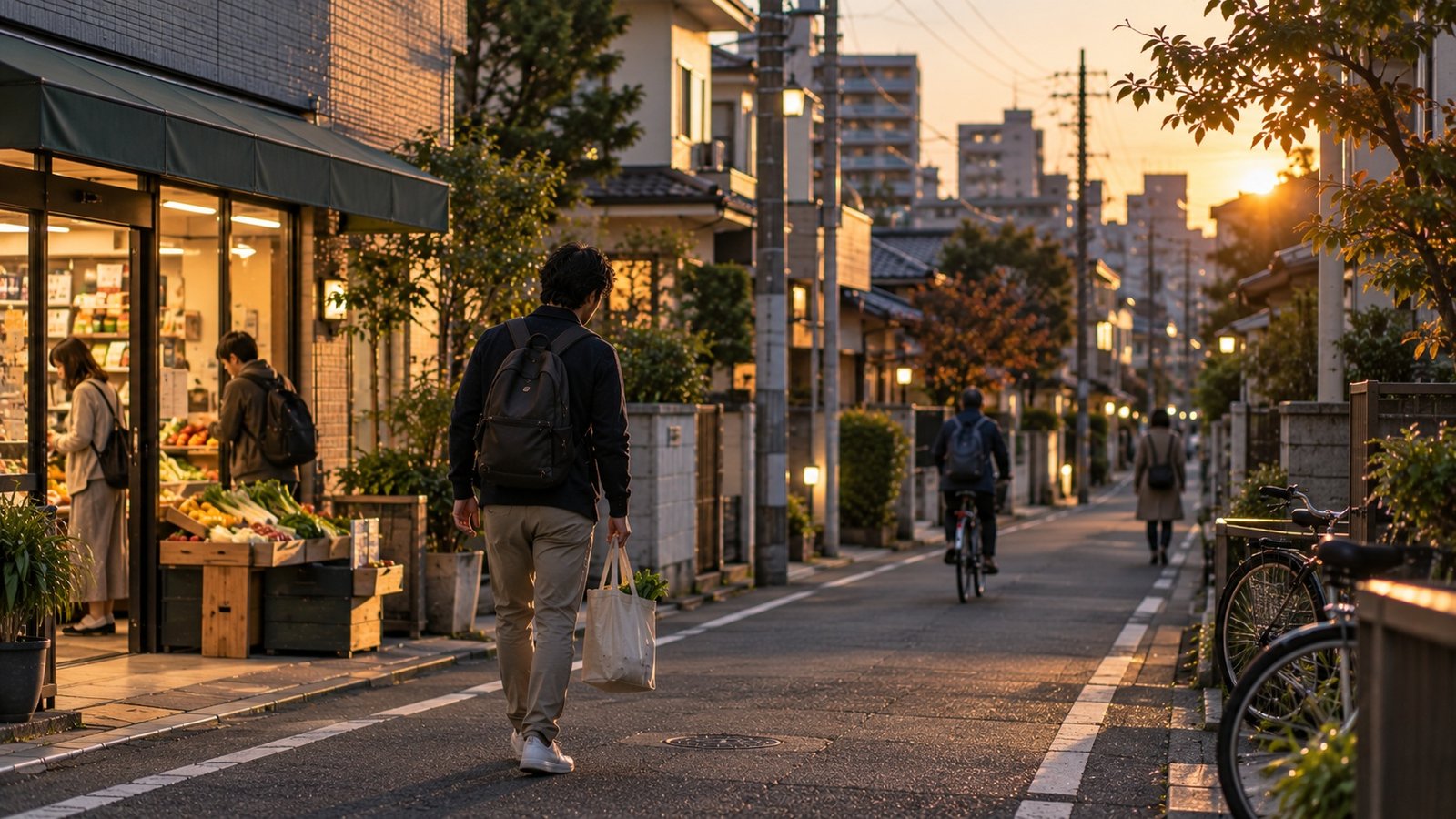
Ask about someone's day.
Hear what comes next.
The main exchanges use two different voices so the conversation sounds like two people rather than one person reading both sides.
“A life is rarely one verb at a time.”
We wake and eat. We walk and ride. We work and return home. Once actions can connect, Japanese begins to sound less like a collection of practice sentences and more like a life being described.
You are no longer building
only one action at a time.
Earlier lessons expanded what one sentence could contain. IJ-0088 changes something deeper: one action can now lead into another.
WHAT → WHERE → WHEN → WITH WHOM → HOW → HOW OFTEN → HOW LONG → FROM / TO → WHY → WANT → EXPERIENCE → CONNECTED ACTIONS
Tell one small
piece of your day.
Do not search for an impressive story. Connect the ordinary things you actually do.
Two connected actions are enough. The goal is movement, not complexity.
A Day
In Motion.
Wake up. Eat breakfast. Take the train. Work. Shop. Come home.
Language begins to connect the same small actions that make a life.