Now Shape Changes
the Number.
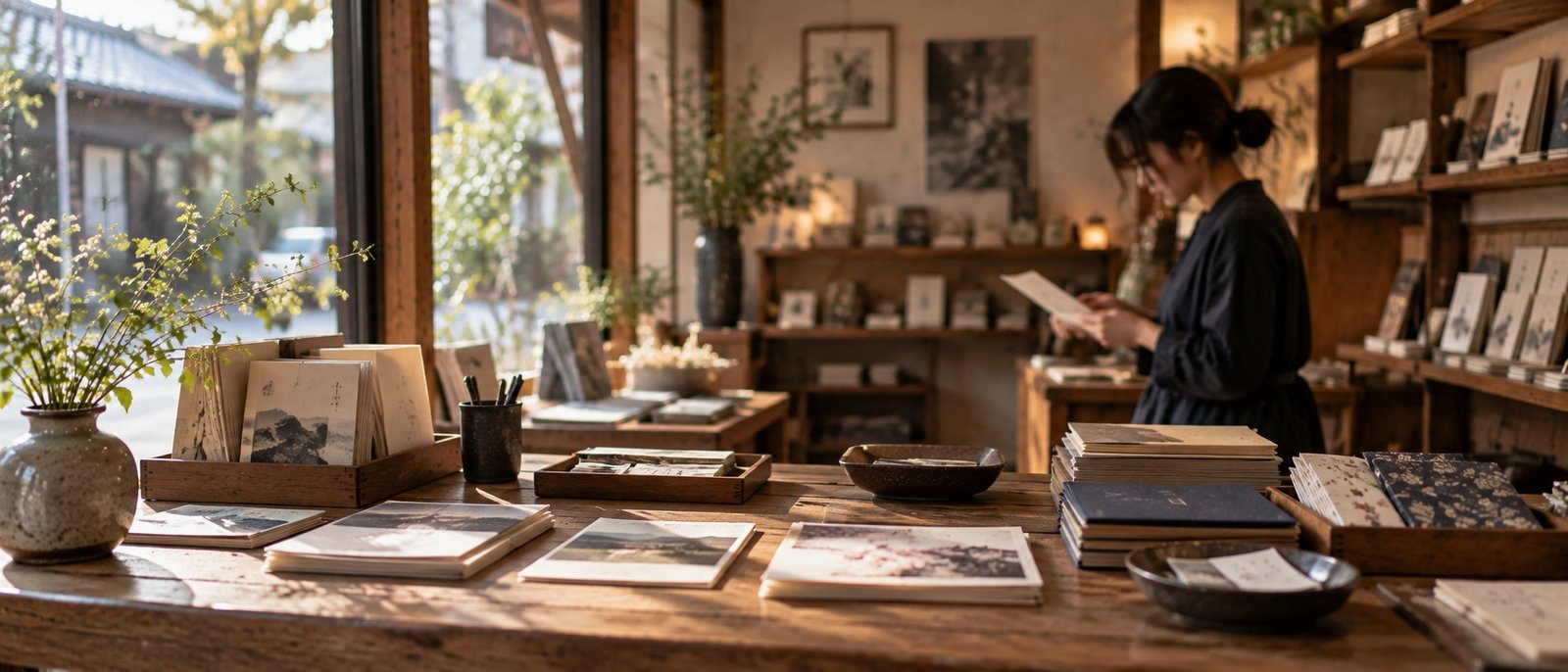
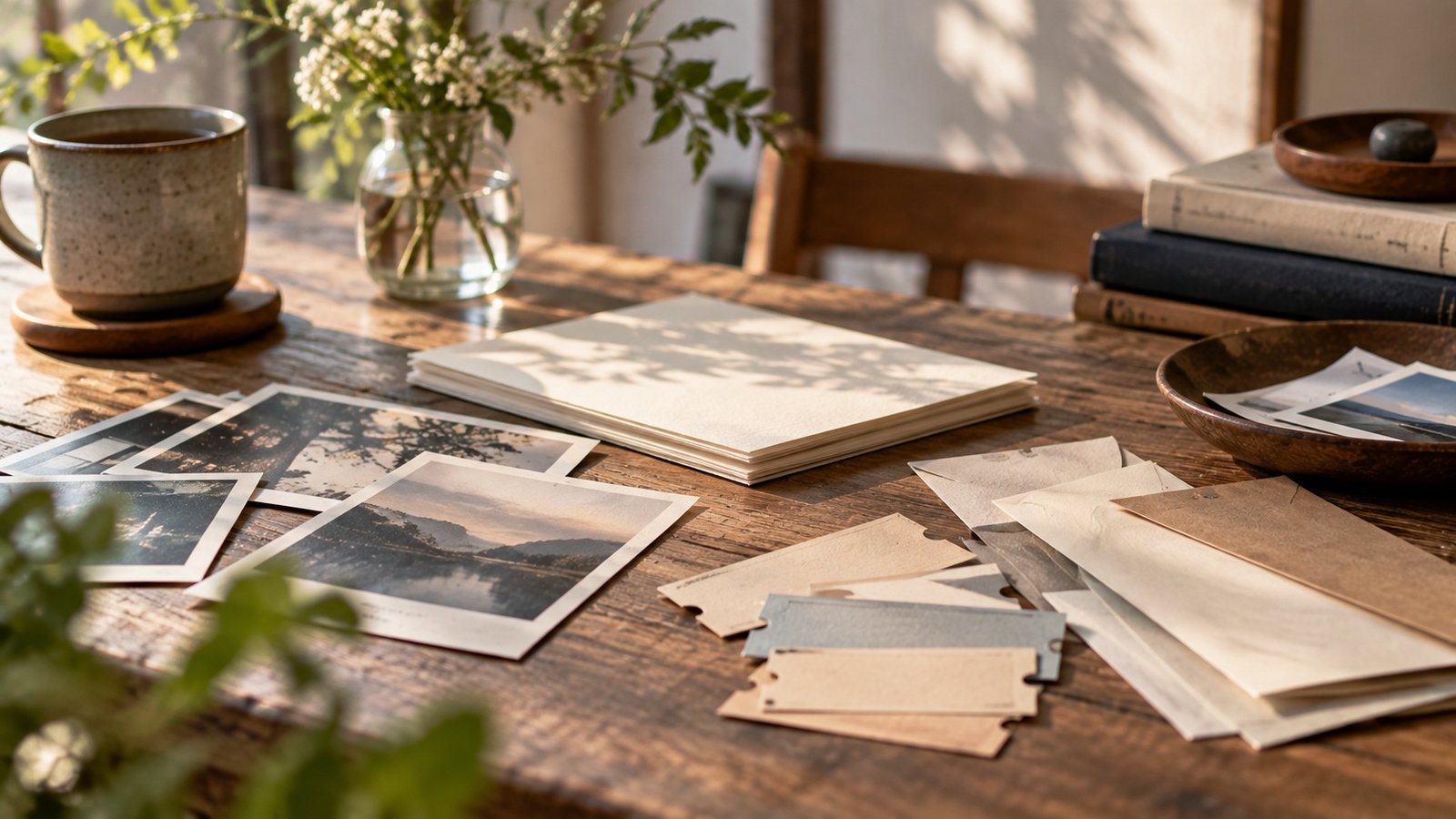
Paper. Tickets. Photographs. Shirts. Plates. Japanese has noticed something they share: they are flat or thin enough to belong to the same counting family.
A counter with a shape.
枚(まい) counts many flat or thin things. Ask 何枚(なんまい) when you want to know how many.
一枚。二枚。三枚。
After ひとつ・ふたつ・みっつ, 枚 is refreshingly well behaved. Use the familiar number reading and add まい.
The pattern keeps behaving.
Listen across the whole set. The number changes; まい stays steady.
何枚ですか。
The question is short. The answer can be equally short.
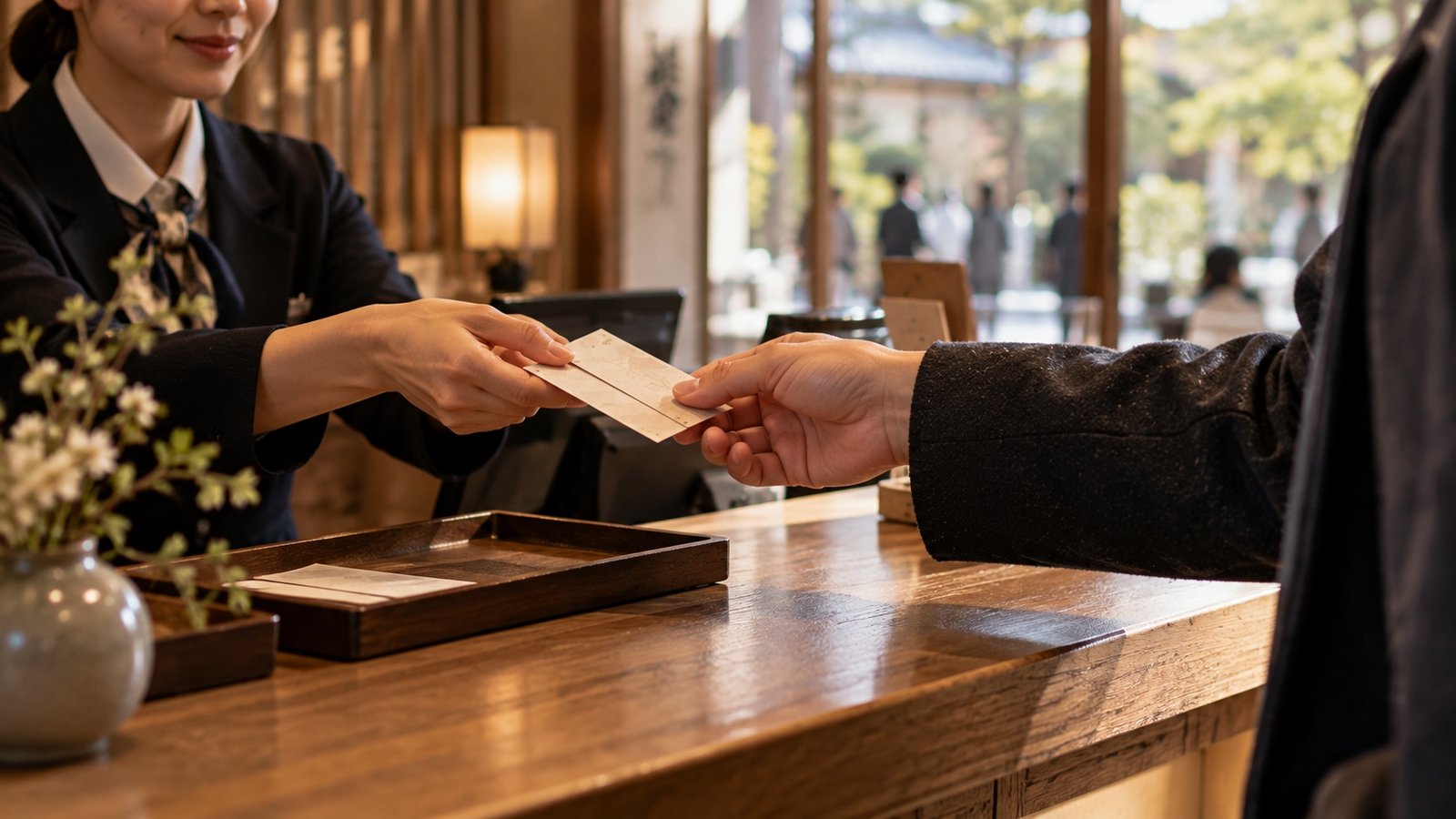
きっぷを二枚ください。
A counter learned on the page becomes rather more convincing when it produces two tickets.
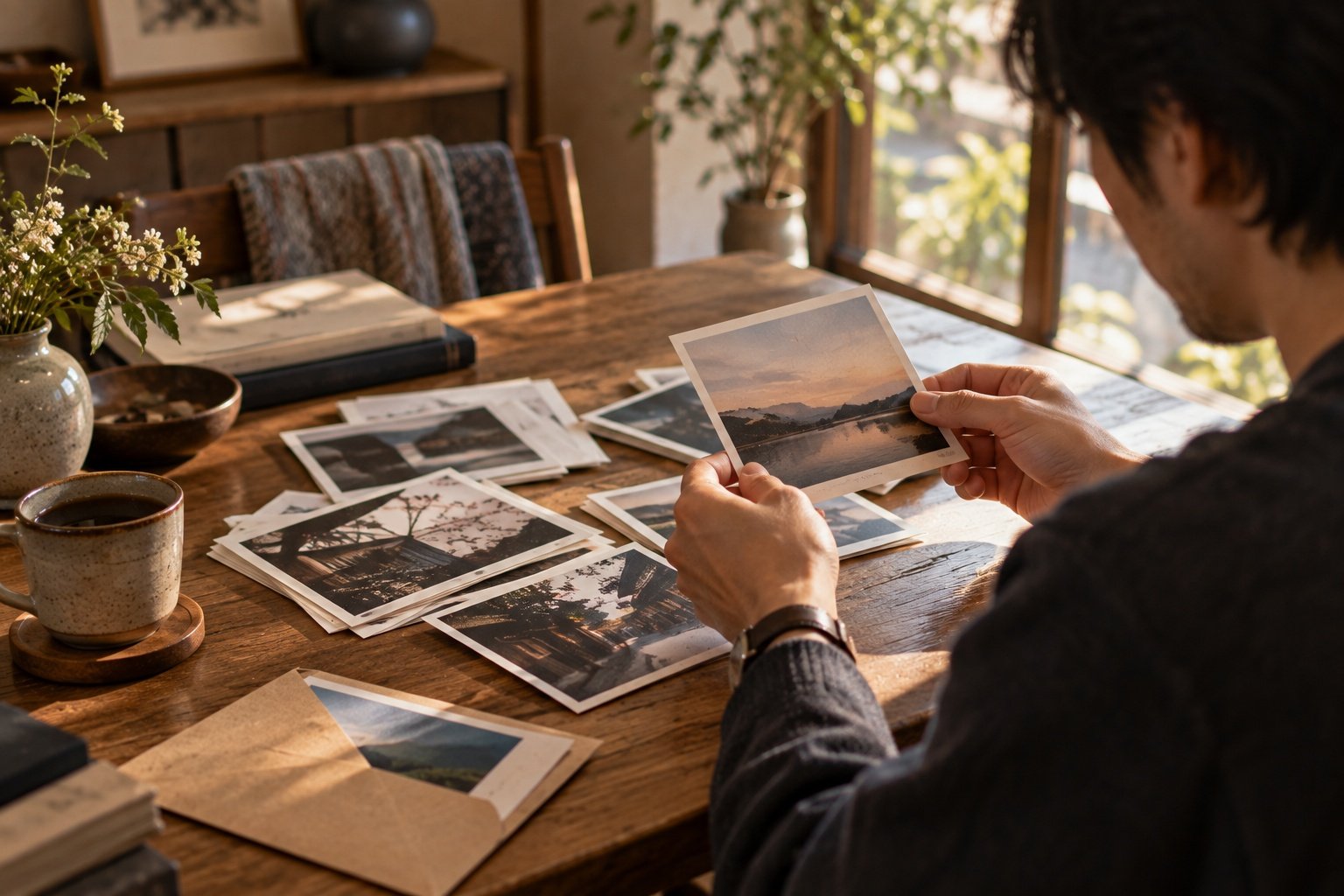
Three photographs are 三枚.
Japanese counts the physical photographs with 枚. The memories inside them, rather inconveniently, refuse to be counted so neatly.
What can 枚 count?
Flatness is the useful clue—not the material. That is why very different objects can enter the same counter family.
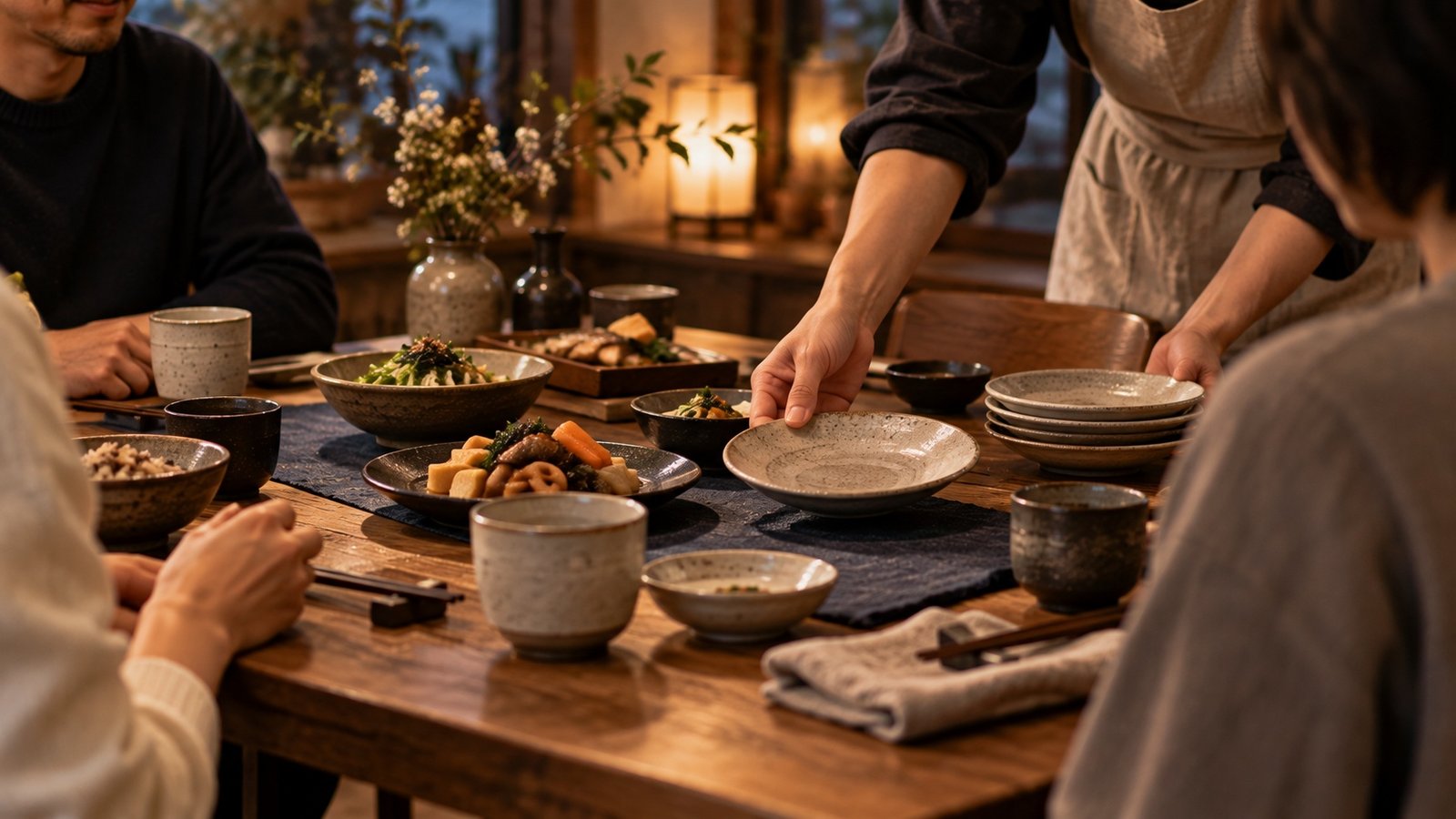
Sometimes grammar is hospitality.
A plate is not interesting because it is flat. It becomes interesting when somebody notices another person needs one.
The counter travels.
Once you hear 枚 as a category rather than a vocabulary item, it begins appearing in surprisingly ordinary places.
Numbers enter a task.
At work, at home or while preparing something together, the number is often connected to what is actually needed.
Notice shape before number.
Look around you for three things that could naturally be counted with 枚: perhaps paper, a photograph, a shirt, a plate or a card. Count them aloud. Then ask yourself what they have physically in common.
See
Find something flat or thin.
Count
Say its quantity with 枚.
Use
Imagine asking for one more: もう一枚ください。

Objects have shapes.
Japanese notices.
Numbers seemed abstract until Japanese began asking you to notice what the things themselves are like.