
Now the Numbers Can
Count Almost Anything.
People had their own counter. Now Japanese gives you a wonderfully useful general counter for ordinary things—one that can follow you through shops, kitchens, cafés and daily life.
How many things?
いくつ asks “how many?” when you are using this general counting system. It becomes useful almost immediately.
ひとつ。ふたつ。みっつ。
This is not simply ichi, ni, san plus a suffix. These native Japanese counting words have their own rhythm.
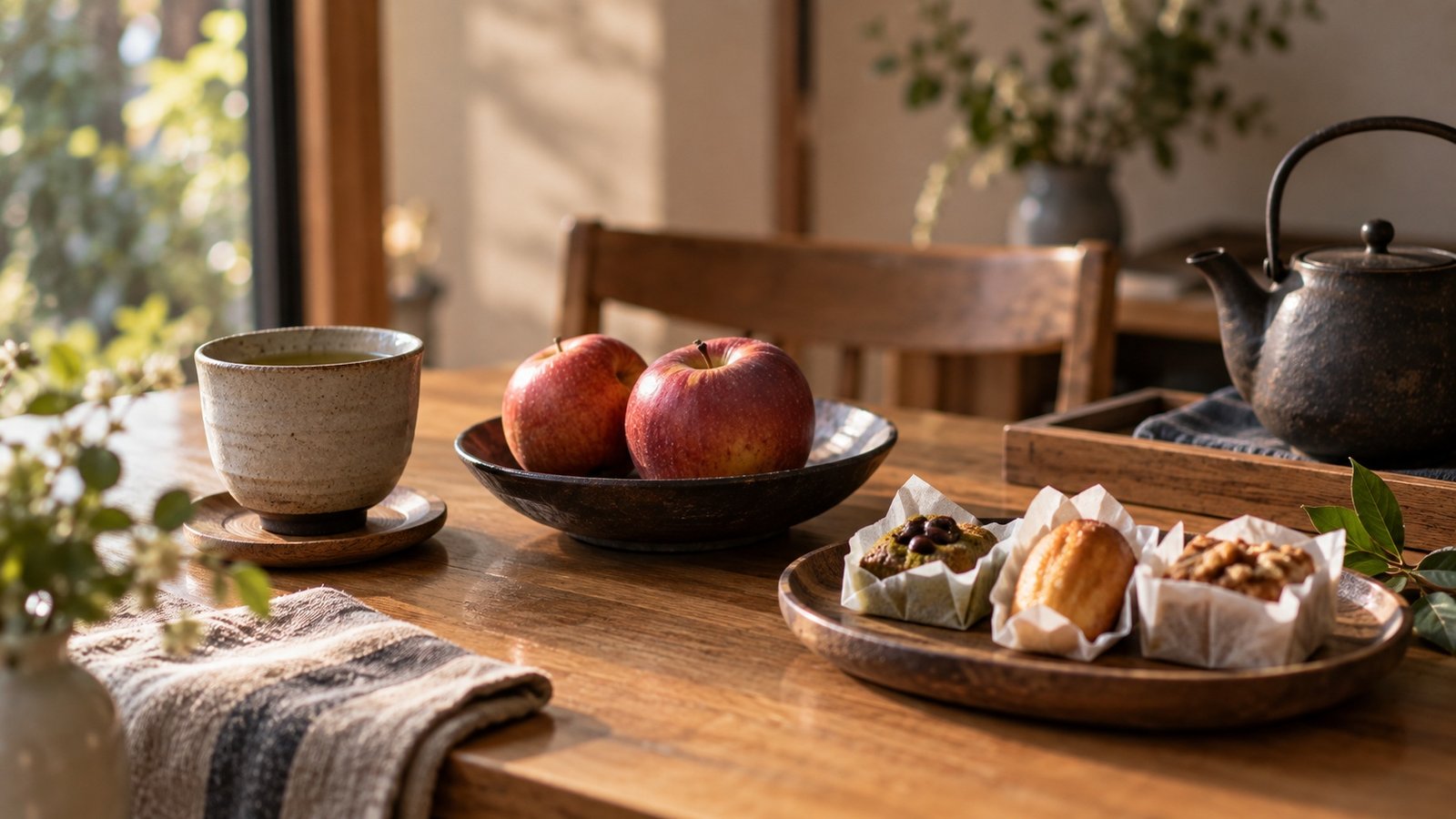
One through ten.
Notice especially みっつ・よっつ・むっつ・やっつ—and the final surprise: ten is simply とお.

One, please.
This is where the counter stops being a vocabulary exercise and starts buying lunch.
これをひとつお願いします。
Sometimes you can see exactly what you want but do not know its Japanese name. No vocabulary emergency is required.
How many are there?
Your earlier Japanese returns again. Combine いくつ with あります and ask about the number of ordinary things.
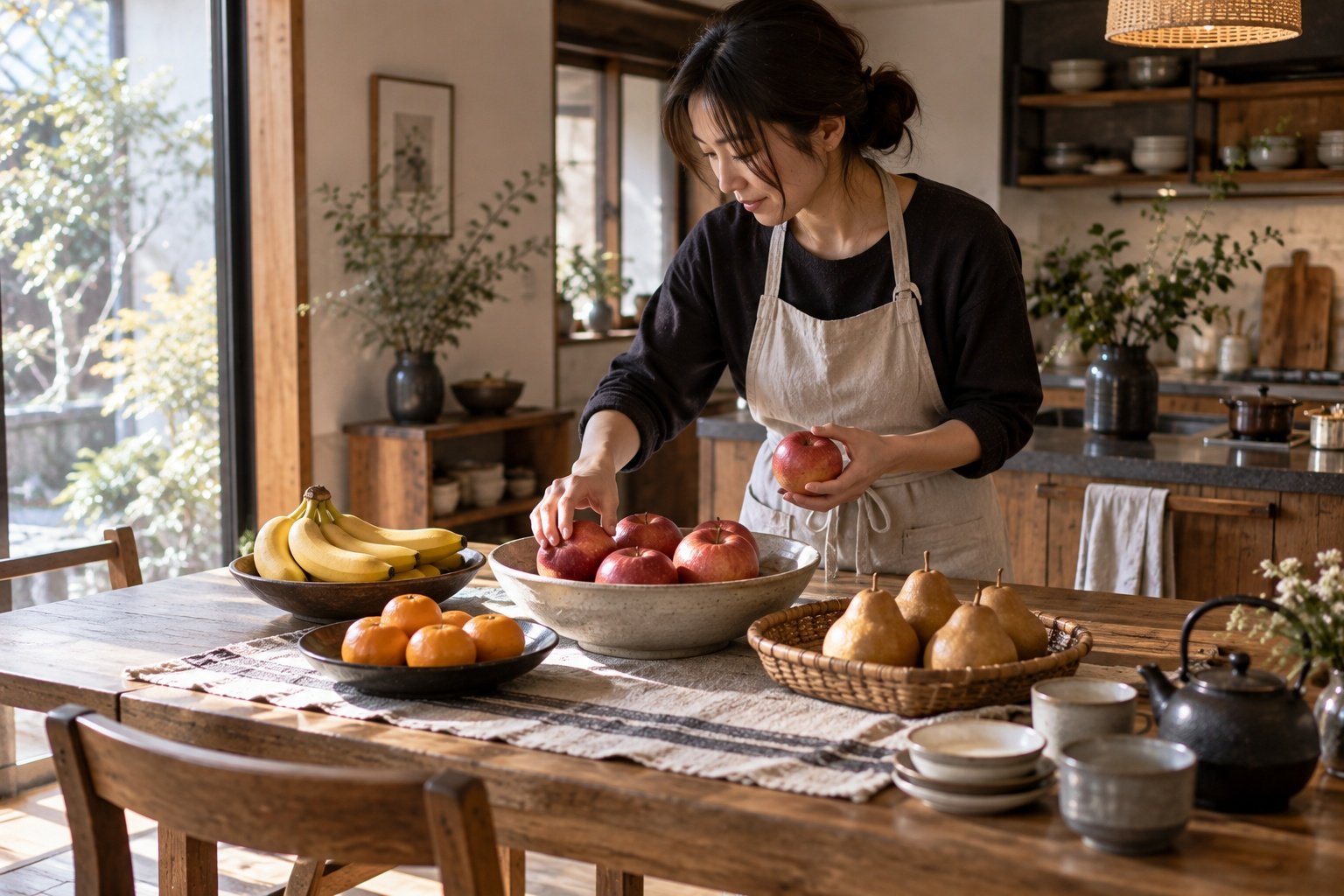
Short answers are real answers.
You do not need a magnificent sentence every time somebody asks a simple quantity.
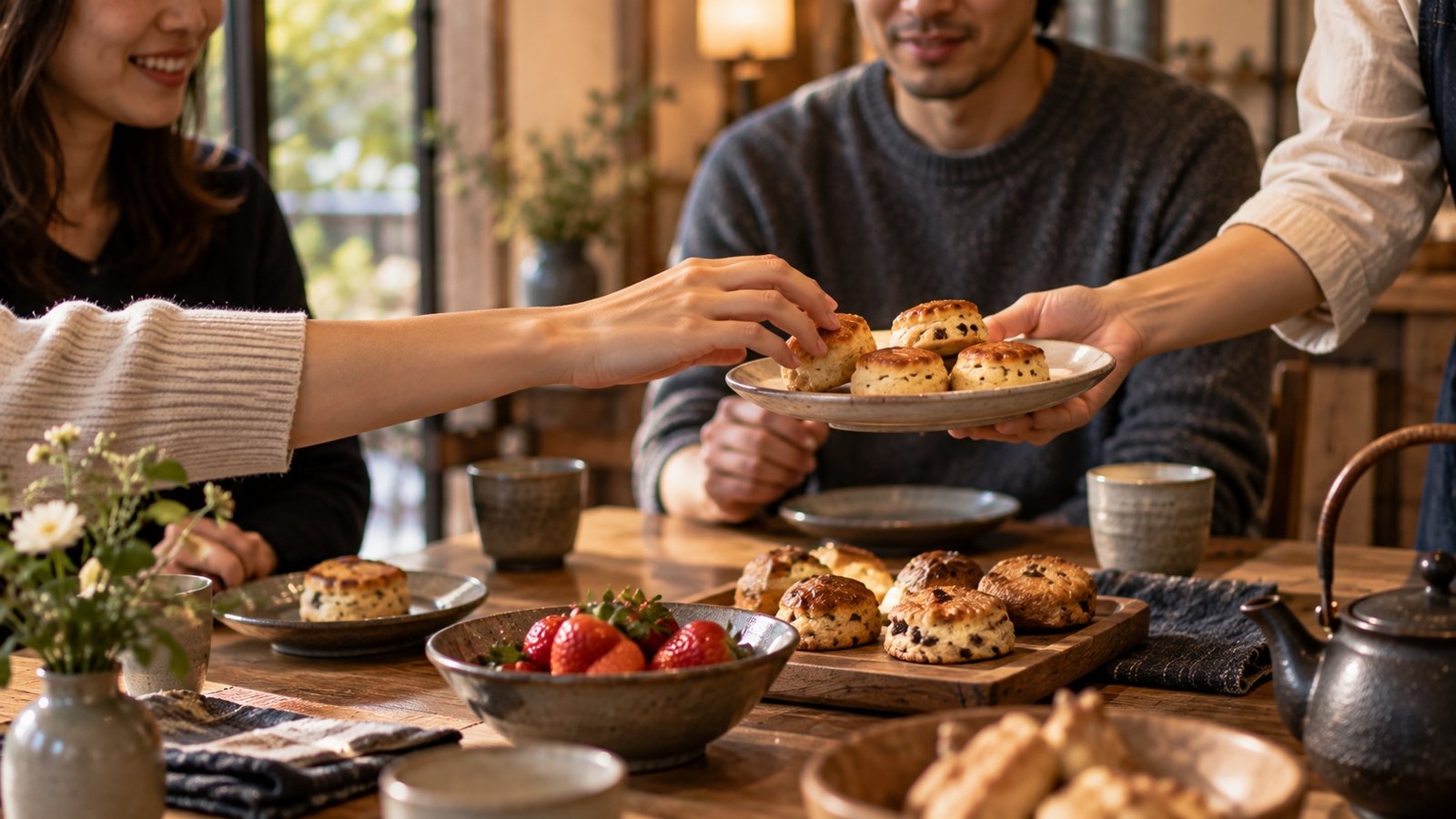
もうひとつ.
Counters become particularly human when the first portion was apparently not enough.
How many do you want?
Now the counter joins another everyday question: not merely what exists, but what somebody wants.
Useful does not mean universal.
The ~つ system is a powerful beginner tool for many ordinary objects and abstract “things.” Japanese also has specialized counters for people, flat objects, long objects, books, machines, cups and much more. We will meet those gradually.
People
You already met 一人・二人・三人.
General things
Now you have 一つ〜十.
Later
Specialized counters arrive when useful—not as a giant list to memorize tonight.
Count the ordinary.
Look around a kitchen, café, shop or desk. Choose three ordinary things. Say their quantities using ひとつ・ふたつ・みっつ. Then imagine you need one more and say もうひとつください。
Ordinary things
begin speaking too.
Language rarely arrives through grand events. Sometimes it begins with one thing, two things—and one more.