
Now the Numbers
Have Faces.
You already know numbers can count years and age. Now Japanese introduces a bigger idea: numbers change shape depending on what they count. We begin with people.
A person. Then people.
人 can mean a person, and it also appears in the counter used for people. The question you will hear is 何人ですか。
One is ひとり.
Two is ふたり.
You might expect one and two people to use the neat ~にん pattern. Japanese had other plans.
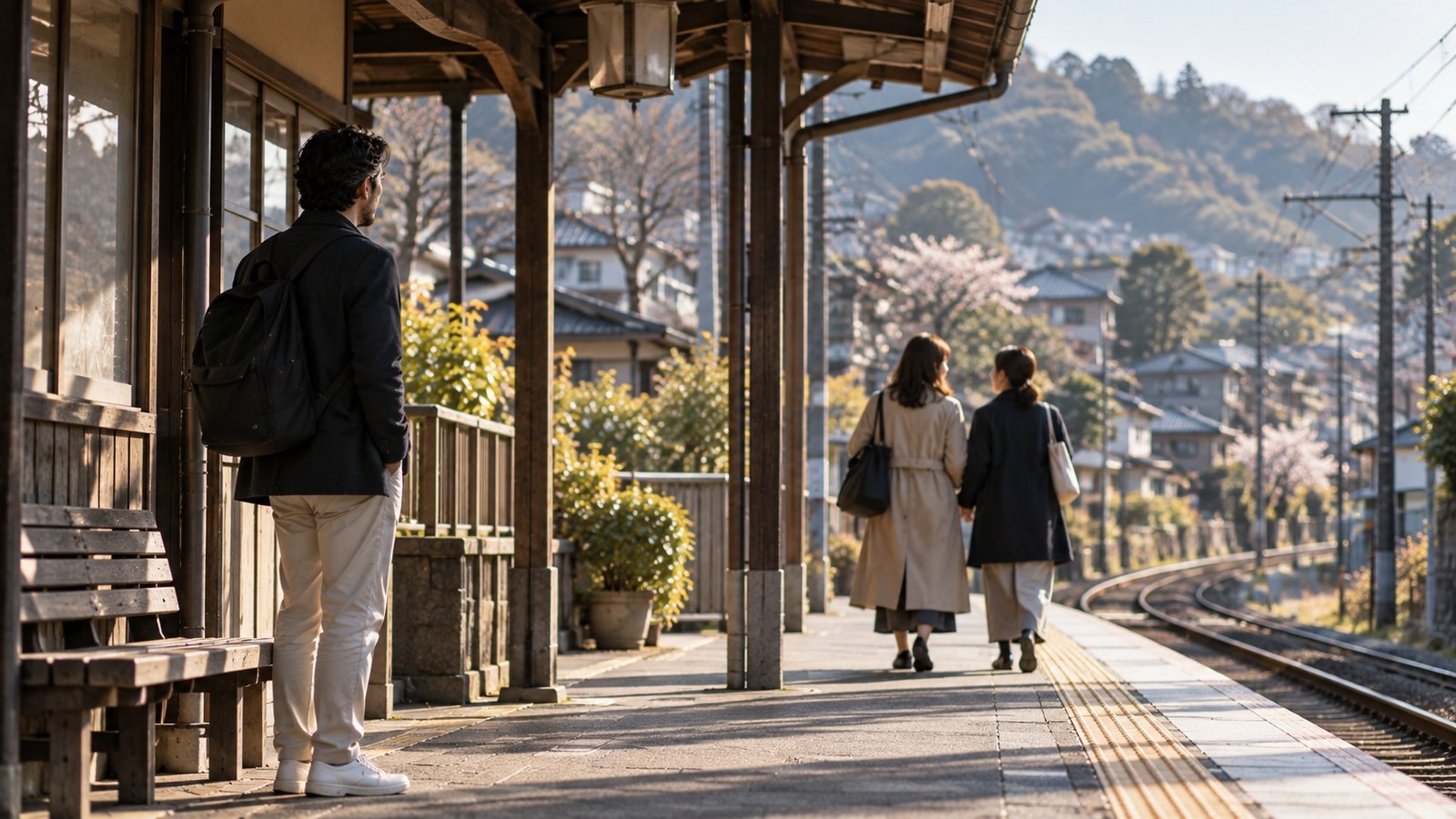
From three, the pattern settles down.
Most counts use the number plus 人, read nin. Learn 一人 and 二人 separately; after that, the road becomes much straighter.

How many people are in your family?
Counters stop feeling abstract the moment they describe people you know.
How many people?
The core exchange travels easily—from plans with friends to bookings and everyday arrangements.
何名様ですか。
At restaurants and other service settings, staff often use the polite expression 何名様ですか。
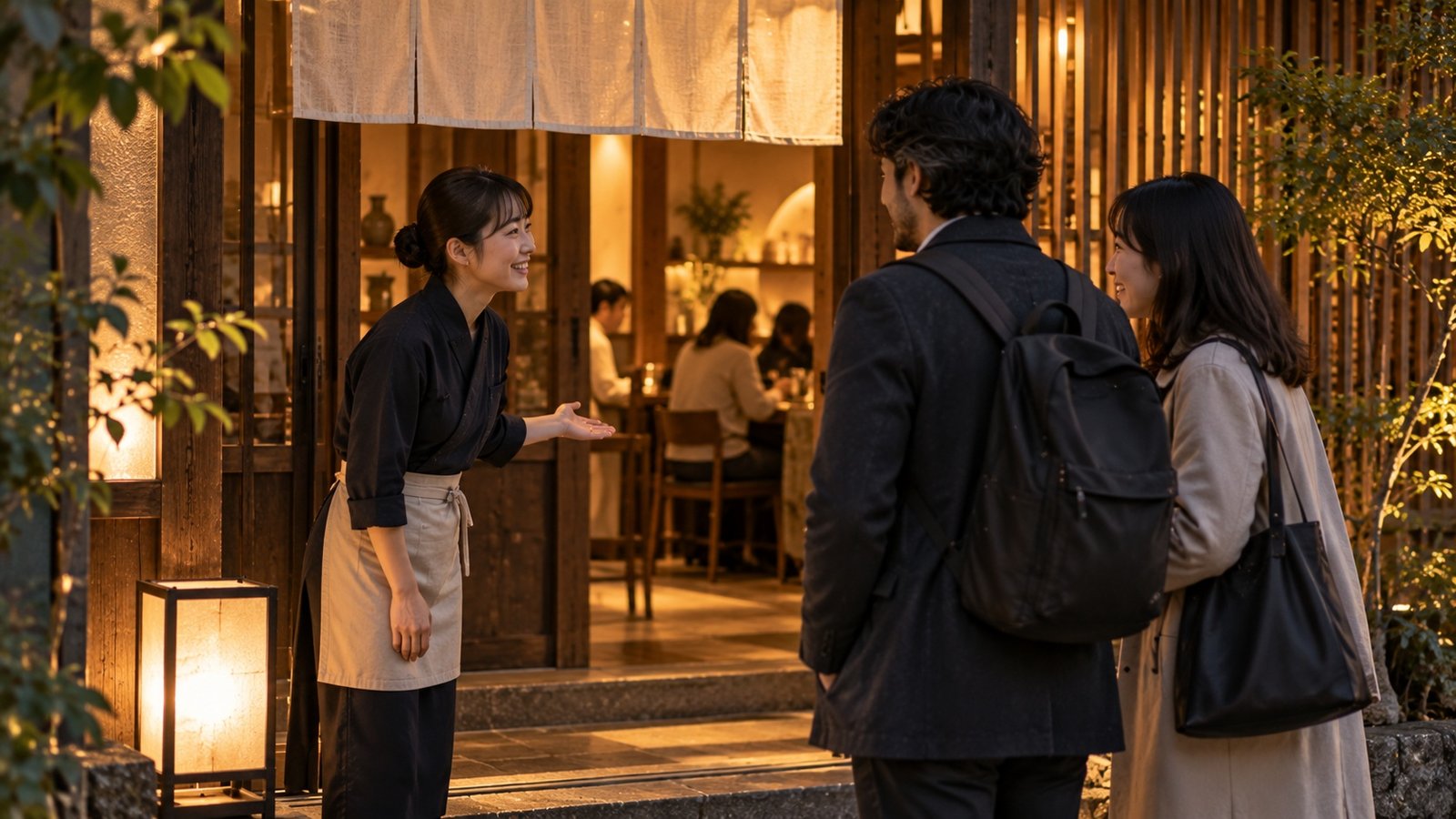
The number can travel with the sentence.
Once the counter feels comfortable, put it inside real plans.
ひとりで is a useful little phrase.
一人で means doing something alone / by oneself. 二人で means doing it as two people.

How many people are there?
You already learned that います tells us living beings are present. Add the people counter and you can ask how many.
Three patterns worth keeping.
一人 · 二人
Special readings: hitori and futari.
三人〜
From three, ~にん becomes the main pattern.
何名様
Polite service language you will hear in real Japan.
Listen before you count.
At a restaurant entrance, hotel counter, group booking, family conversation or event, listen for 何人, 二人, ~人, or 何名様.
People make
the number matter.
Japanese gives you a way to count people. Life gives you the people worth counting.