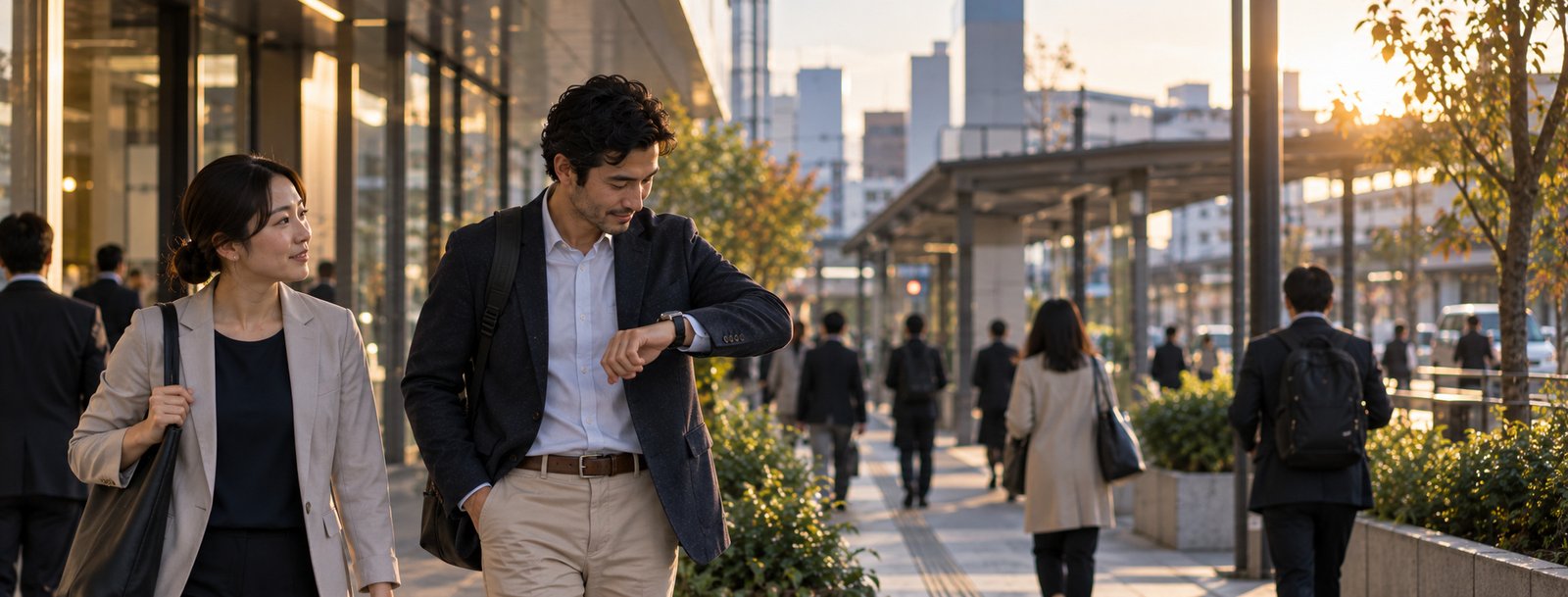
Now Japanese
can find the hour.
You know when at the scale of days. Now zoom in. Meetings, trains and appointments have a habit of caring about the hour.
What time is it?
何時 is read なんじ — nanji. Add ですか and you have one of daily Japanese's most useful questions.
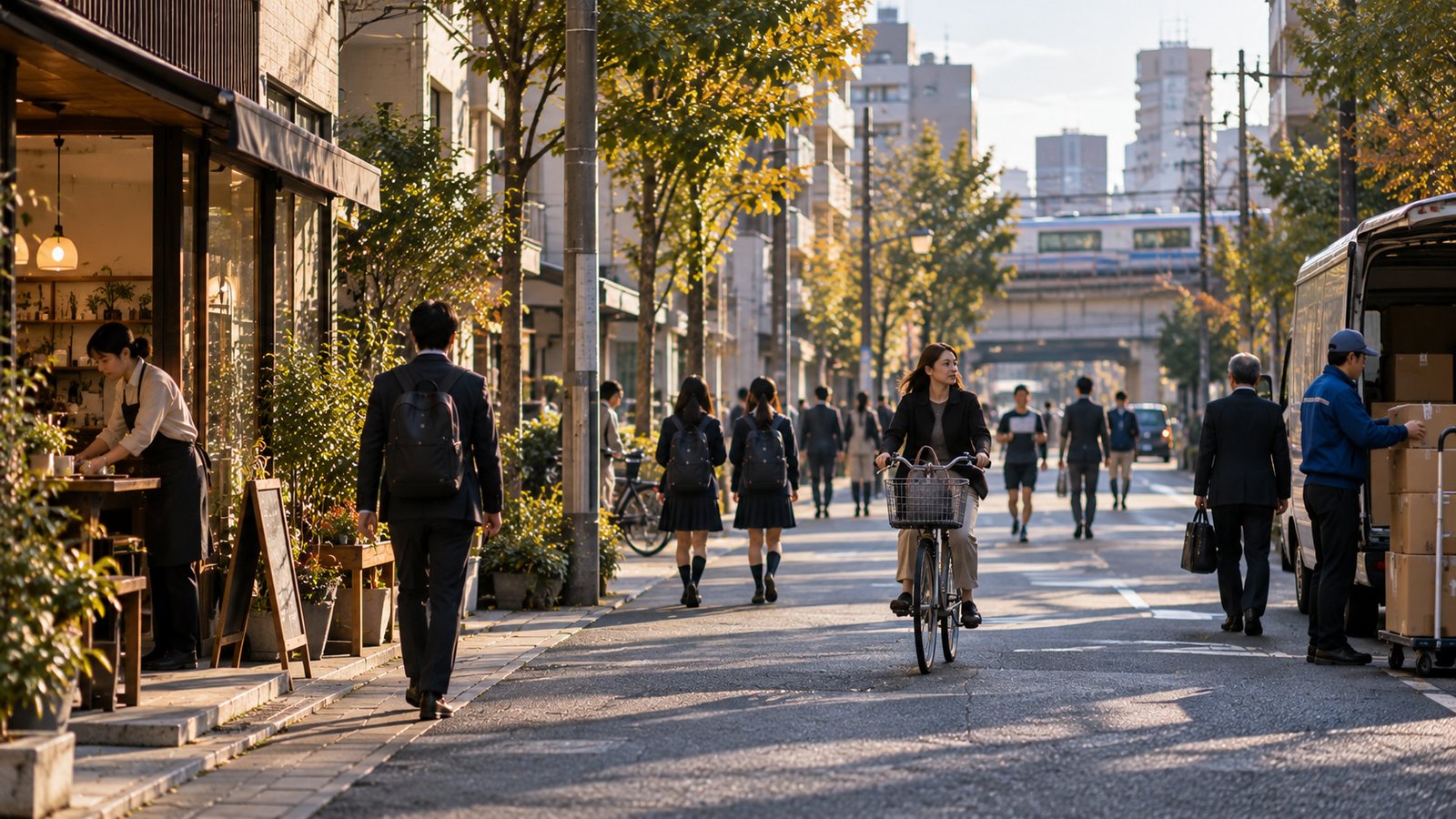
The day starts acquiring hours.
A train, workplace, school gate and small shop may all begin differently. Time quietly coordinates the choreography.
Three little surprises.
Most hours behave. These three deserve practice before they ambush you at a station.
What time is the meeting?
いつ asks broadly when. 何時 asks specifically for the clock hour.

Time becomes conversational.
Meeting · Female → Male
Appointment · Female → Male
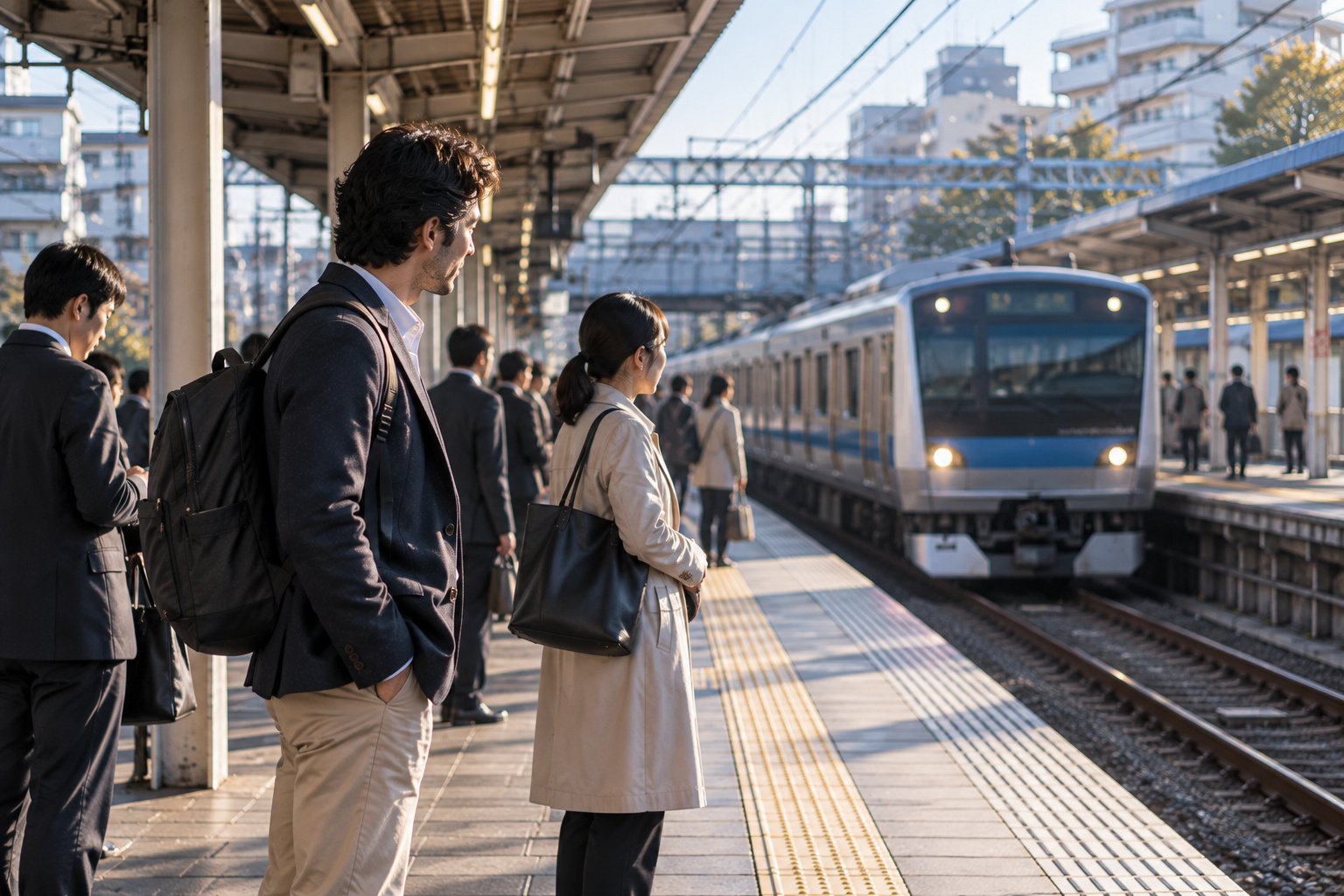
At a station, the hour matters.
“Sometime today” is philosophically interesting. It is less impressive when you are trying to catch a train.
The same frame travels.
Change the topic; keep the question. Repetition is the language becoming yours.
A city is partly made of hours.
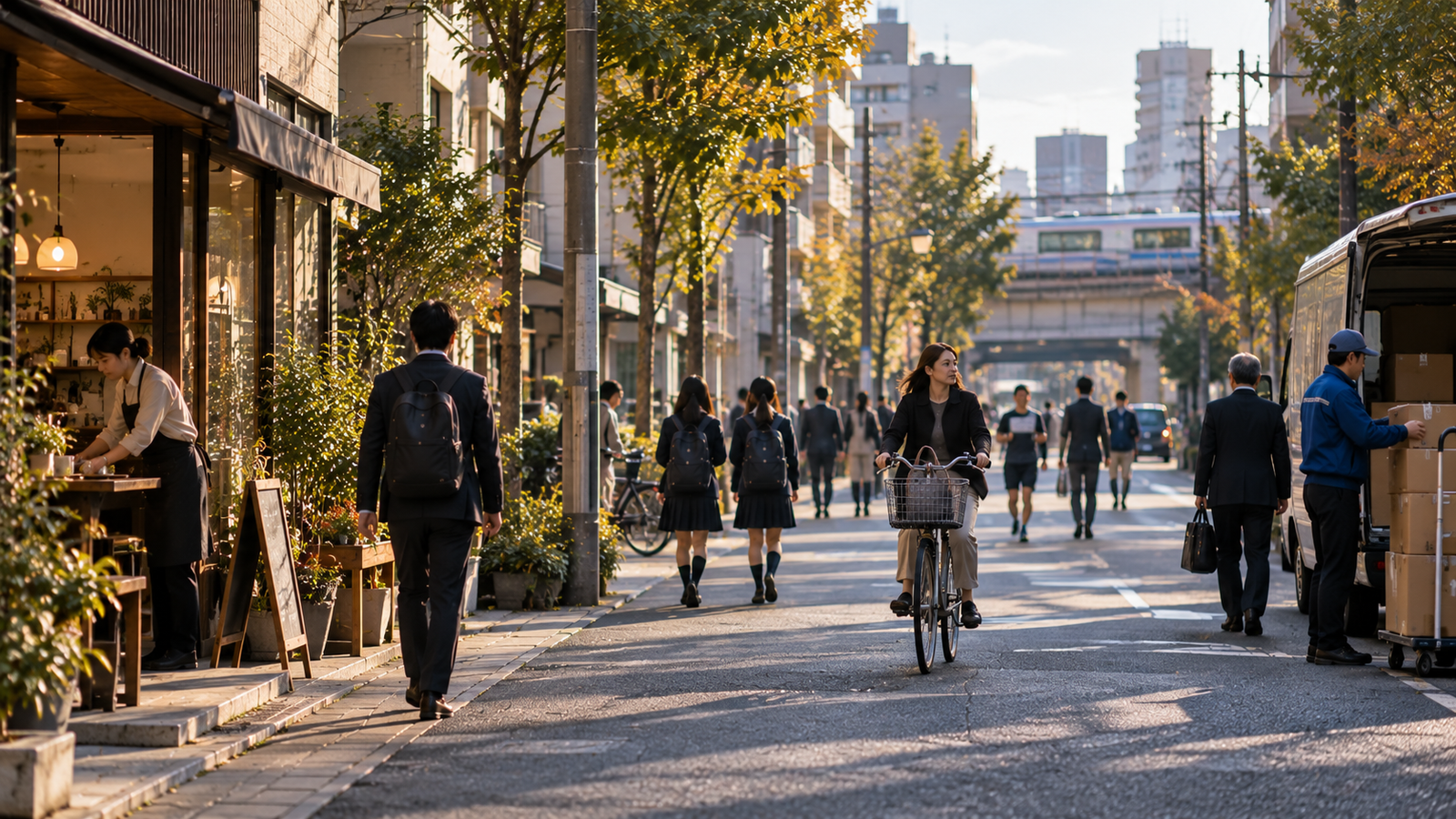
Deliveries arrive. Schools begin. Cafés prepare. Offices fill. People return home. The clock is rarely the most beautiful thing in the scene, but its rhythm is everywhere.
Ask for one real hour.
Ask about a meeting, train, appointment or work start. Listen for the number before 時. Notice whether you hear よじ, しちじ or くじ.
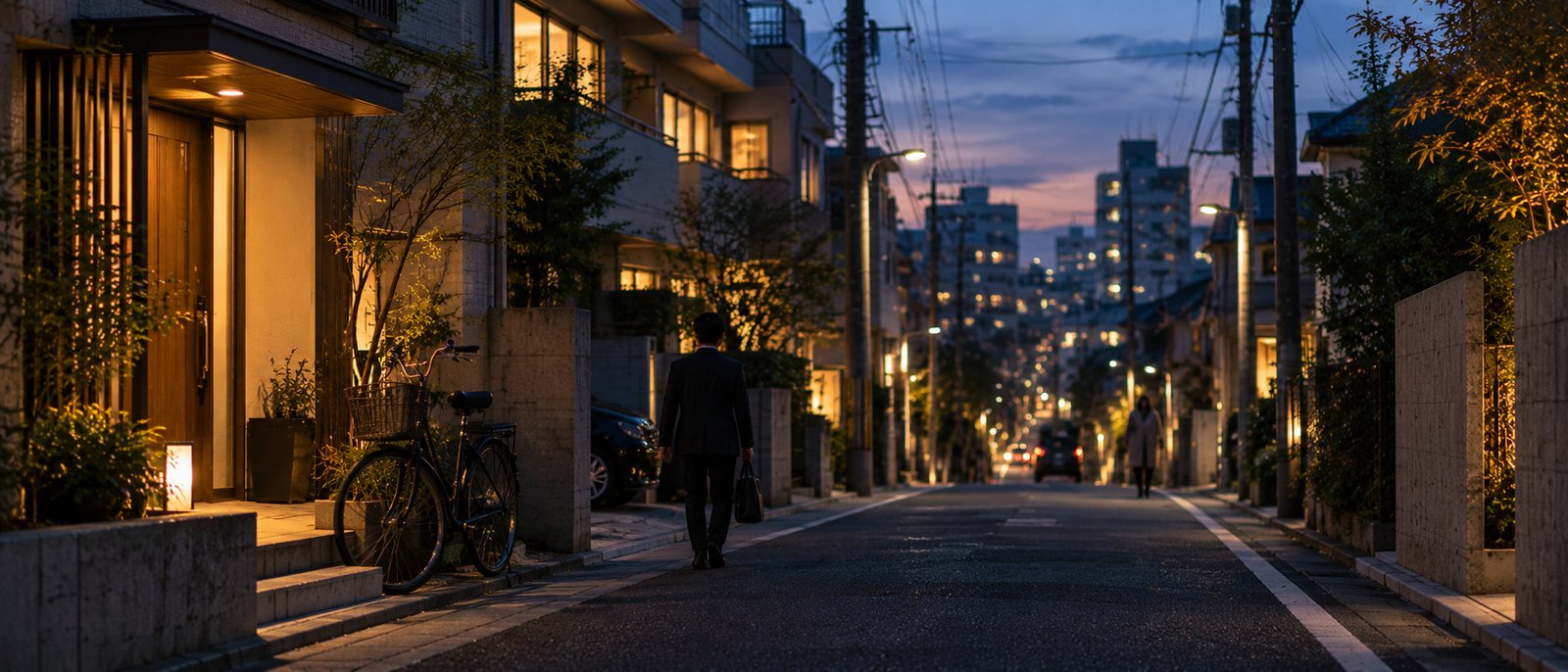
Hours pass invisibly. Ordinary life keeps arriving inside them.
A bicycle waits. Someone walks home. Another person is still expected somewhere. Japanese can now locate those moments not only on a day, but inside it.