Now the Things That Move
Have a Counter.
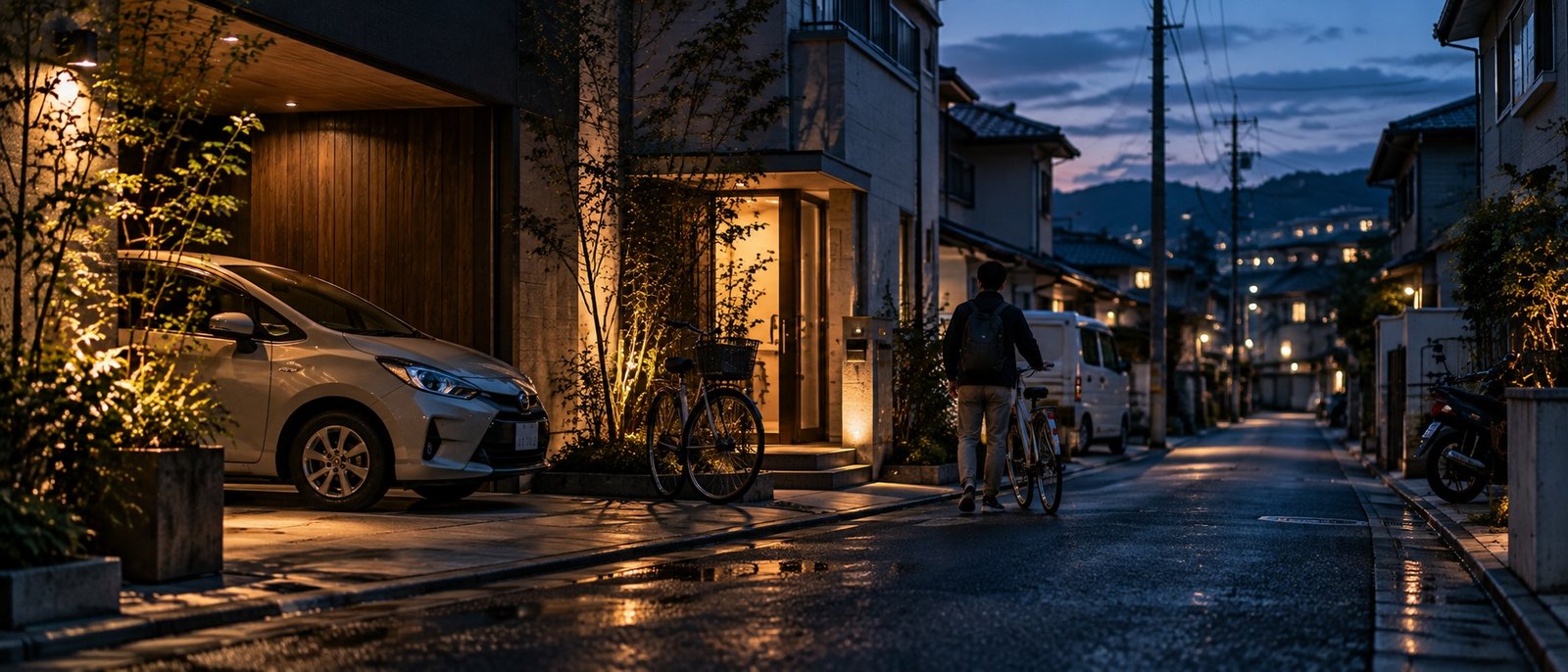
Cars, bicycles, computers, televisions and washing machines may look unrelated. Japanese notices what they share: they are machines and equipment, and 台 is waiting to count them.
A counter for machines and vehicles.
台 counts many vehicles, machines and pieces of equipment. You will meet it in parking areas, homes, offices, shops and conversations about the devices people use every day.
一台。二台。三台。
The number changes. 台 does not. Listen for the steady だい at the end.
Keep the rhythm simple.
Attach だい to the familiar number reading. The counter remains beautifully predictable from one to ten.
Every number keeps だい.
1–5
いちだい · にだい · さんだい
よんだい · ごだい
6–10
ろくだい · ななだい · はちだい
きゅうだい · じゅうだい
何台ですか。
Use 何台 when you want to ask how many vehicles, machines or pieces of equipment there are.
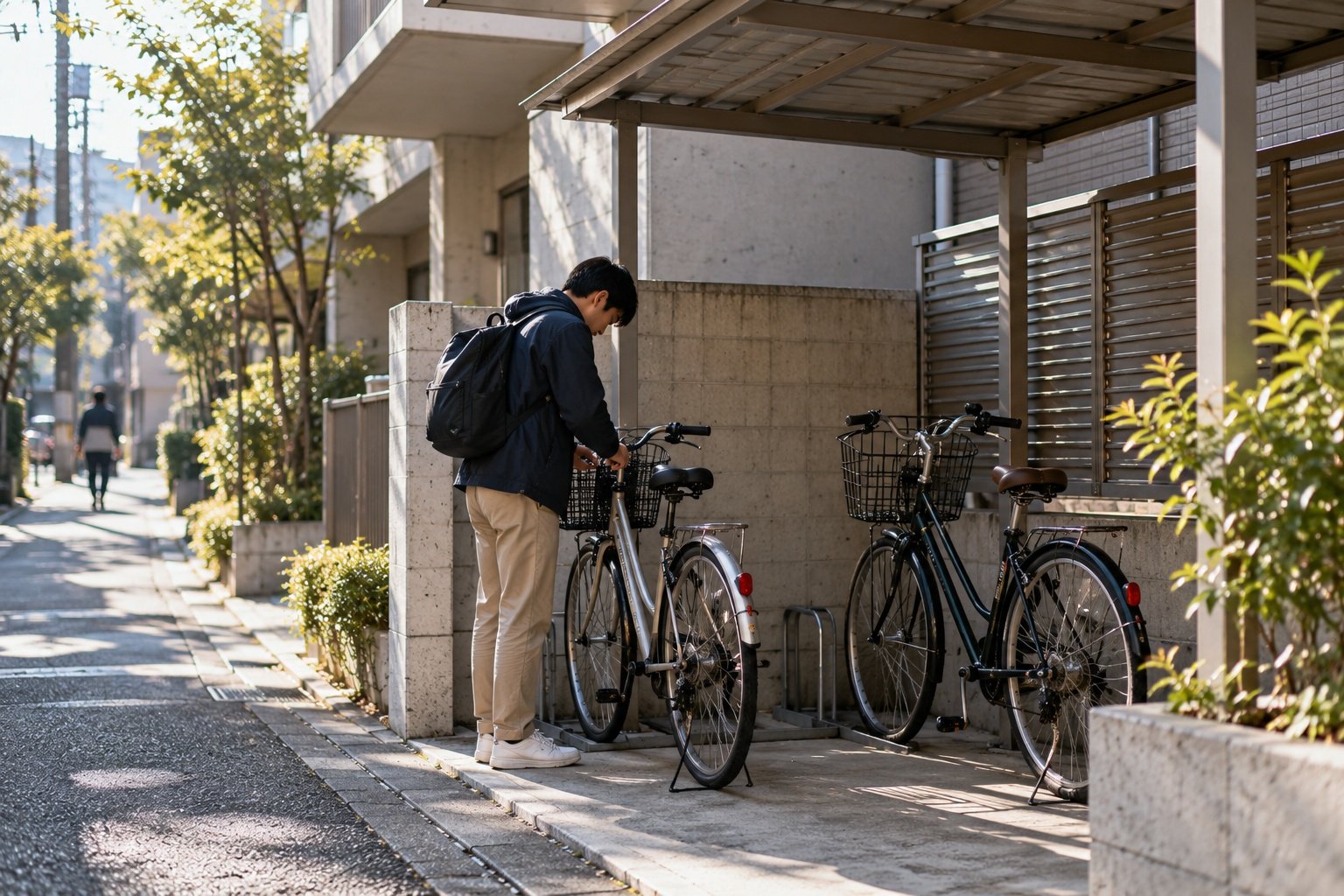
自転車が二台あります。
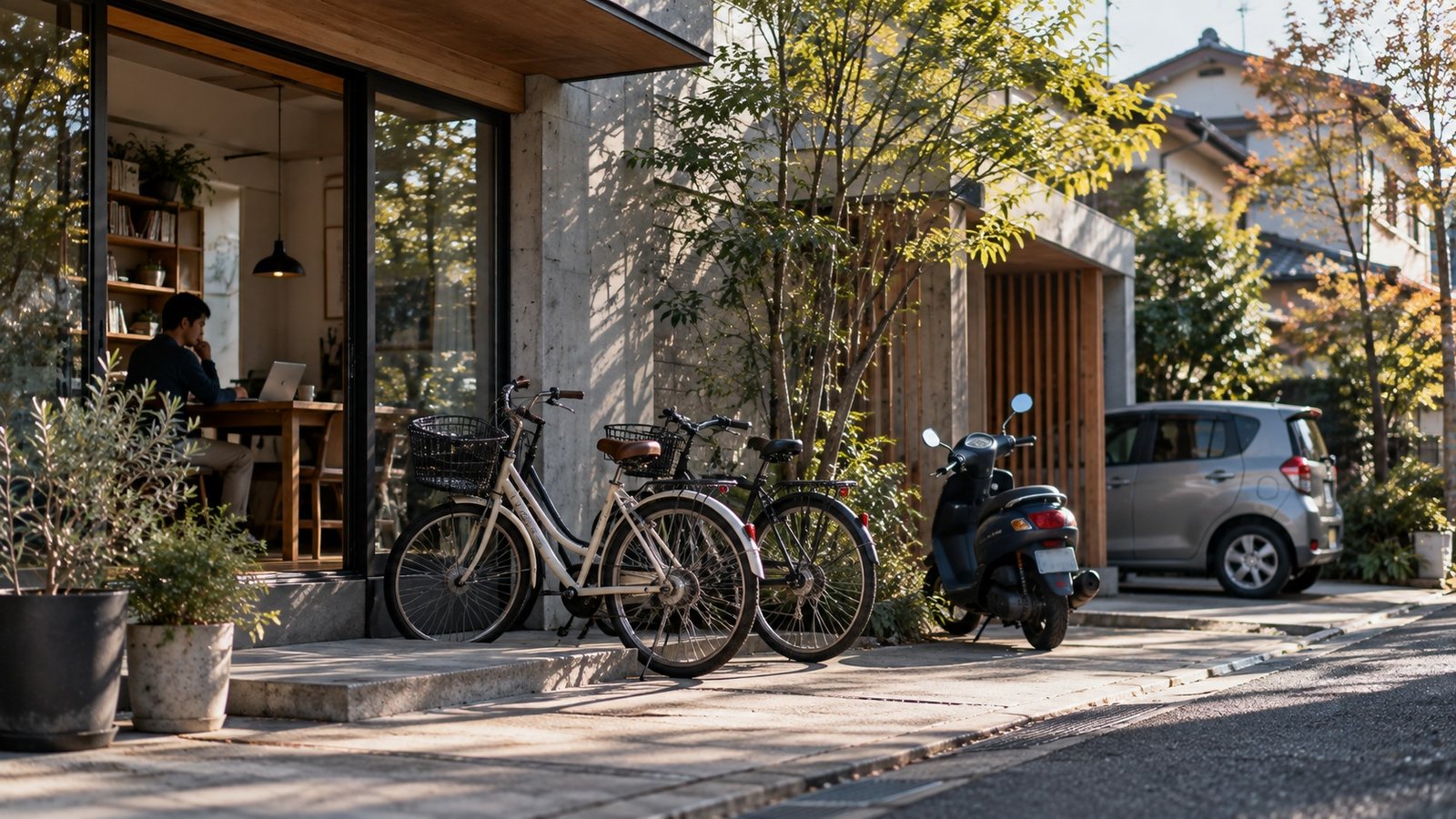
Bicycles outside apartments, stations and shops are part of the visual rhythm of everyday Japan. Now you can count them.
台 walks straight into the office.
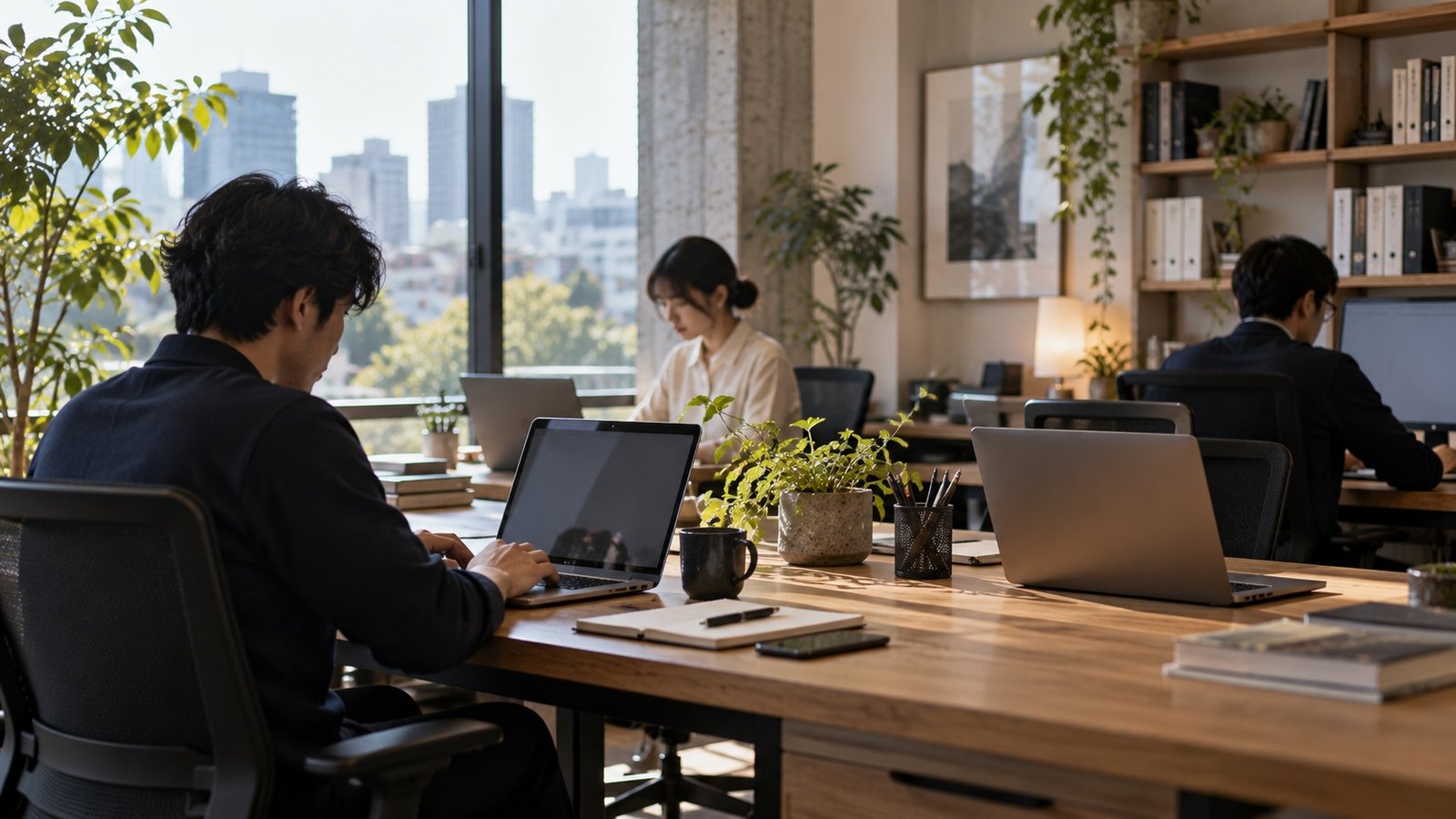
The same counter used for a car or bicycle can count computers and other equipment.
パソコンが三台あります。
Technology sounds less like a vocabulary list when it is sitting on somebody's desk doing Tuesday's work.
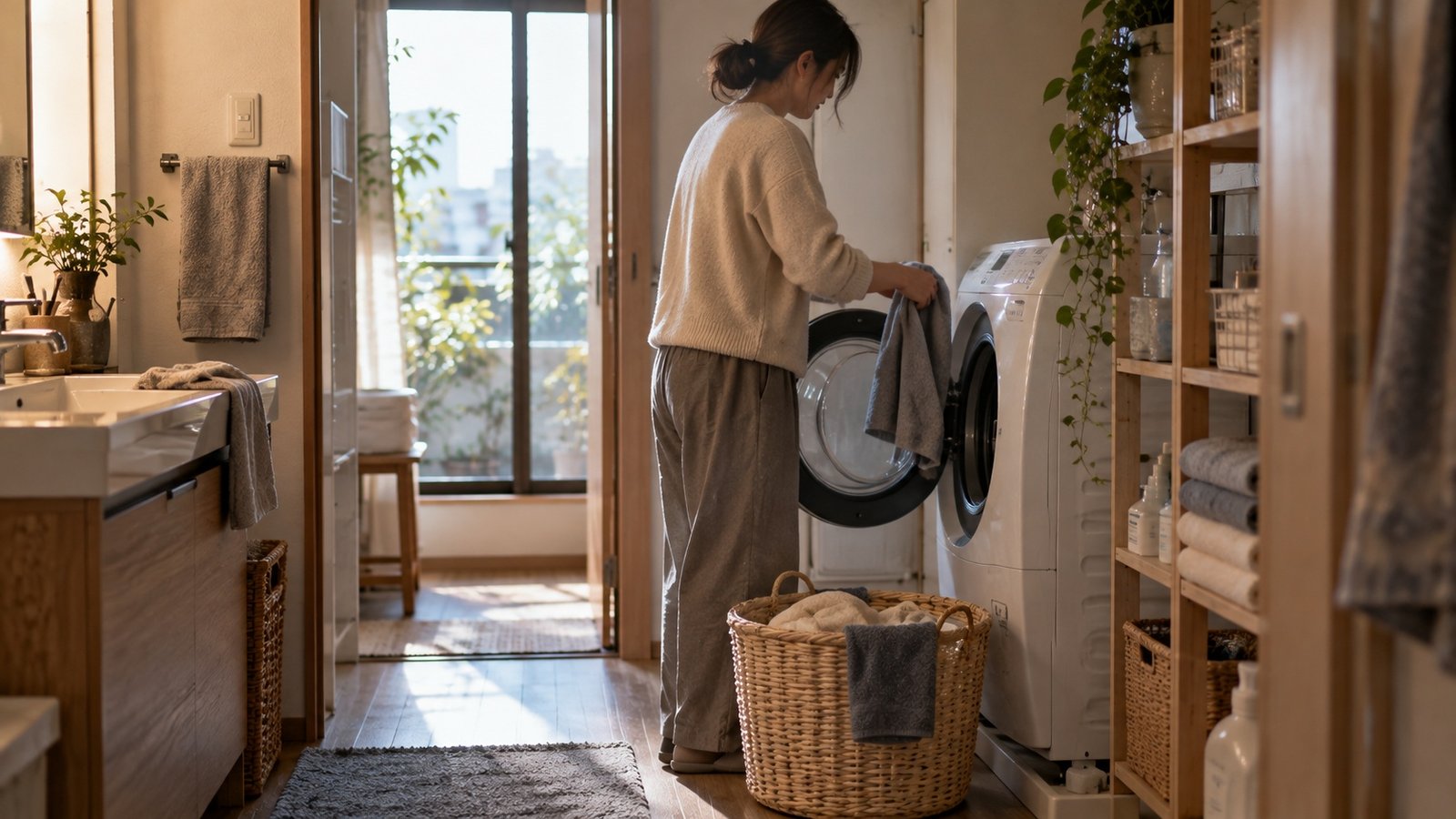
洗濯機が一台あります。
台 does not only count things that travel. Sometimes the machine stays home and spends its life dealing with socks.
The counter travels with the machine.
Quantity becomes planning.
In a workplace, event, home or project, 台 lets you move naturally from simply noticing machines to talking about what is required.
Look for machines hiding in ordinary life.
On your next walk—or simply from where you are sitting—notice vehicles and equipment. A bicycle. A car. A computer. Perhaps the washing machine patiently waiting for its next encounter with socks.
See
Notice which everyday objects Japanese treats as machines or equipment.
Count
Say 一台、二台、三台 aloud and keep だい steady.
Ask
Try 何台ありますか。 when the situation allows it.
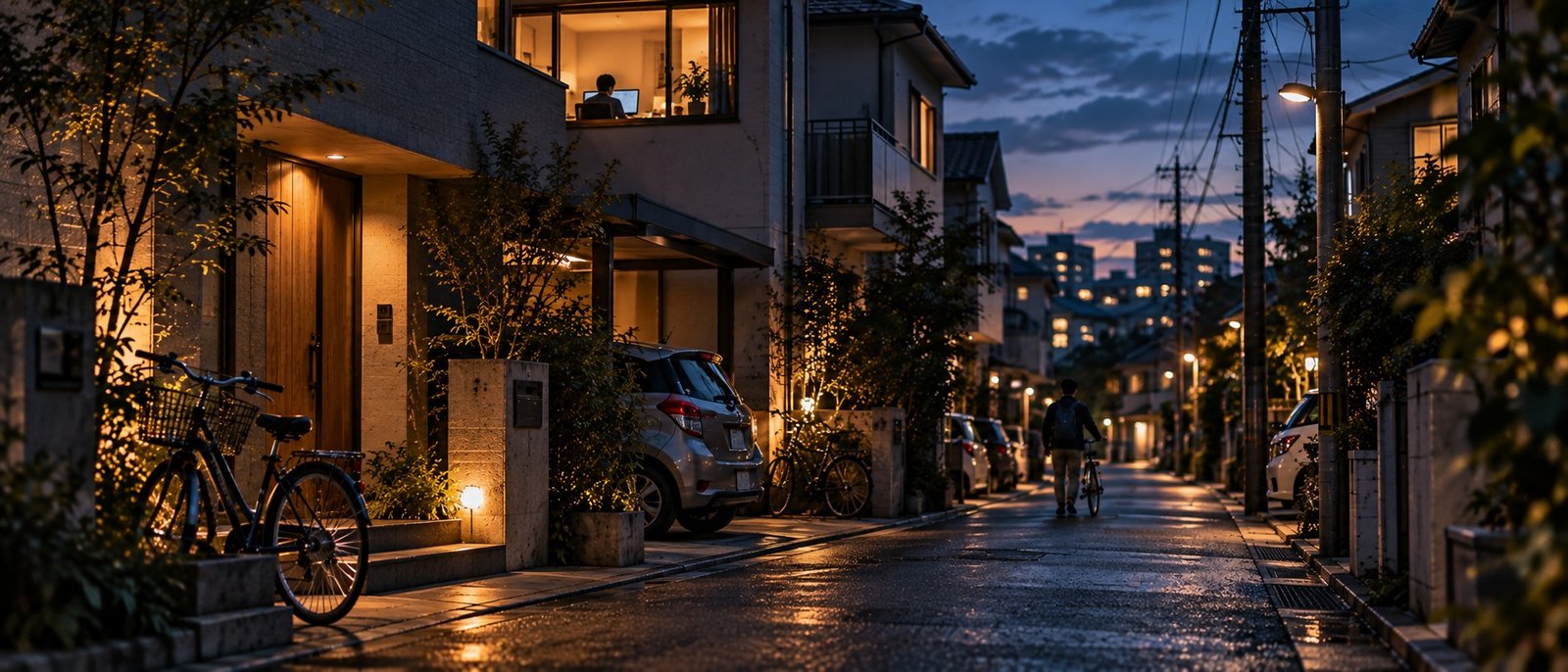
The world people built
has its own counters.
A bicycle waiting outside. A car cooling after the journey. A computer still glowing upstairs. Japanese counters are not really about numbers alone. They are another way of noticing the world people have built around themselves.