Some Things Are
Happening Right Now.
Some things happened yesterday. Some will happen tomorrow. And some are unfolding in the moment we are standing inside.
Something is
happening now.
You already know how to connect an action with the て-form. Now that same form opens another door: describing an action that is currently in progress.
Eat. Drink. Read. Watch.
Now let them happen.
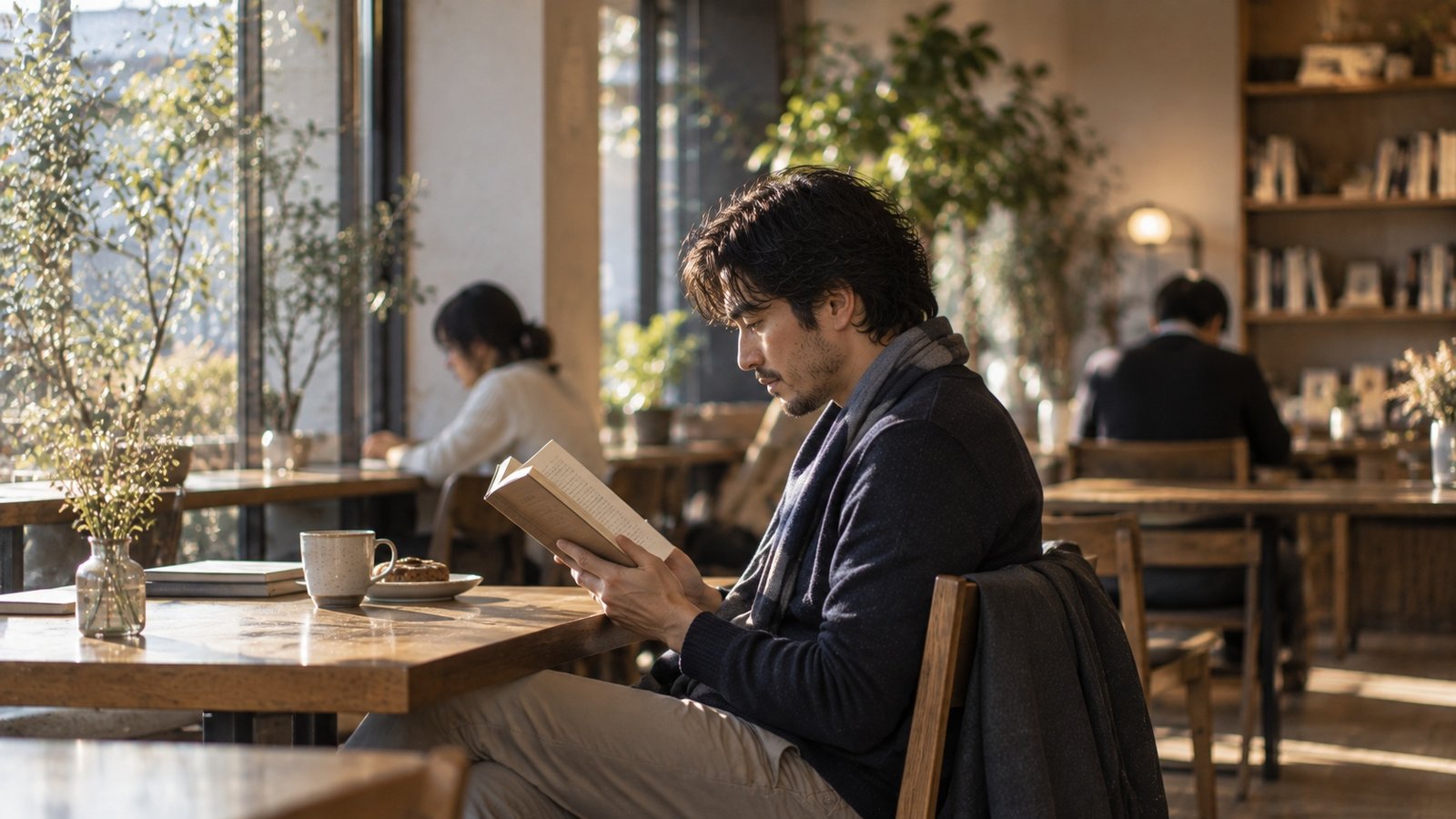
“I read.”
becomes
“I am reading.”
The action is no longer
only an idea or routine.
The present moment
is full of verbs.
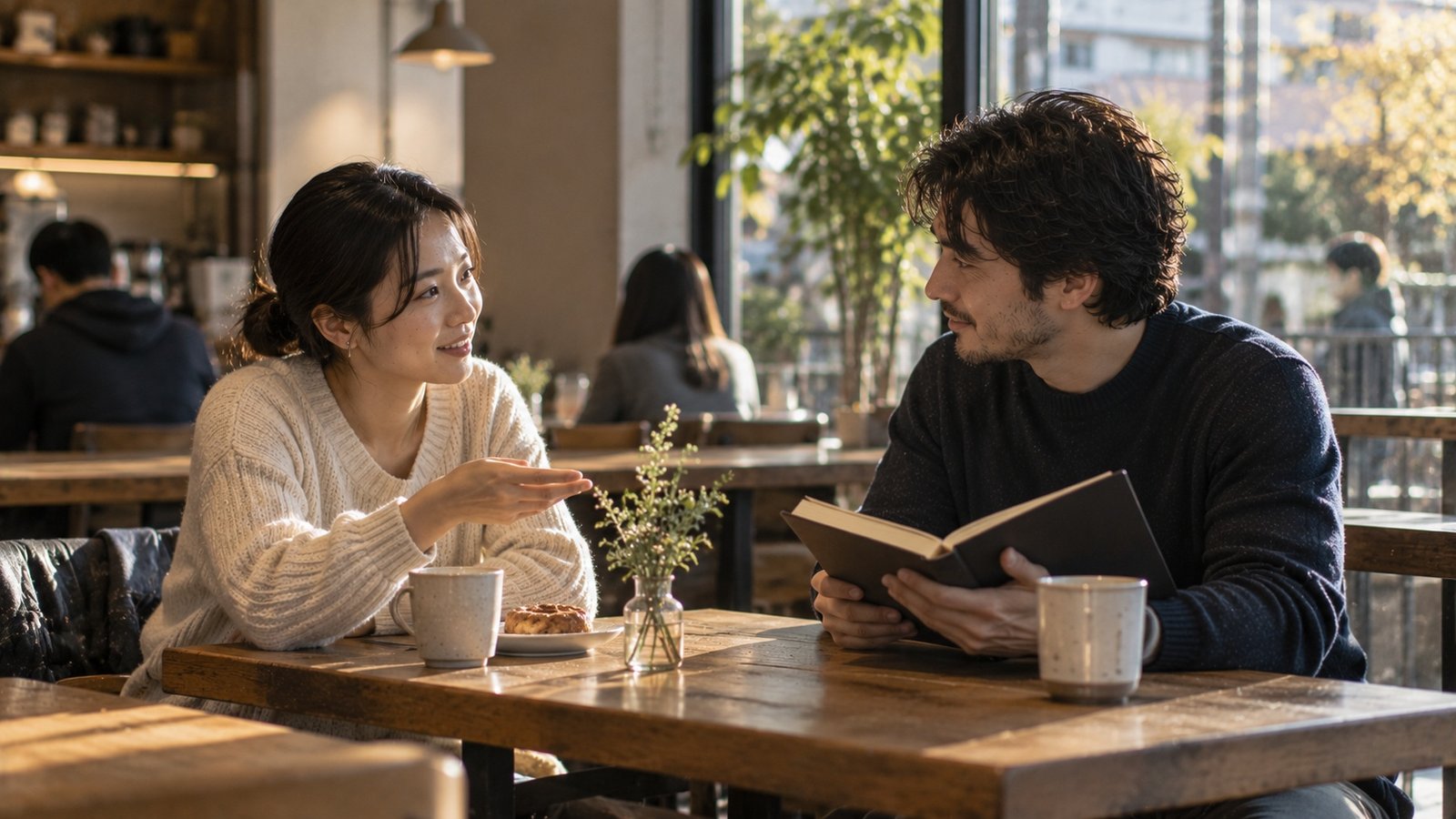
What is happening?
And where?
The sentence structure you already know still works. The action can happen at a café, at a station, at home, at school, or almost anywhere else.
The present moment
can include someone else.
Earlier you learned how to say who you do something with. That same information now fits naturally inside an action in progress.
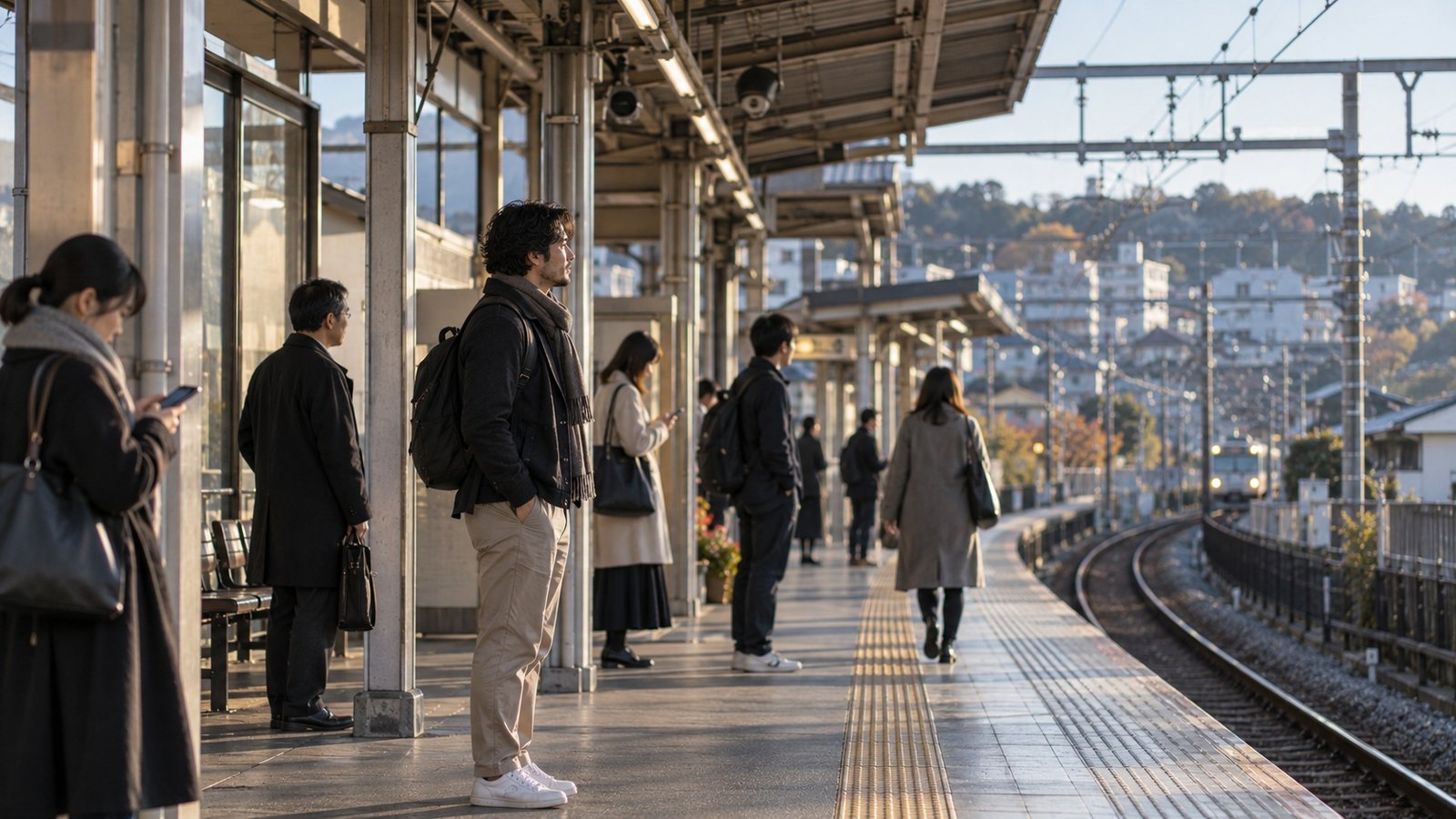
Waiting is an action too.
The present moment
can also be negative.
One action finishes.
Another is happening now.
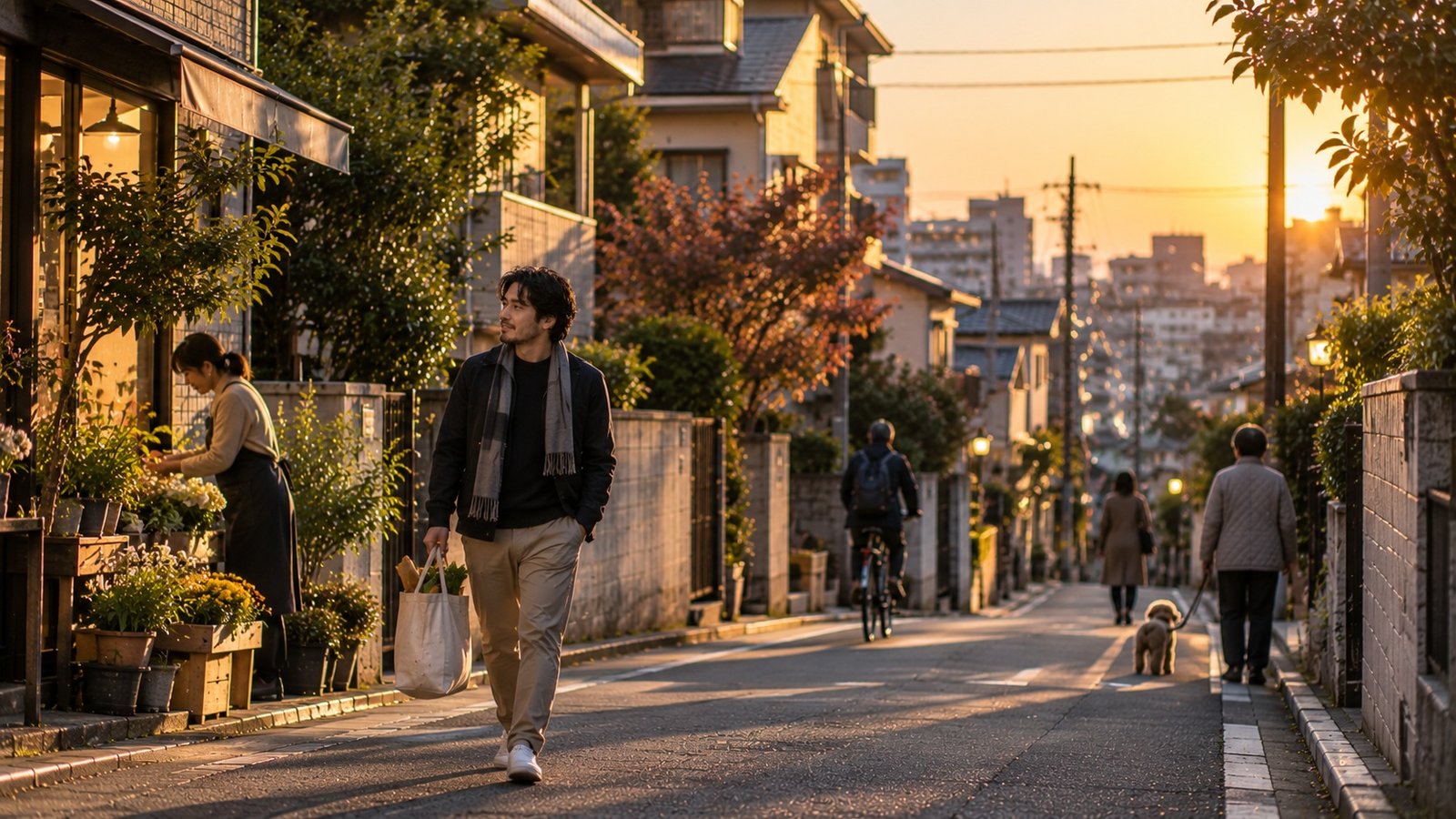
Where are you
going now?
Ask what is happening.
Listen to the answer.
These short exchanges turn the grammar into ordinary human conversation: what, where, who, and what is happening around us now.
“The present moment does not need to be extraordinary to be worth describing.”
Someone is waiting for a train. Someone is studying over coffee. Someone is talking with a friend. Japanese now gives you a way to notice those ordinary moments while they are still happening.
Your Japanese can now
enter the present moment.
You can describe what happens, where it happens, when it happens, why, how often, how long, what you want, what you have experienced, how actions connect—and now what is happening right now.
WHAT → WHERE → WHEN → WITH WHOM → HOW → HOW OFTEN → HOW LONG → FROM / TO → WHY → WANT → EXPERIENCE → CONNECTED ACTIONS → ACTION IN PROGRESS
Look around.
What is happening?
Do not invent a complicated situation. Notice one ordinary action that is genuinely happening around you.
One real observation is enough. Japanese becomes useful when it begins attaching itself to the life already happening around you.
Life Is
Happening Now.
Someone is waiting. Someone is walking home. Someone is reading over coffee. Somewhere, a conversation is beginning.
The present moment is full of Japanese.