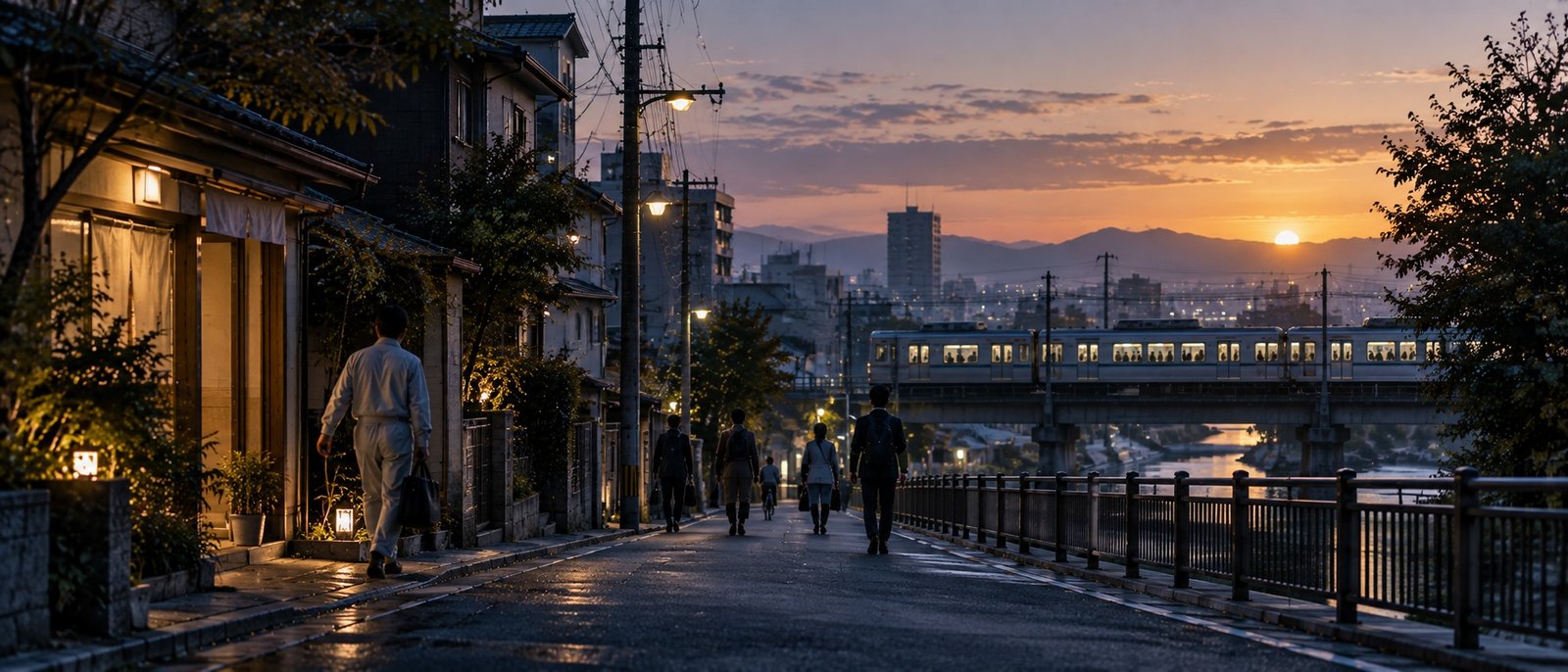
Now time
can move.
Yesterday has already happened. Tomorrow has not. Japanese gives you three small words for standing exactly between them — and suddenly the week you learned can move.
Yesterday. Today. Tomorrow.
These are ordinary words, which is precisely why they matter. They appear in conversations about work, appointments, plans and memories.

The grammar you know can now travel.
Present, past and the weekdays now begin to connect.
今日は何曜日ですか。
A meeting moves by one day.
A tiny exchange that prevents surprisingly large misunderstandings.

Plans, work and the days around you.

Somebody is expecting you at 3:30.
Tomorrow stops being vague when it contains an appointment.
昨日はどうでしたか。
Yesterday begins as time. The moment somebody asks how it was, it becomes a story.

Let the three days enter ordinary life.
Describe your real three days.
Say one true thing about yesterday, one about today and one about tomorrow. Keep it simple. Real Japanese does not need to be impressive to be useful.

Tomorrow is already waiting.
Yesterday is memory. Today is almost finished. Somewhere behind these windows, tomorrow is already being prepared.
You can now ask when, tell the time, describe a span, name the days of the week, and place ordinary life in yesterday, today and tomorrow.
The names repeat. The lives inside them never quite do.