IJ-0084 · FOUNDATION · EVERYDAY RHYTHM
From / Until · Starting & Ending Points

Every Journey Has
a Beginning and an End.

ここkokoから、 そこsokoまで。

From home to the station. From nine until five. Japanese can now give your day a beginning and an endpoint.

A SMALL STEP. A WIDER JAPAN.
Learning support
01 Two small words

A starting point.
An endpoint.

You already know how to say what you do, where you do it, when you do it, how often you do it and how long it lasts. Now we can give an activity or journey its boundaries.

から
from · starting point
まで
until / to · endpoint
七時から
shichi-ji kara
from seven
九時まで
ku-ji made
until nine
A quiet evening study period in Japan
02 Time has boundaries

From seven.
Until nine.

Shichi-ji kara ku-ji made benkyō shimasu.
I study from seven until nine.
A point in time
Shichi-ji ni okimasu.
I get up at seven.
A starting point
Shichi-ji kara benkyō shimasu.
I study from seven.
03 One boundary at a time

You don't always
need both.

から can mark only the beginning. まで can mark only the end. Put them together when you want the whole range.

Shichi-ji kara benkyō shimasu.
I study from seven.
Ku-ji made benkyō shimasu.
I study until nine.
Asa ku-ji kara gogo go-ji made hatarakimasu.
I work from nine in the morning until five in the afternoon.
04 The same idea works with place

From home
to the station.

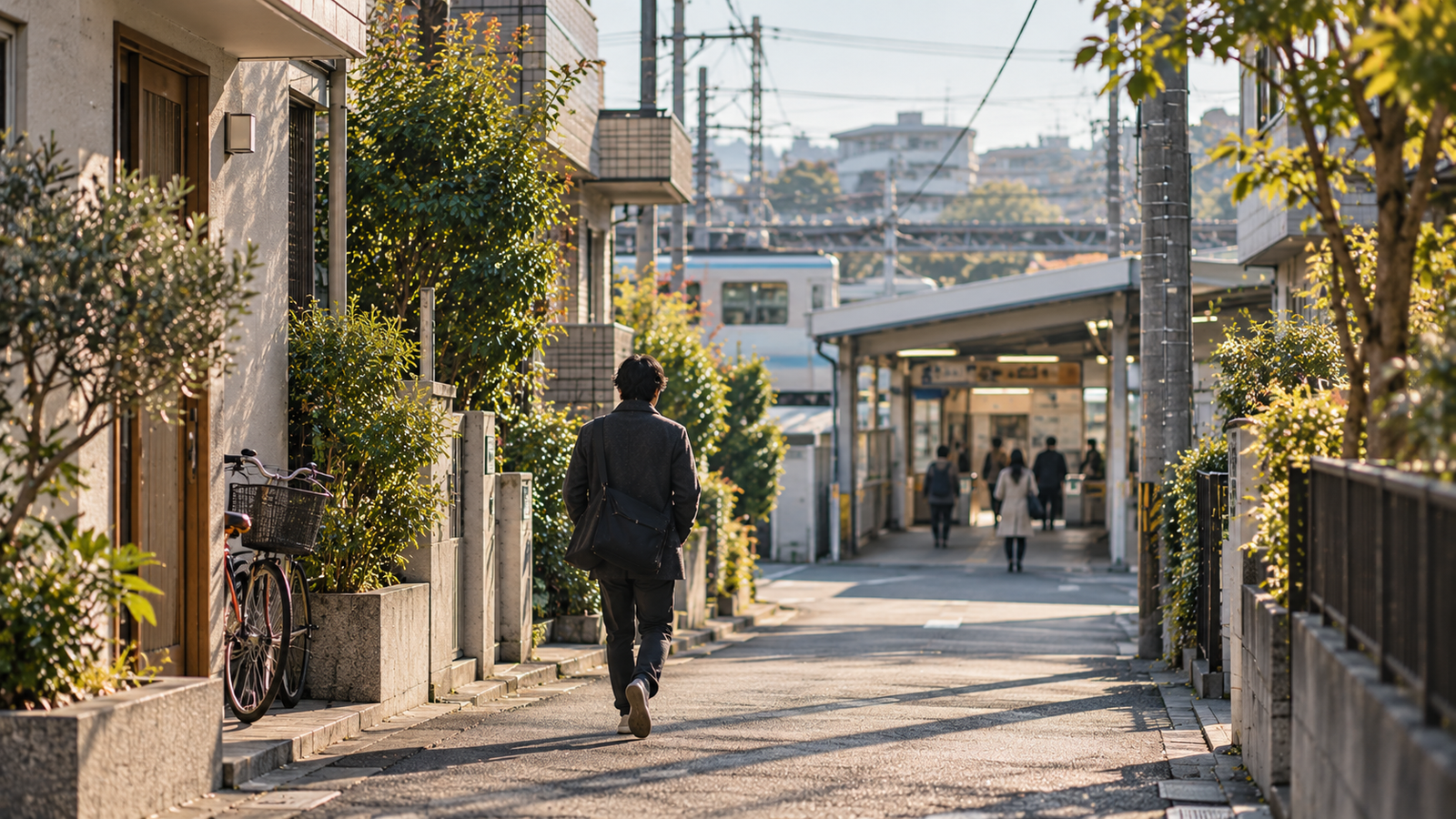
Ie kara eki made arukimasu.
I walk from home to the station.
Starting point
from home
→
Endpoint
to the station
An ordinary route from home to a station in Japan
05 Starting point + endpoint + movement

The route becomes
part of the sentence.

Tōkyō kara Yokohama made ikimasu.
I go from Tokyo to Yokohama.
Eki kara kaisha made densha de ikimasu.
I go from the station to the company by train.
Ie kara gakkō made jitensha de ikimasu.
I go from home to school by bicycle.
A small everyday conversation in a Japanese railway environment
06 Ask about the boundaries

Where does it begin?
Where does it end?

A
Nan-ji kara desu ka?
From what time?
B
Ku-ji kara desu.
From nine.
A
Nan-ji made desu ka?
Until what time?
B
Go-ji made desu.
Until five.
07 Ask for the whole range

From what time
until what time?

Once you understand each boundary separately, Japanese can ask for both in one compact question.

Nan-ji kara nan-ji made desu ka?
From what time until what time?
Ku-ji kara go-ji made desu.
From nine until five.
08 Not only clocks and stations

A range can stretch
across your week.

Getsuyōbi kara kin'yōbi made hatarakimasu.
I work from Monday through Friday.
Asa kara yoru made isogashii desu.
I am busy from morning until night.
09 Bring the earlier Japanese back

Frequency. Duration.
Starting point.

The pieces from earlier lessons are no longer separate. They can now live inside the same sentence.

Ku-ji kara ichi-jikan benkyō shimasu.
I study for one hour starting at nine.
Shichi-ji kara sanjuppun gurai arukimasu.
I walk for about thirty minutes starting at seven.
Mainichi ku-ji kara ichi-jikan gurai Nihongo o benkyō shimasu.
Every day I study Japanese for about an hour starting at nine.
10 Everyday conversation

Where from?
How far?

Doko kara kimasu ka?
Where do you come from?
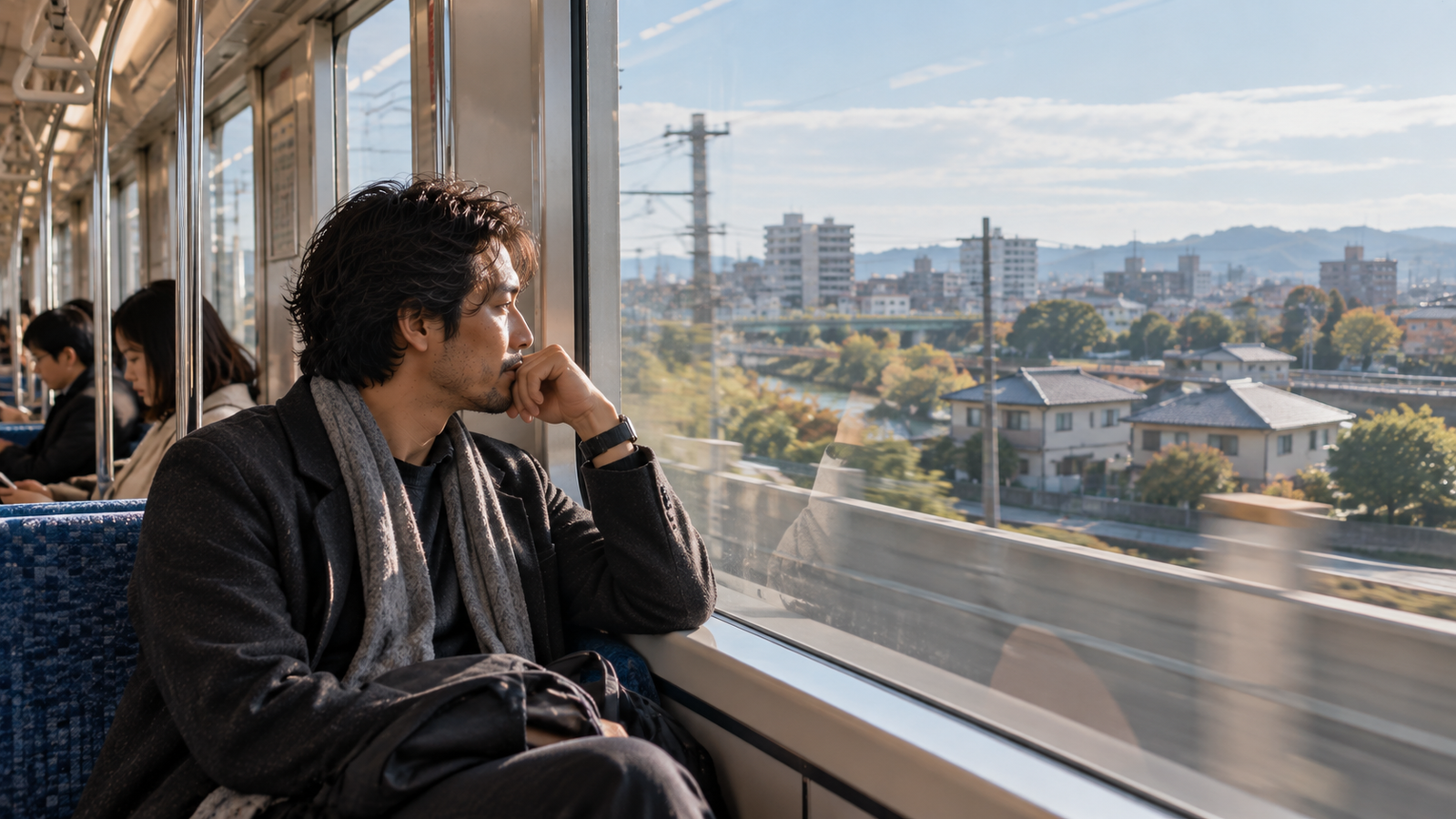
Fujisawa kara kimasu.
I come from Fujisawa.
Doko made ikimasu ka?
How far / to where are you going?
Yokohama made ikimasu.
I'm going as far as Yokohama.
An ordinary train journey between two places in Japan
11 Hear another voice

The same Japanese belongs
to different people.

A
Nan-ji kara nan-ji made desu ka?
From what time until what time?
B
Ku-ji kara go-ji made desu.
From nine until five.
A
Doko kara kimasu ka?
Where do you come from?
B
Fujisawa kara kimasu.
I come from Fujisawa.
A
Doko made ikimasu ka?
How far / to where are you going?
B
Yokohama made ikimasu.
I'm going as far as Yokohama.
A
Ie kara eki made dō yatte ikimasu ka?
How do you get from home to the station?
B
Eki made arukimasu.
I walk to the station.
12 Your Japanese is getting longer

One sentence can now hold
much more of a day.

Mainichi, ku-ji kara ichi-jikan gurai Nihongo o benkyō shimasu.
Every day, I study Japanese for about an hour starting at nine.

WHAT → WHERE → WHEN → WITH WHOM → HOW → HOW OFTEN → HOW LONG → FROM WHERE / WHEN → TO WHERE / WHEN

Nothing here replaces what you learned before. Two small particles simply give the sentence two more places to stand.

A final thought

Between here
and there.

From home to the station. From morning until evening. From one ordinary place to another. A day is full of beginnings and endings we barely notice.

から and まで simply give those quiet boundaries a voice.