
Now Japanese
can ask when.
A meeting exists. A day off is coming. An appointment has been made. Useful—but one rather important detail remains: when?
When is it?
いつ means “when.” Put the topic first, then ask いつですか. Compact enough to learn today; useful enough to keep for years.

The meeting is tomorrow.
The question asks for time. The answer can be wonderfully short.
Today. Tomorrow. Sunday. Monday.
When is the day off?
A calendar is really a collection of human hopes disguised as boxes. Some contain meetings. Occasionally one contains Sunday.

Ask across the conversation.
The meeting · Female → Male
The appointment · Male → Female

Useful Japanese rarely announces itself dramatically.
At a clinic, salon or reservation desk, one small question may prevent an impressively inconvenient mistake.
The frame stays still.
Change the topic and the same question keeps working. Beginner Japanese is occasionally kind enough not to redesign the furniture.
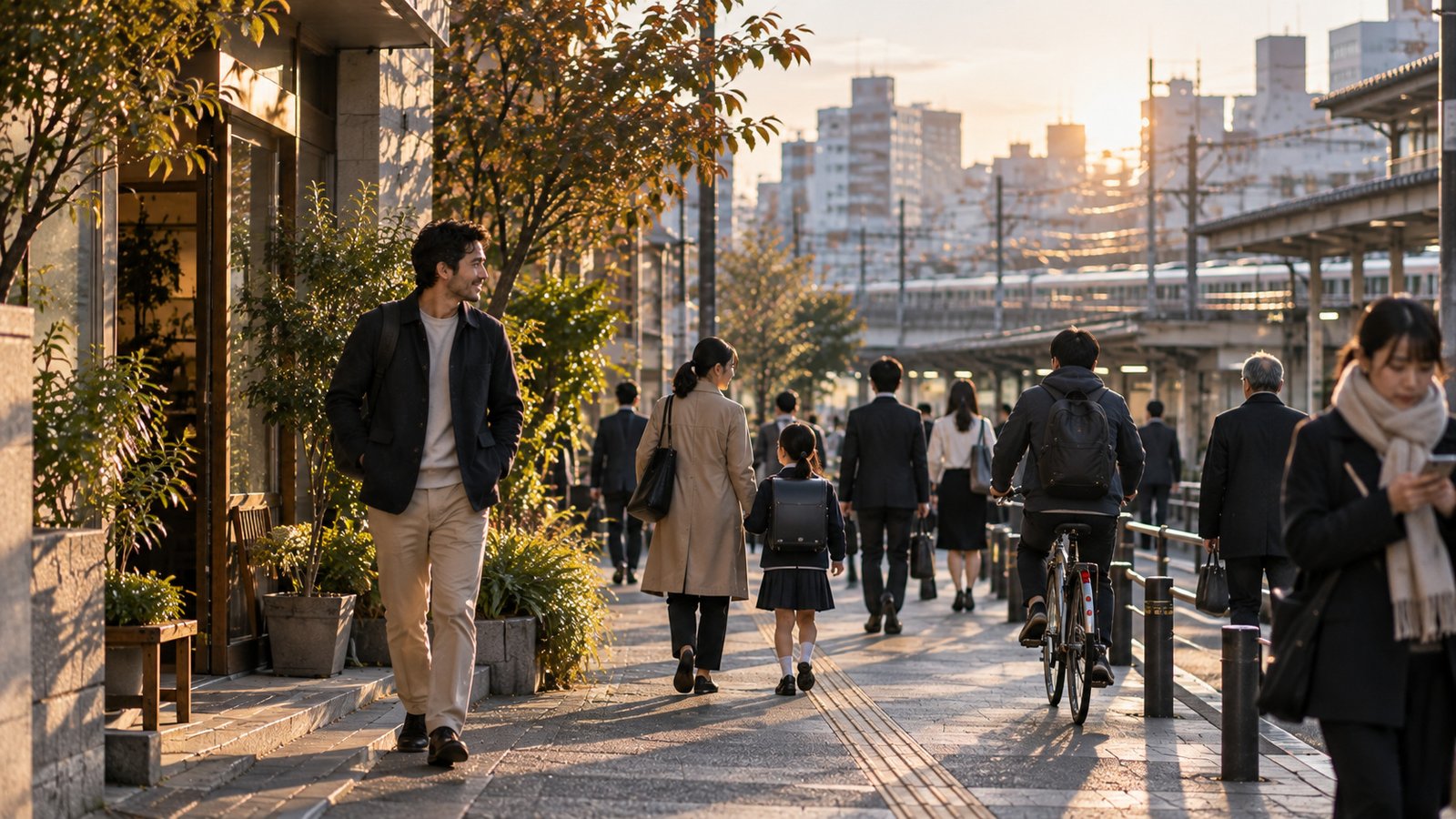
Everybody is going somewhere.
The commuter, student, parent and shop worker share a street while living on different schedules. いつ gives you a small doorway into that invisible architecture.
Ask when something happens.
Choose something real—work, school, a meeting, appointment or day off. Ask いつですか. Then listen for the time word instead of trying to translate the entire universe at once.

Time is invisible. Life arranges itself around it anyway.
A bicycle waits. A work bag is ready. Windows glow while tomorrow quietly approaches. You cannot see time—but now your Japanese can ask where in it something belongs.