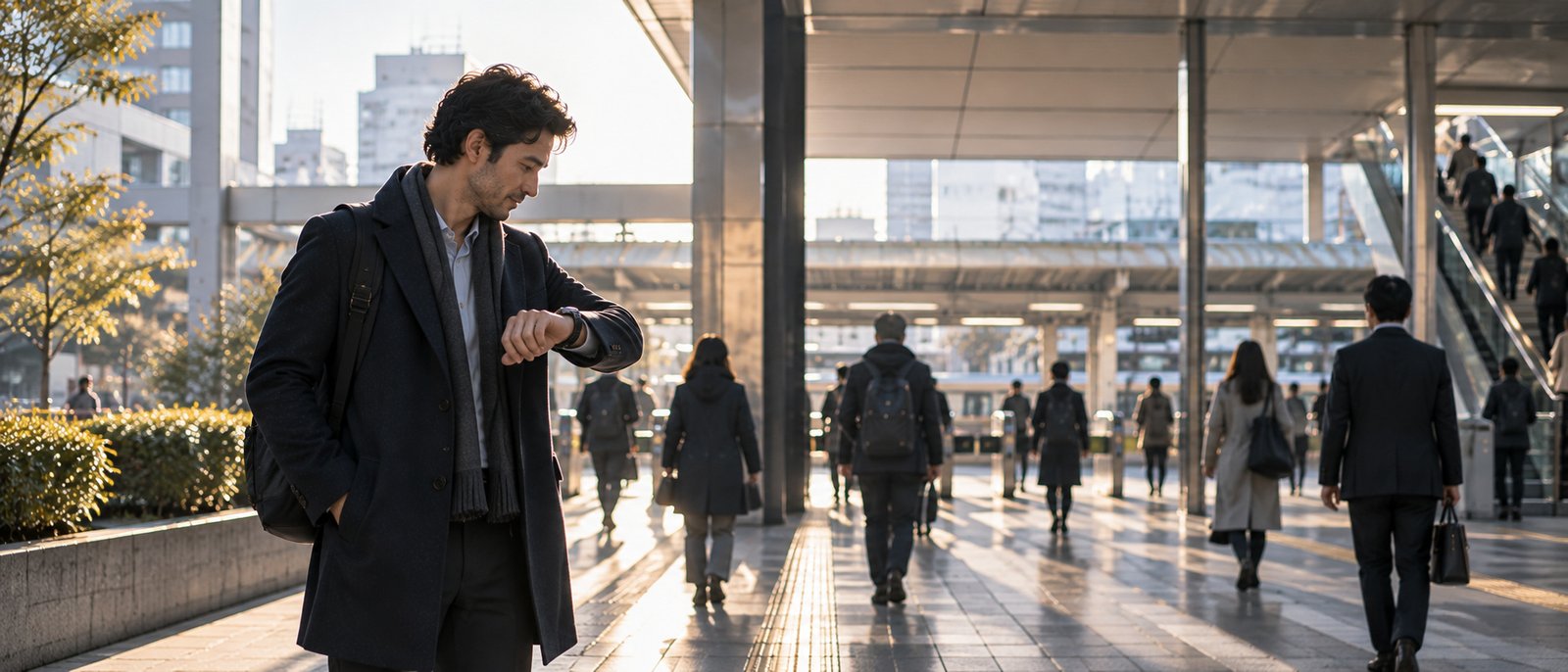
Now Japanese can
find the exact time.
Knowing the hour gets you close. Minutes are what get you onto the right train, into the meeting, or through the clinic door before somebody starts looking at the clock.
What hour and what minute?
In the last lesson, 何時ですか asked for the hour. Add 何分 and Japanese becomes precise. 何分 is read なんぷん — nanpun.
Japanese simply places the hour first and the minutes after it: 8時15分 — 8:15.
Meet ふん and ぷん.
The kanji 分 does not keep one pronunciation. Sometimes it is fun; sometimes pun; a few numbers also tighten the sound. This looks fussy on paper. Your ears will learn the pattern faster than your anxiety will.
Hear the pattern.
Now the clock becomes useful.
Notice that the hour readings from IJ-0055 remain intact: 7時 = しちじ and 9時 = くじ. Minutes are simply attached after them.
Five minutes can suddenly matter.
At a station, exact time stops being grammar and starts becoming logistics.
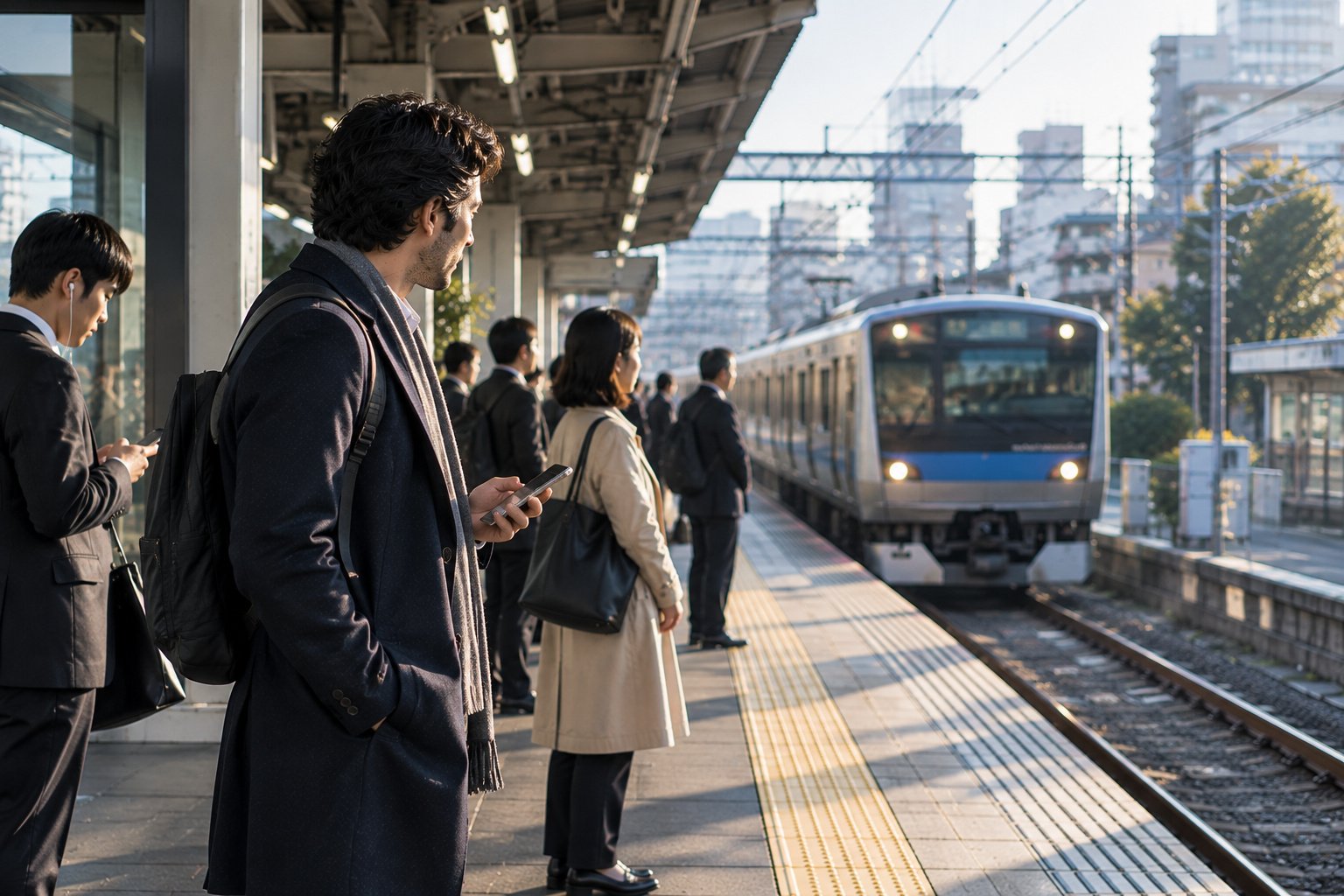

An hour is approximate. An appointment is not.
A useful workplace exchange, with two actual voices rather than one synthetic person holding a meeting with themselves.
The pattern travels with you.
Female → Male
Listen again with another voice
Precision without staring at clocks.
Commuters arrive, deliveries appear, shutters rise, school routes fill and meeting rooms acquire people. Minutes are mostly invisible. Their consequences are not.
Catch three exact times today.
Look at three ordinary times around you—a train, appointment, meeting, opening time or your own plan. Say each one aloud in Japanese. For one of them, ask the complete question first.
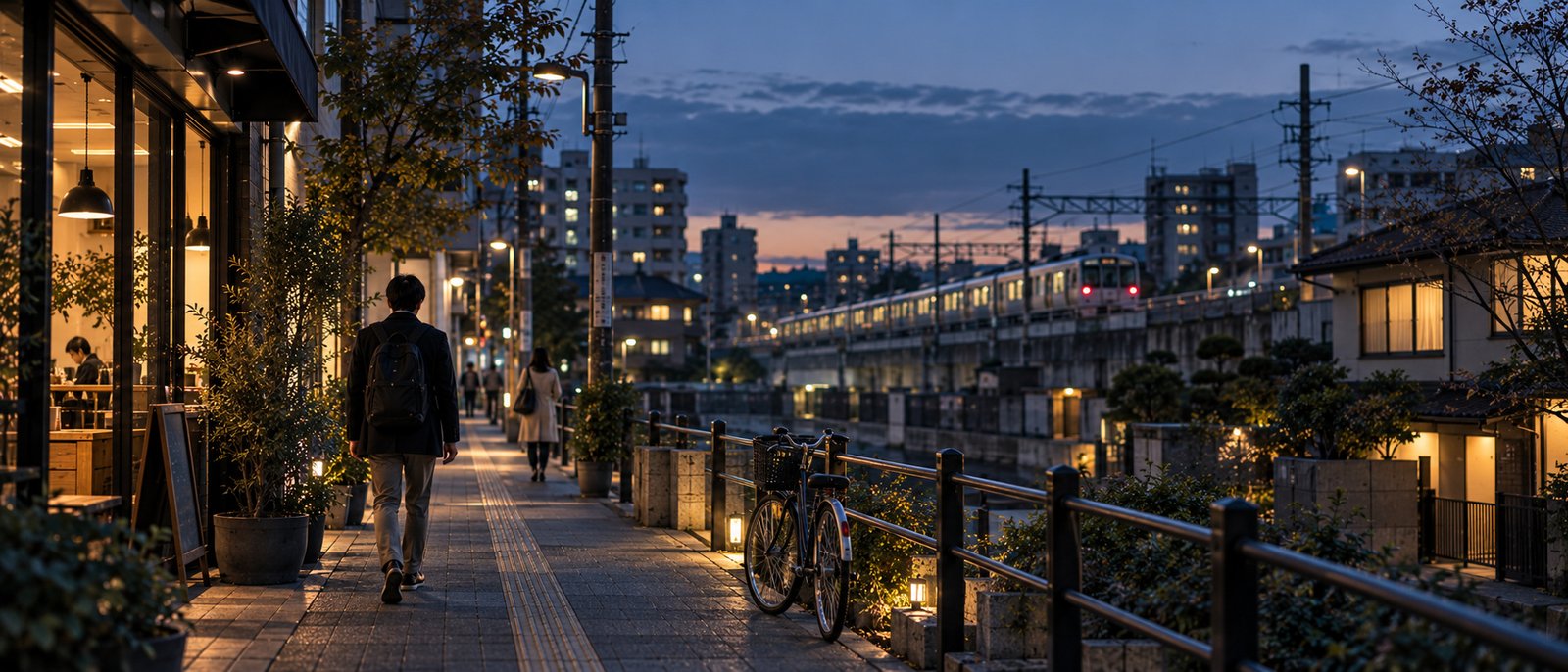
Five minutes can mean catching the train—or watching it disappear.
And sometimes five minutes simply means standing still long enough to notice the evening. You can now ask for an exact time and understand an answer. Next, Japanese gives you one particularly human shortcut: 半 — half past.