Made by Hand.
Heard with Care.
Some Japanese sounds are everywhere. Others make fewer appearances. That is not a problem to fix—it is how a living language behaves. Today three quieter sounds lead us into workshops, clay, indigo, timber and the patient hands behind beautiful things.
One full び. One very small companion.
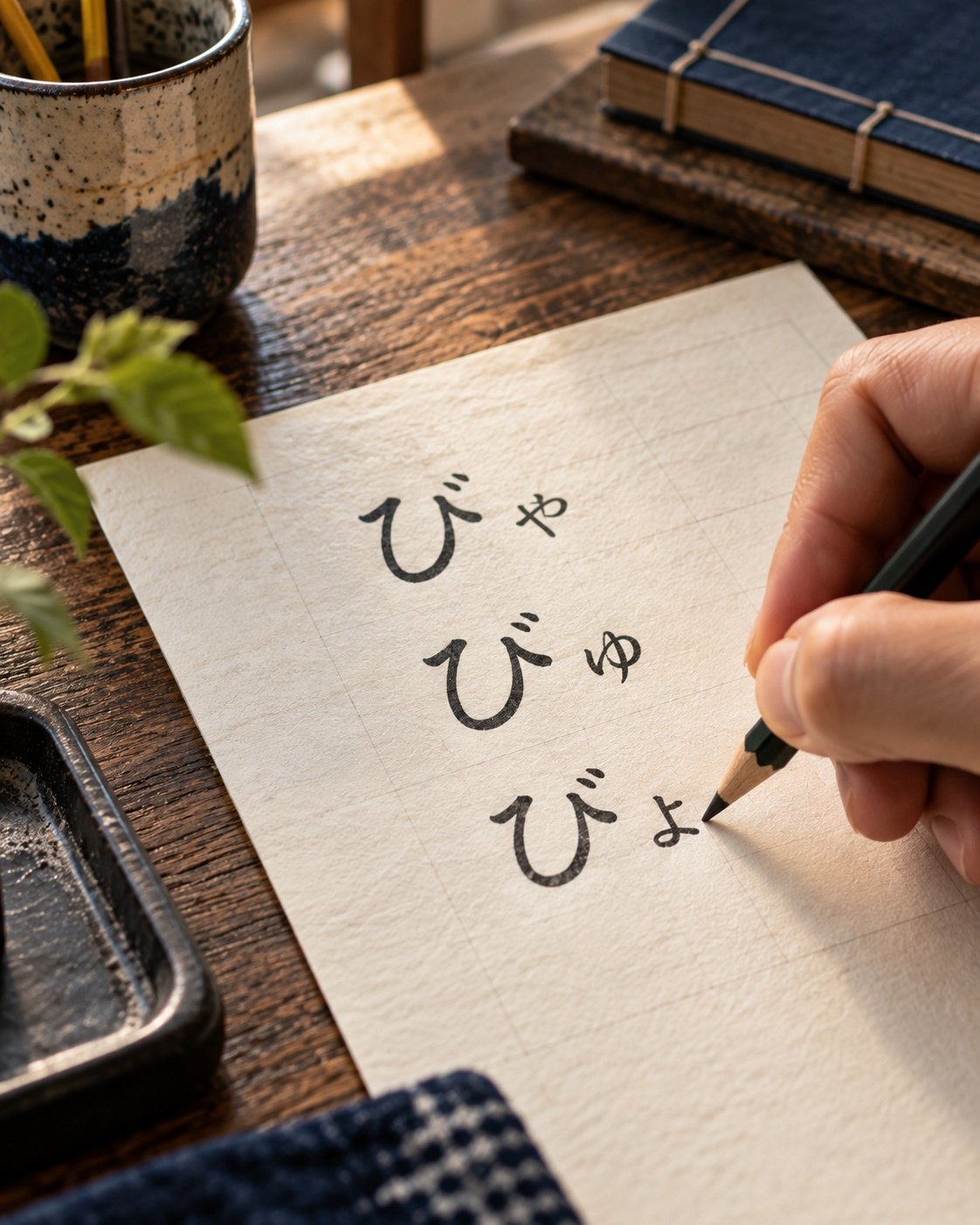
You already know the yōon idea. Start with び, then place a small ゃ・ゅ・ょ beside it. Do not pronounce two separate kana. Let them become one compact sound.
び + small ゃ → びゃ
び + small ゅ → びゅ
び + small ょ → びょ
These three sounds are not equally common. びょ appears in several useful everyday words. びゃ and especially びゅ are much less common in ordinary beginner vocabulary. We will not pretend Japanese has arranged itself neatly for our worksheet.
The sound you will actually meet.
Three important words put びょ immediately to work. You do not need to memorise every kanji yet. See the written form, read the hiragana, understand the meaning, and listen.
hospital
illness / being sick
hospital room
three hundred
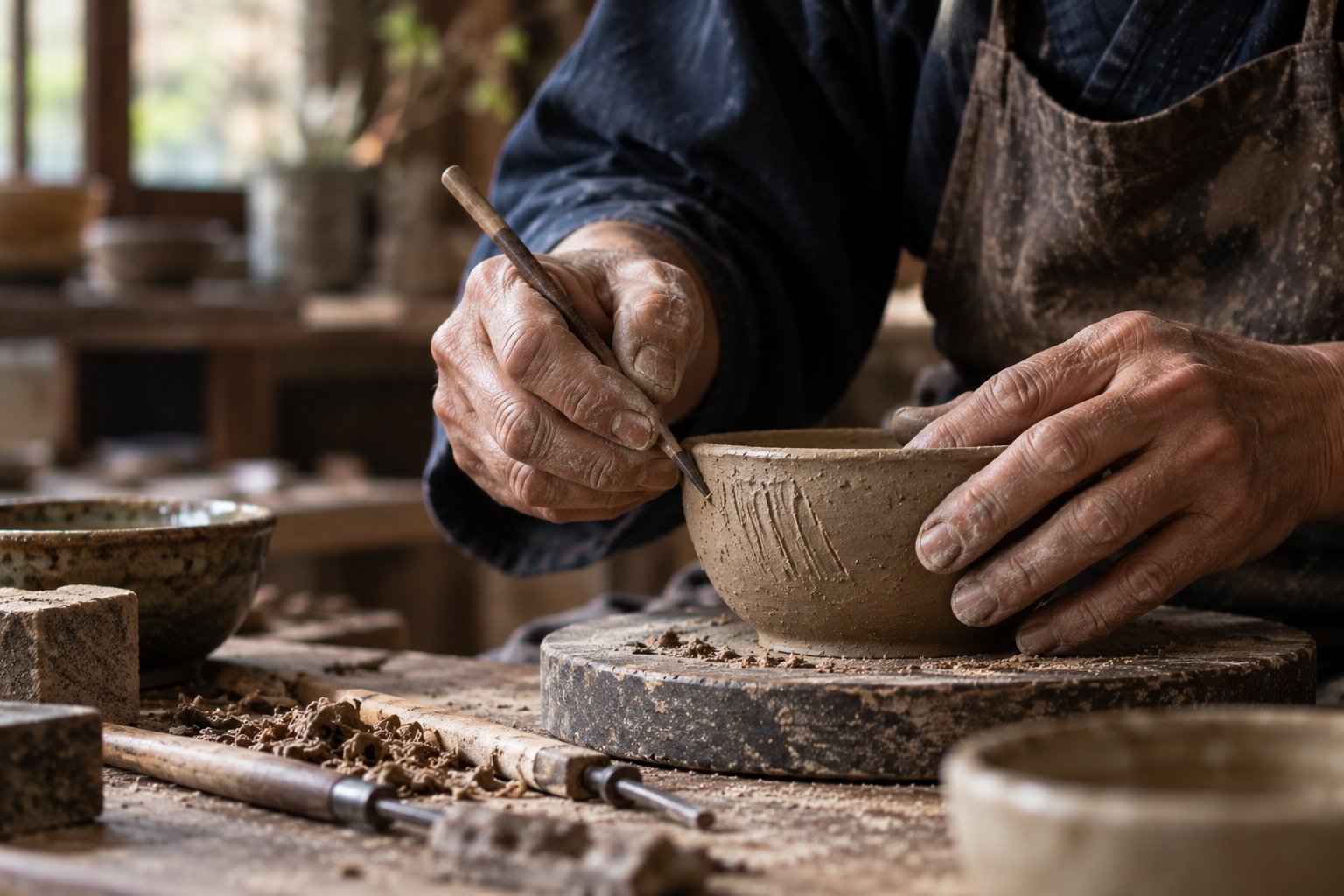
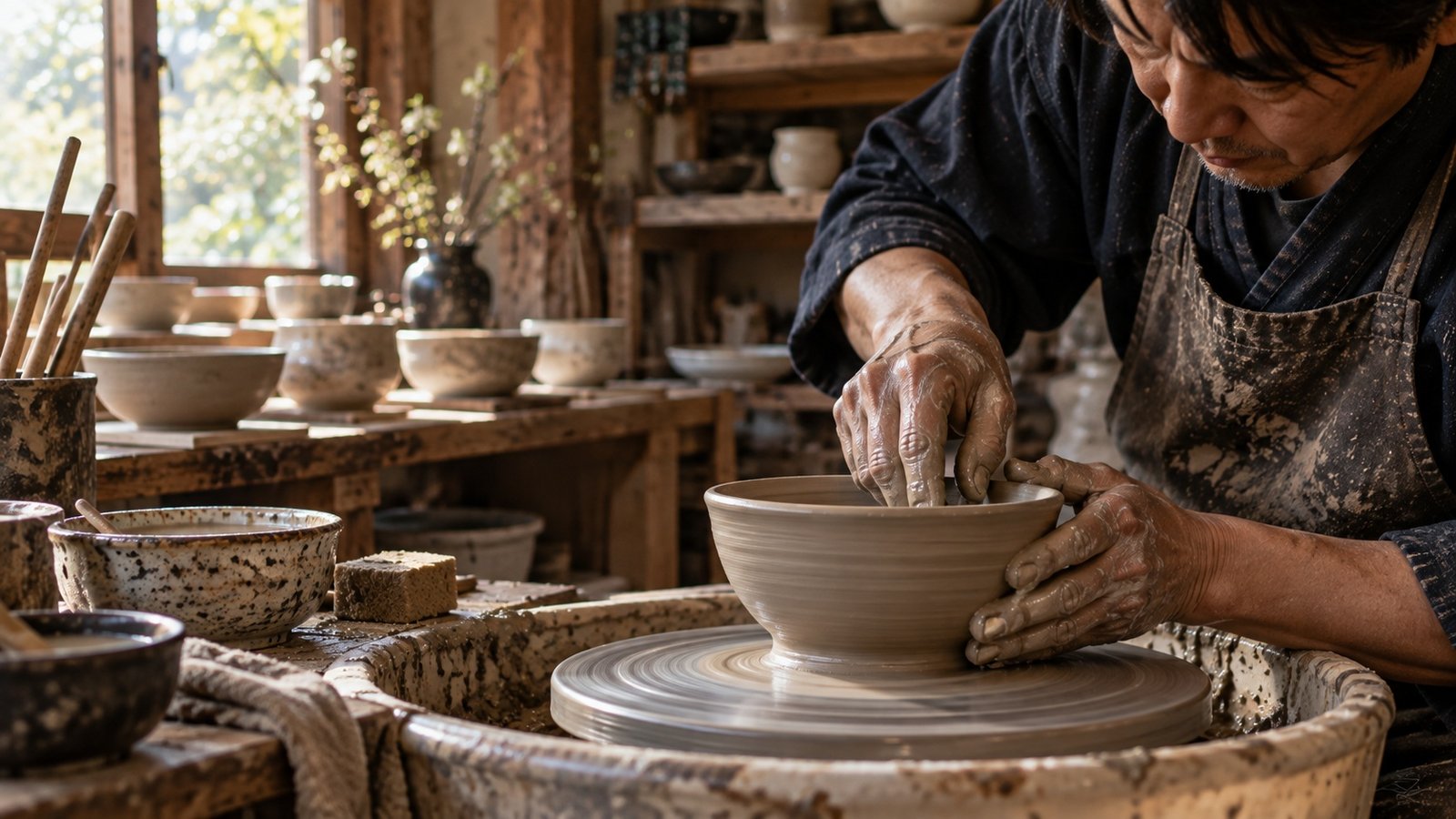
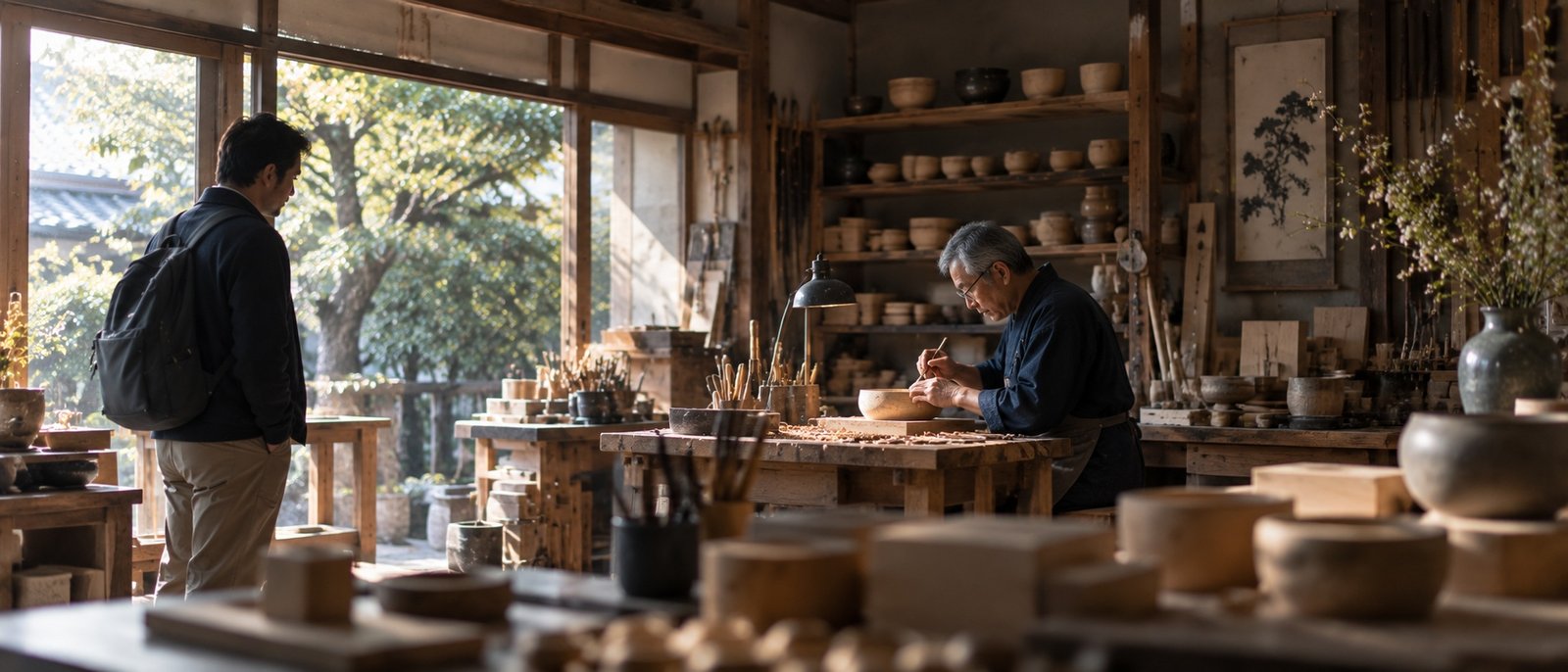
Before something becomes beautiful, somebody has to be patient with it.
手仕事 — てしごと literally points toward work done by hand. In a pottery studio, the evidence is everywhere: fingerprints, wet clay, tools that have been held thousands of times, pieces waiting to dry.
Perfectly identical bowls are impressive. Slightly different bowls are occasionally more interesting dinner companions.
The factory may prefer identical. Human hands leave evidence that someone was here.
職人 — not decoration, but accumulated skill.
職人 — しょくにん means an artisan or skilled craftsperson. The romantic photograph lasts a second; the skill behind it may have taken decades.
ものづくり is a broad expression around making and manufacturing. In Japan it can carry ideas of craft, process, ingenuity and care—but it is not a magic word meaning “everything Japanese is perfect.” Good making still requires work.
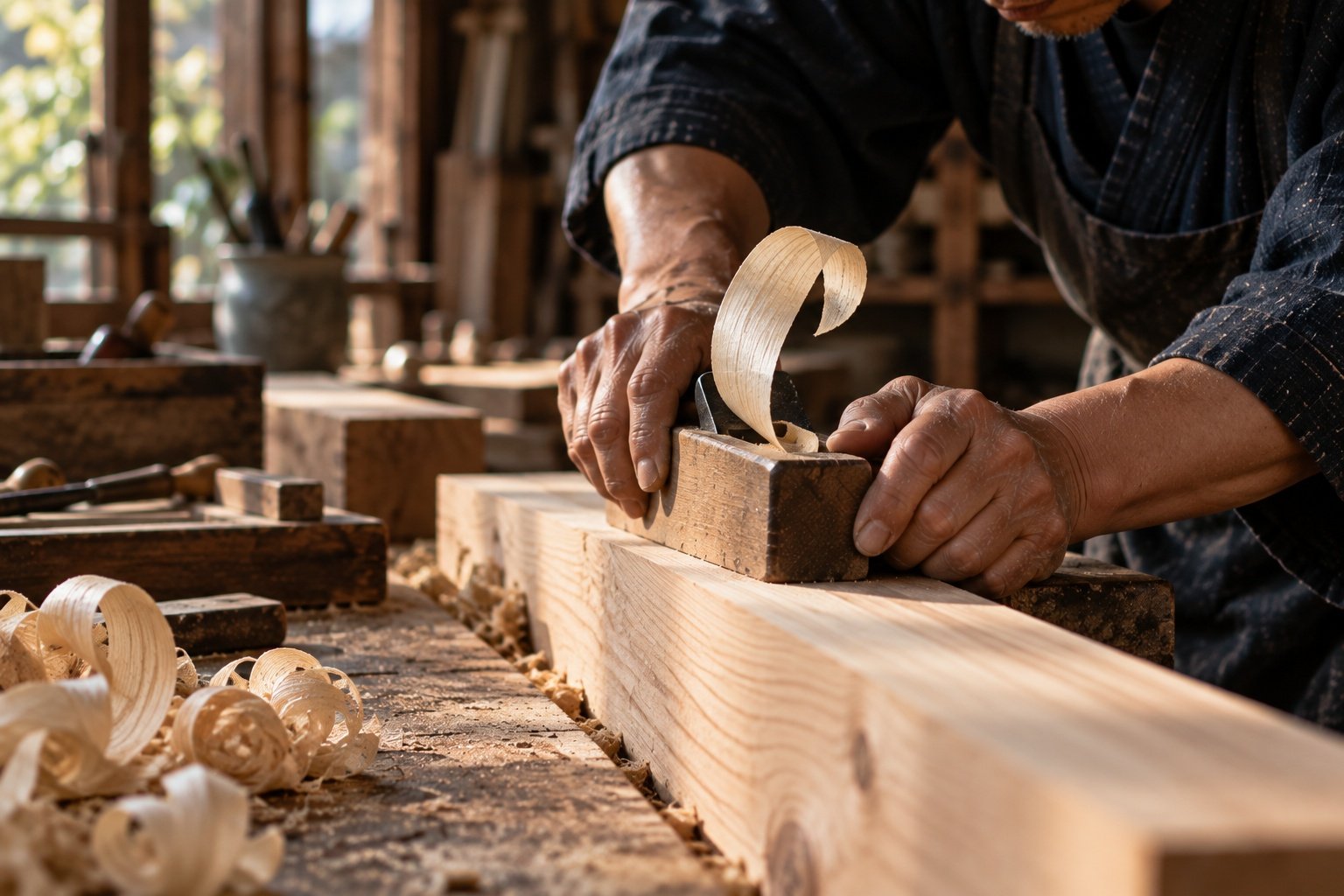
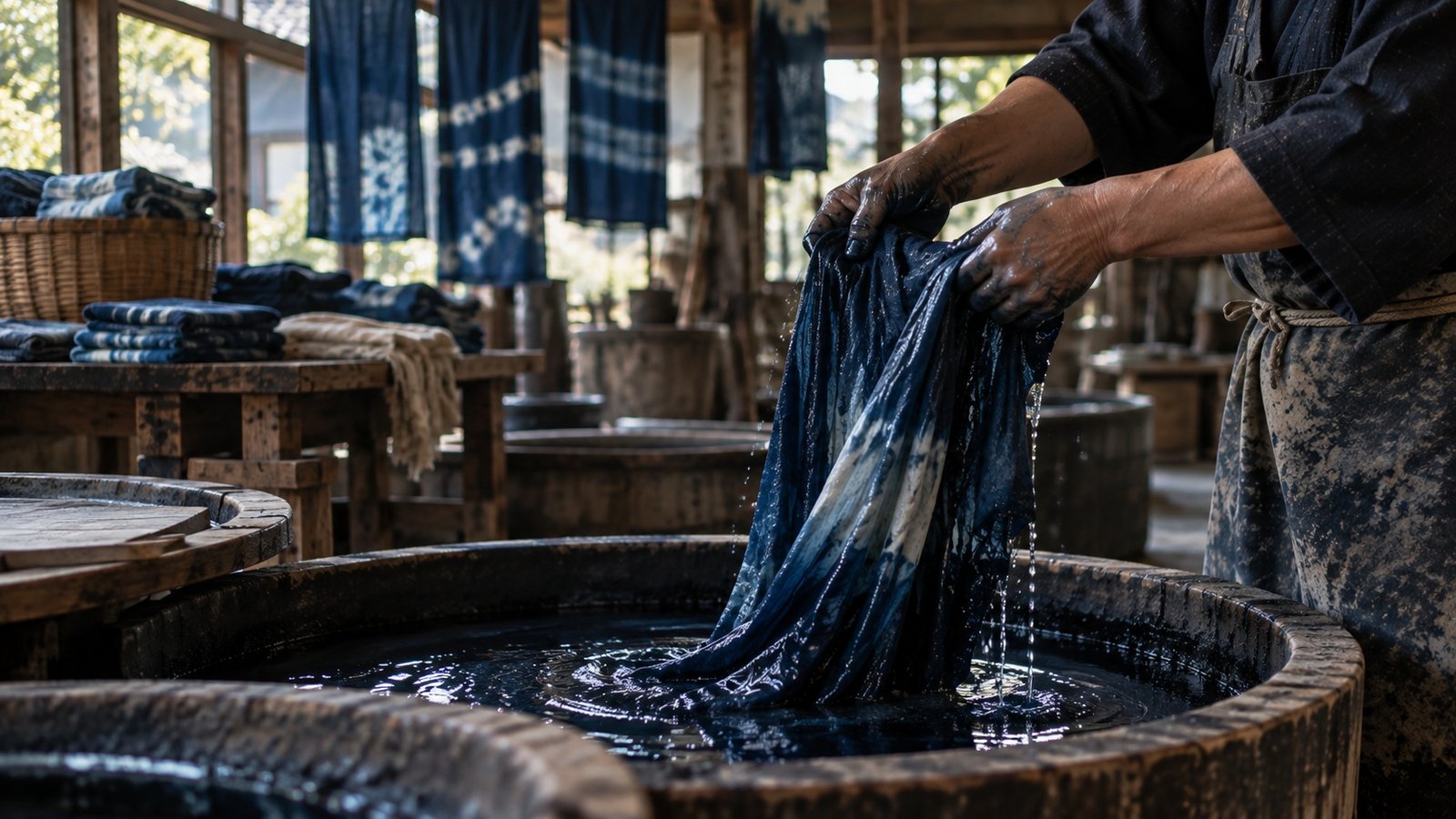
Some colours are built slowly.
藍染 — あいぞめ, indigo dyeing, gives us another way to look at craft: material, repetition and time. Fabric goes into the process ordinary and comes out carrying layers of deep colour.
We are not asking you to learn 藍染 as target vocabulary today. This is your Japan window. Japanese lessons should occasionally let you look up from the flashcards.
A beautiful object is often the visible end of many invisible repetitions.
Make the second kana genuinely small.
The little ゃ・ゅ・ょ is not decorative. Its size tells you how to read the combination. We are using the same bold stroke-order system as the previous combination lessons.
You do not need perfect Japanese to admire somebody's work.
A learner notices a handmade object. Four very manageable lines are enough to turn admiration into a conversation.
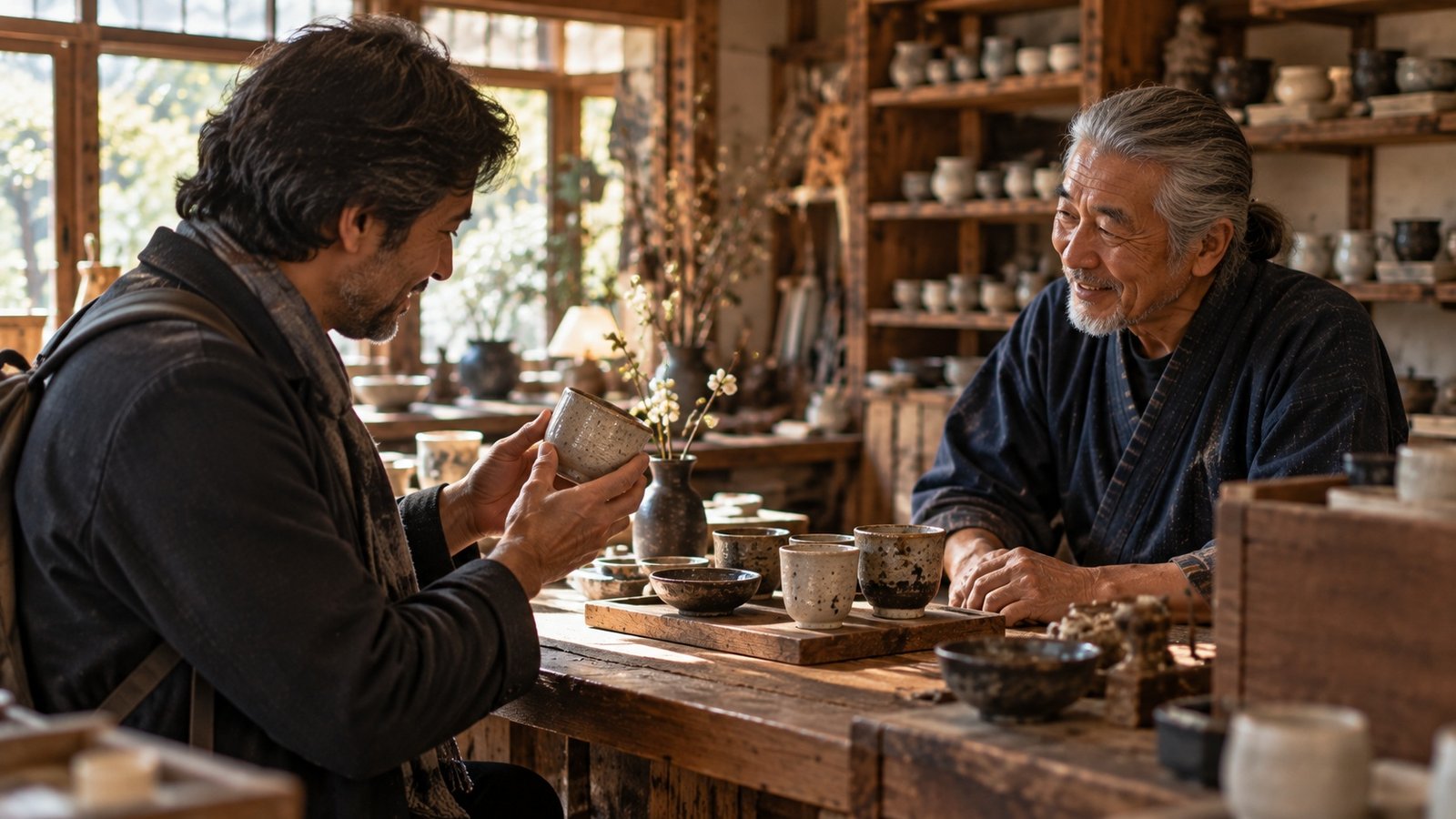
What the maker says matters too.
We make them one by one.
Please use it with care.
An object can cross a counter in two seconds. The work inside it may have taken years to learn.
Soft. Shiny. Heart pounding. Japanese gets wonderfully specific.
Japanese uses many mimetic expressions to capture texture, movement, appearance and feeling. They are not childish extras; they are a lively part of everyday Japanese.
soft / fluffy / light
shiny / sparkling / gleaming
heart pounding / nervous excitement
That's amazing / impressive.
English occasionally looks at the world and says, “soft.” Japanese sometimes seems to reply: yes, but what kind of soft?
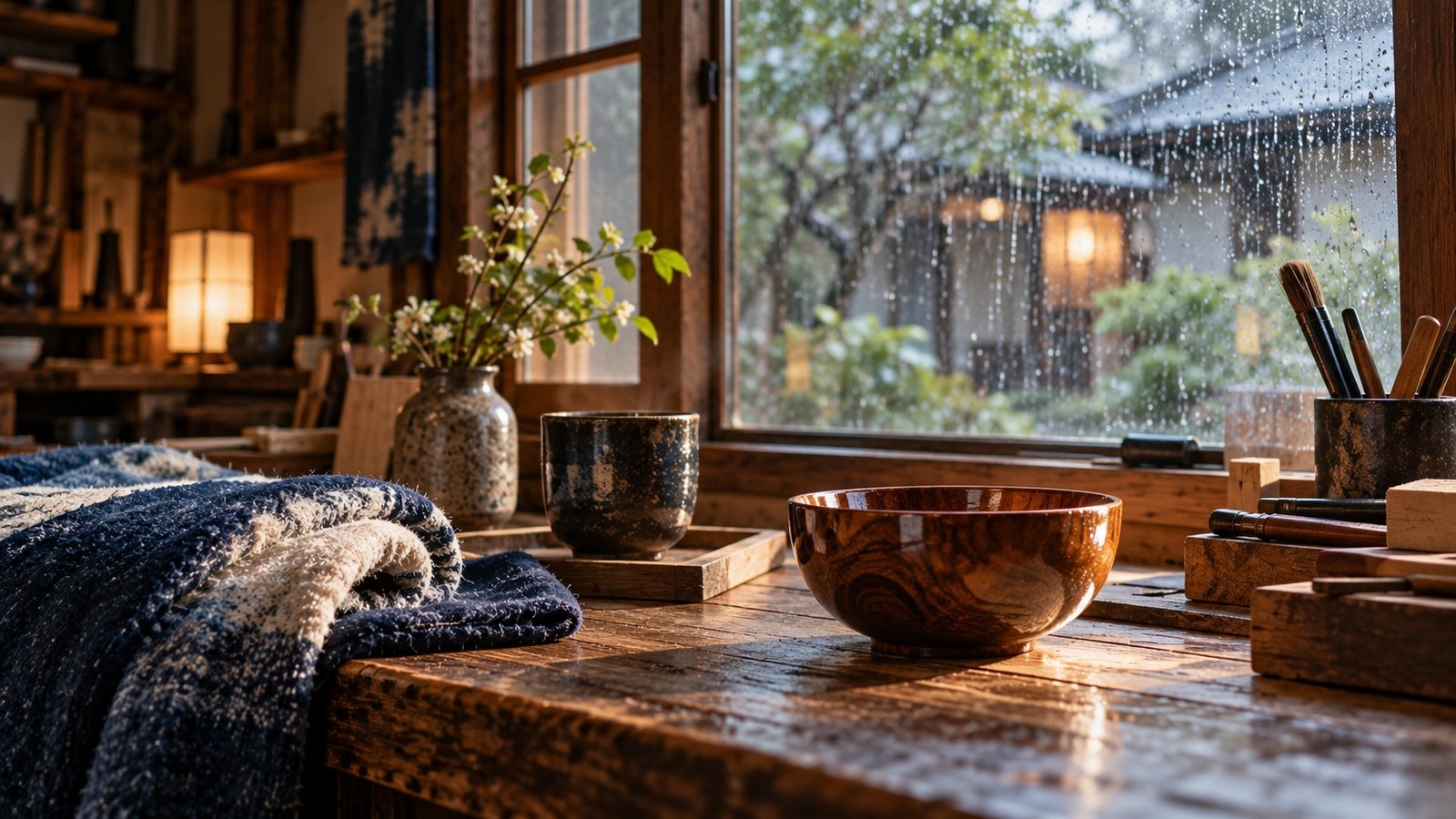
Rare sounds are still real sounds.
A serious learner should know something textbooks sometimes hide: language is uneven. びょ gives you useful words such as びょういん. びゃ appears in forms such as さんびゃく. びゅ is much rarer in common native beginner vocabulary.
That is useful knowledge. You are learning Japanese as people actually use it—not trying to make every kana combination win equal screen time.
Look for the person behind the object.
At a craft shop or market
Instead of only checking the price, notice material, tool marks, weight and small differences. If you genuinely like something, try きれいですね or すごいですね.
When something is handmade
Try これは てづくりですか。 You may receive more Japanese than you can understand. That is not failure. That is what happens when a sentence opens a door.
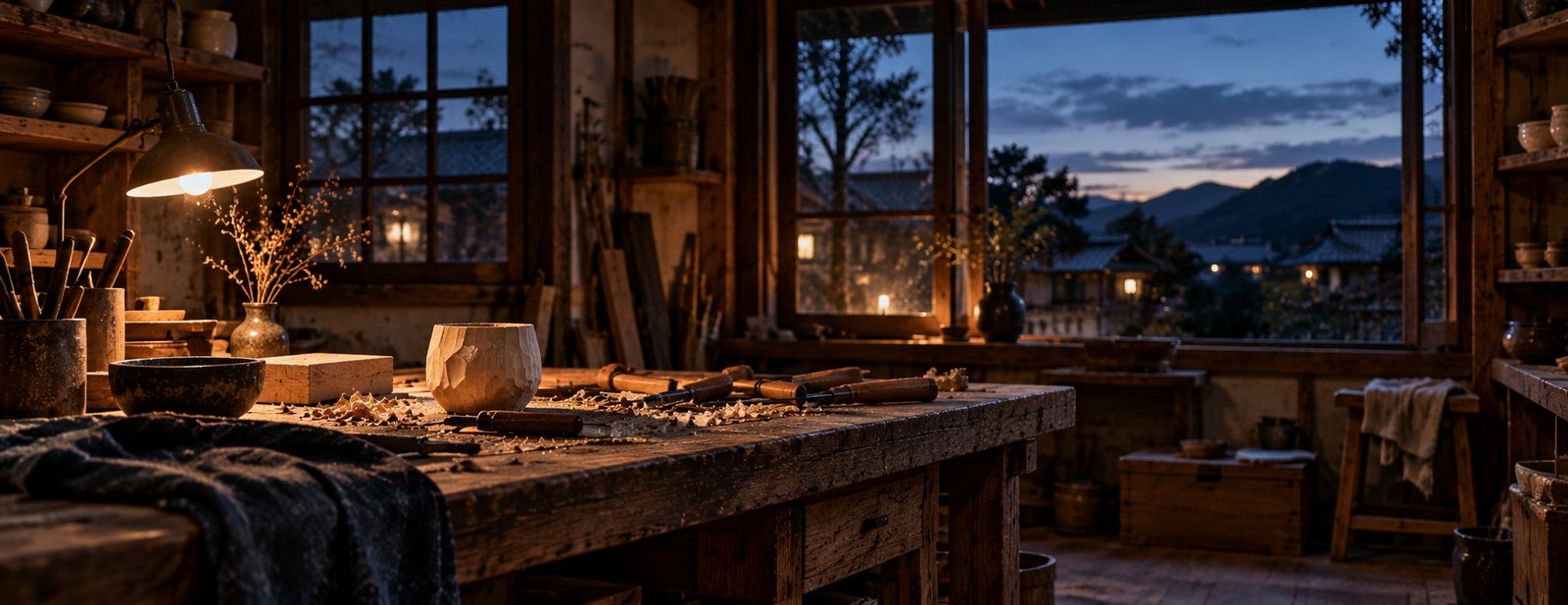
The hands stop.
What they made remains.
Someone chose the material. Someone learned the movement. Someone made mistakes long before you arrived, corrected them, and tried again. Somewhere between clay, indigo, timber and a workbench, three uncommon sounds brought you into a very human part of Japan.
Your Japanese may still be small. But きれいですね can already cross the space between two people.