IJ-0089 · FOUNDATION · ACTIONS IN PROGRESS
What Are You Doing? · 〜ています

Some Things Are
Happening Right Now.

〜ています

Some things happened yesterday. Some will happen tomorrow. And some are unfolding in the moment we are standing inside.

LANGUAGE ENTERS THE PRESENT MOMENT
Learning support
01 Meet the present moment

Something is
happening now.

You already know how to connect an action with the て-form. Now that same form opens another door: describing an action that is currently in progress.

~te imasu
is doing / am doing / are doing
~te imasen
is not doing / am not doing
Nani o shite imasu ka?
What are you doing?
ima
now
02 Four actions in progress

Eat. Drink. Read. Watch.
Now let them happen.
食べています
is eating
飲んでいます
is drinking
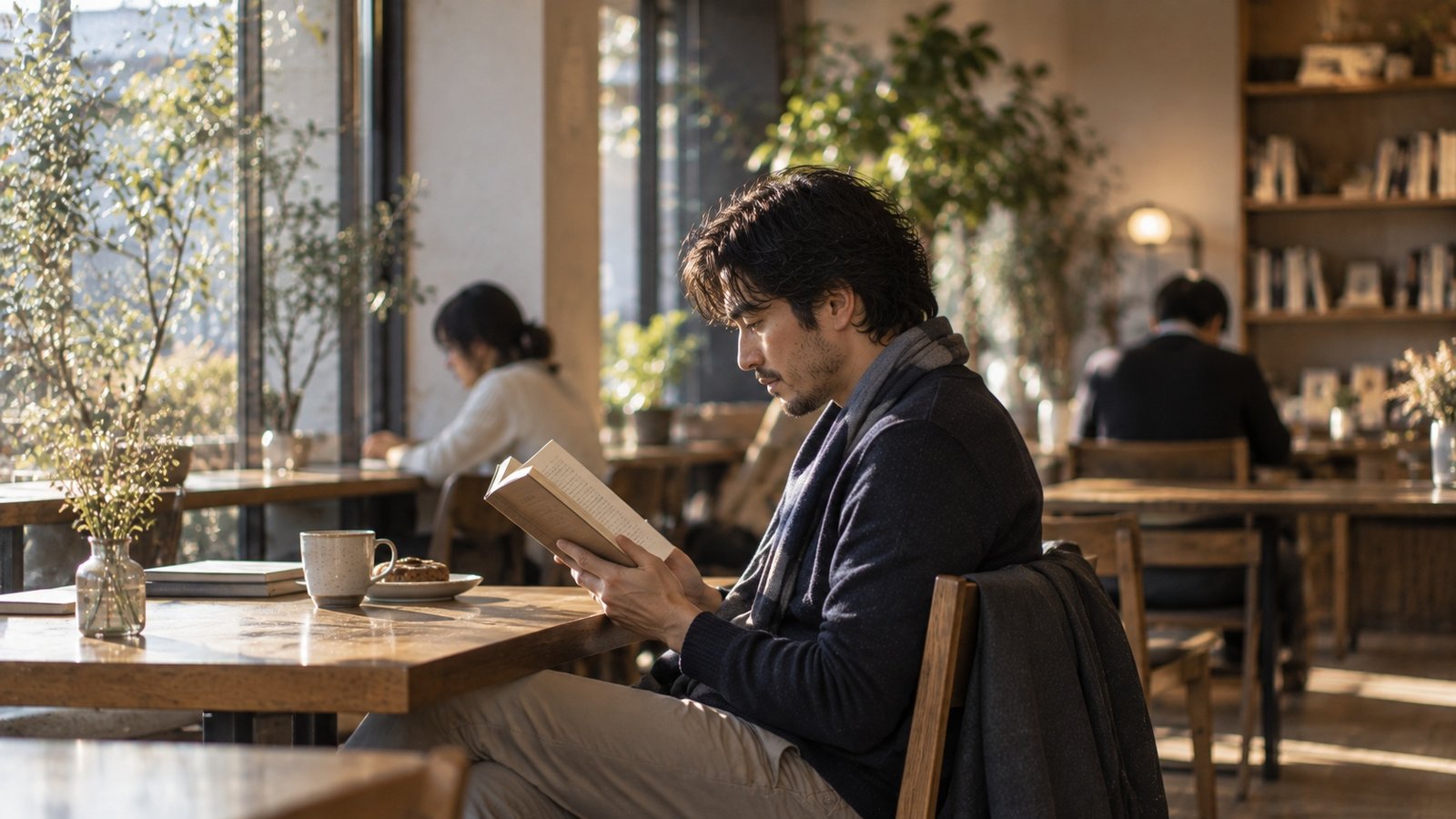
読んでいます
is reading
見ています
is watching / looking
A person reading quietly in an ordinary Japanese setting
03 From an action to right now

“I read.”
becomes
“I am reading.”

Hon o yomimasu.
I read a book.
Hon o yonde imasu.
I am reading a book.
04 Watch the meaning shift

The action is no longer
only an idea or routine.

Action
Kōhī o nomimasu.
I drink coffee.
→
Happening now
Kōhī o nonde imasu.
I am drinking coffee.
今 IMA · NOW
Ima hon o yonde imasu.
I am reading a book now.
Ima kōhī o nonde imasu.
I am drinking coffee now.
06 Ordinary life, happening now

The present moment
is full of verbs.

Ima terebi o mite imasu.
I am watching television now.
Ima bangohan o tabete imasu.
I am eating dinner now.
Ima nani o shite imasu ka?
What are you doing now?
Nihongo o benkyō shite imasu.
I am studying Japanese.
Two people sharing an ordinary present-moment conversation
07 Add where

What is happening?
And where?

The sentence structure you already know still works. The action can happen at a café, at a station, at home, at school, or almost anywhere else.

Doko de benkyō shite imasu ka?
Where are you studying?
Kafe de benkyō shite imasu.
I am studying at a café.
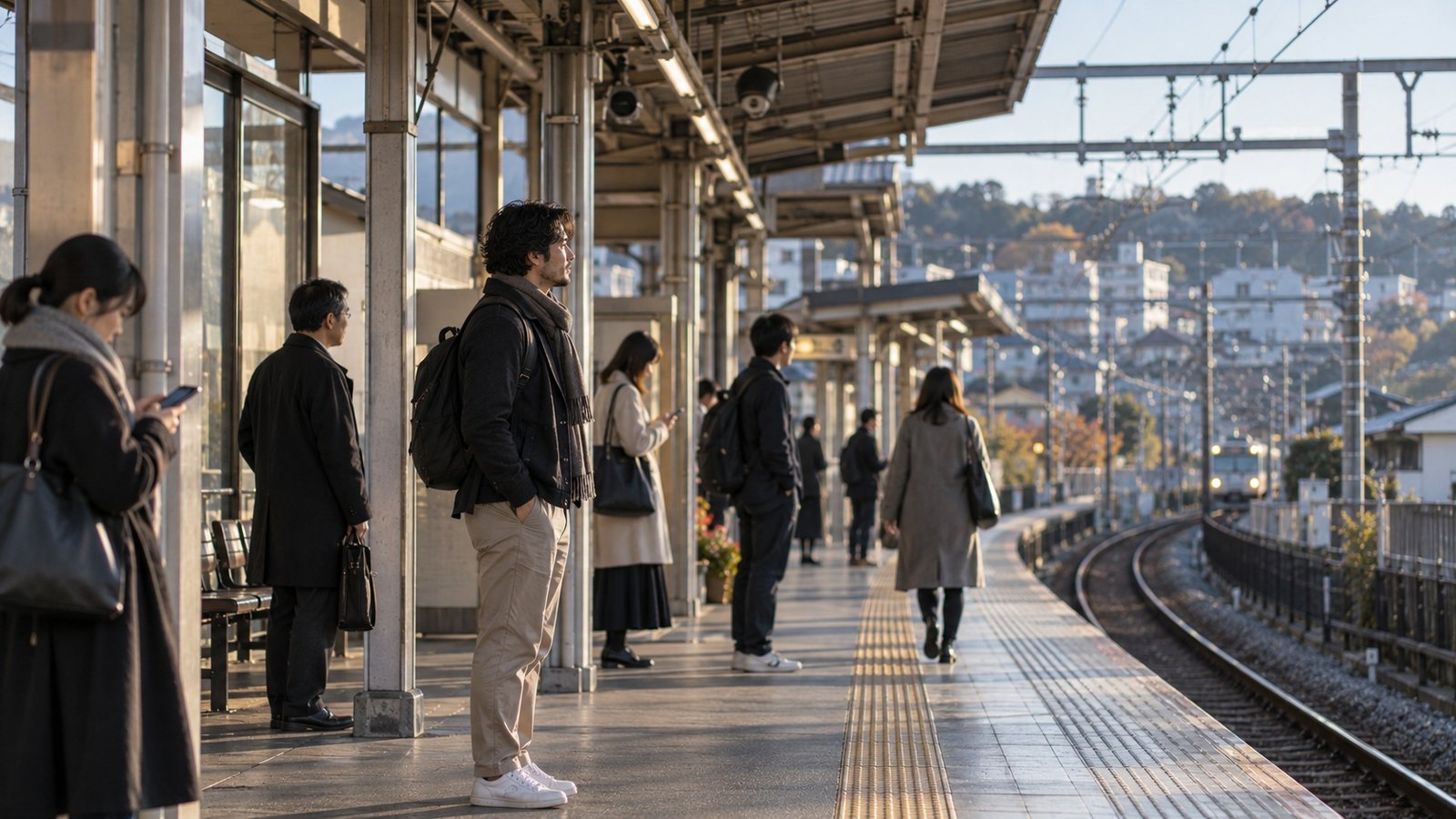
Everyday actions happening on an ordinary Japanese railway platform
09 Everyday Japan in progress

Waiting is an action too.

Eki de nani o shite imasu ka?
What are you doing at the station?
Densha o matte imasu.
I am waiting for the train.
10 What is not happening?

The present moment
can also be negative.

Ima shigoto o shite imasu ka?
Are you working now?
Iie, shigoto o shite imasen.
No, I am not working.
Ima terebi o mite imasu ka?
Are you watching television now?
Iie, mite imasen.
No, I am not watching.
11 Reconnect IJ-0088

One action finishes.
Another is happening now.
Asagohan o tabete, ima eki made aruite imasu.
I ate breakfast, and now I am walking to the station.
Densha ni notte, ima kaisha e mukatte imasu.
I took the train and am now heading to work.
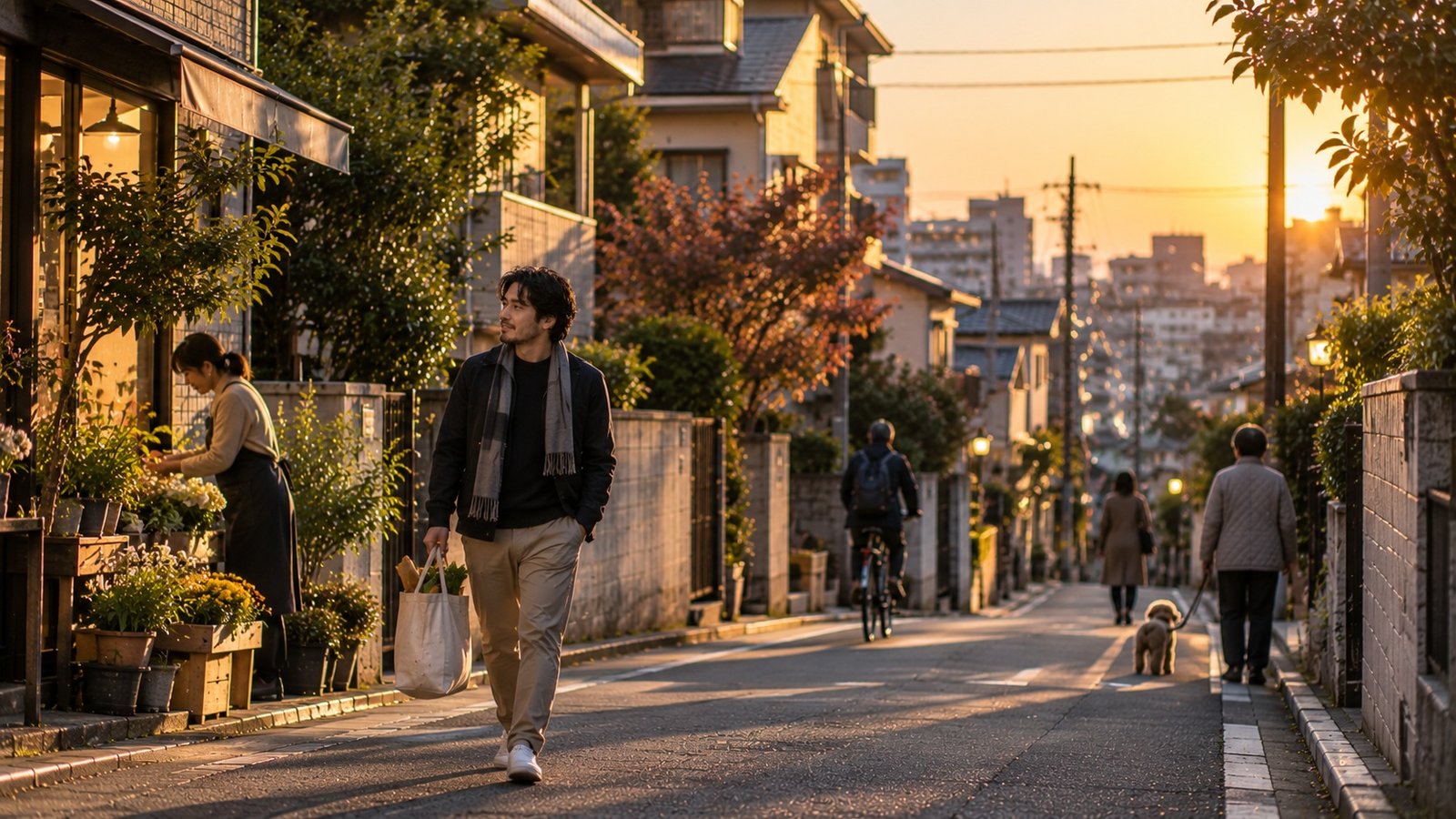
An ordinary action unfolding in a Japanese neighbourhood
12 A moment in motion

Where are you
going now?

Ima doko e itte imasu ka?
Where are you going now?
Sūpā e itte imasu.
I am going to the supermarket.
Ima nani o shite imasu ka?
What are you doing now?
Kafe de hon o yonde imasu.
I am reading a book at a café.
13 The present moment becomes conversation

Ask what is happening.
Listen to the answer.

These short exchanges turn the grammar into ordinary human conversation: what, where, who, and what is happening around us now.

Conversation 01 · Right now
A
Ima nani o shite imasu ka?
What are you doing now?
B
Nihongo o benkyō shite imasu.
I am studying Japanese.
Hear the question in another voice
Conversation 02 · Where?
A
Doko de benkyō shite imasu ka?
Where are you studying?
B
Kafe de benkyō shite imasu.
I am studying at a café.
Hear the question in another voice
Conversation 03 · With whom?
A
Dare to hanashite imasu ka?
Who are you talking with?
B
Tomodachi to hanashite imasu.
I am talking with a friend.
Hear the question in another voice
Conversation 04 · At the station
A
Eki de nani o shite imasu ka?
What are you doing at the station?
B
Densha o matte imasu.
I am waiting for the train.
Hear the question in another voice
The ordinary present
“The present moment does not need to be extraordinary to be worth describing.”

Someone is waiting for a train. Someone is studying over coffee. Someone is talking with a friend. Japanese now gives you a way to notice those ordinary moments while they are still happening.

15 The Foundation sentence keeps growing

Your Japanese can now
enter the present moment.

You can describe what happens, where it happens, when it happens, why, how often, how long, what you want, what you have experienced, how actions connect—and now what is happening right now.

WHAT → WHERE → WHEN → WITH WHOM → HOW → HOW OFTEN → HOW LONG → FROM / TO → WHY → WANT → EXPERIENCE → CONNECTED ACTIONS → ACTION IN PROGRESS

16 Real Japan mission

Look around.
What is happening?

Do not invent a complicated situation. Notice one ordinary action that is genuinely happening around you.

Right now, I am ______.
At ______, I am ______.
Who are you ______ with?

One real observation is enough. Japanese becomes useful when it begins attaching itself to the life already happening around you.

A final thought

Life Is
Happening Now.

Someone is waiting. Someone is walking home. Someone is reading over coffee. Somewhere, a conversation is beginning.

The present moment is full of Japanese.