IJ-0087 · FOUNDATION · EXPERIENCE
Have You Ever? · 〜たことがあります

Some Things Become
Part of Our Story.

〜たことがあります

Some things are still ahead of us. Others have already happened — and now belong to our experience.

FROM AN EVENT TO AN EXPERIENCE
Learning support
01 Meet the idea

Have done.
Have not done.
Have you ever?

Japanese can now talk about experiences that belong somewhere in your life — without saying exactly when they happened.

〜たことが
あります。
have done before
〜たことが
ありません。
have never done
〜たことが
ありますか。
Have you ever done it?
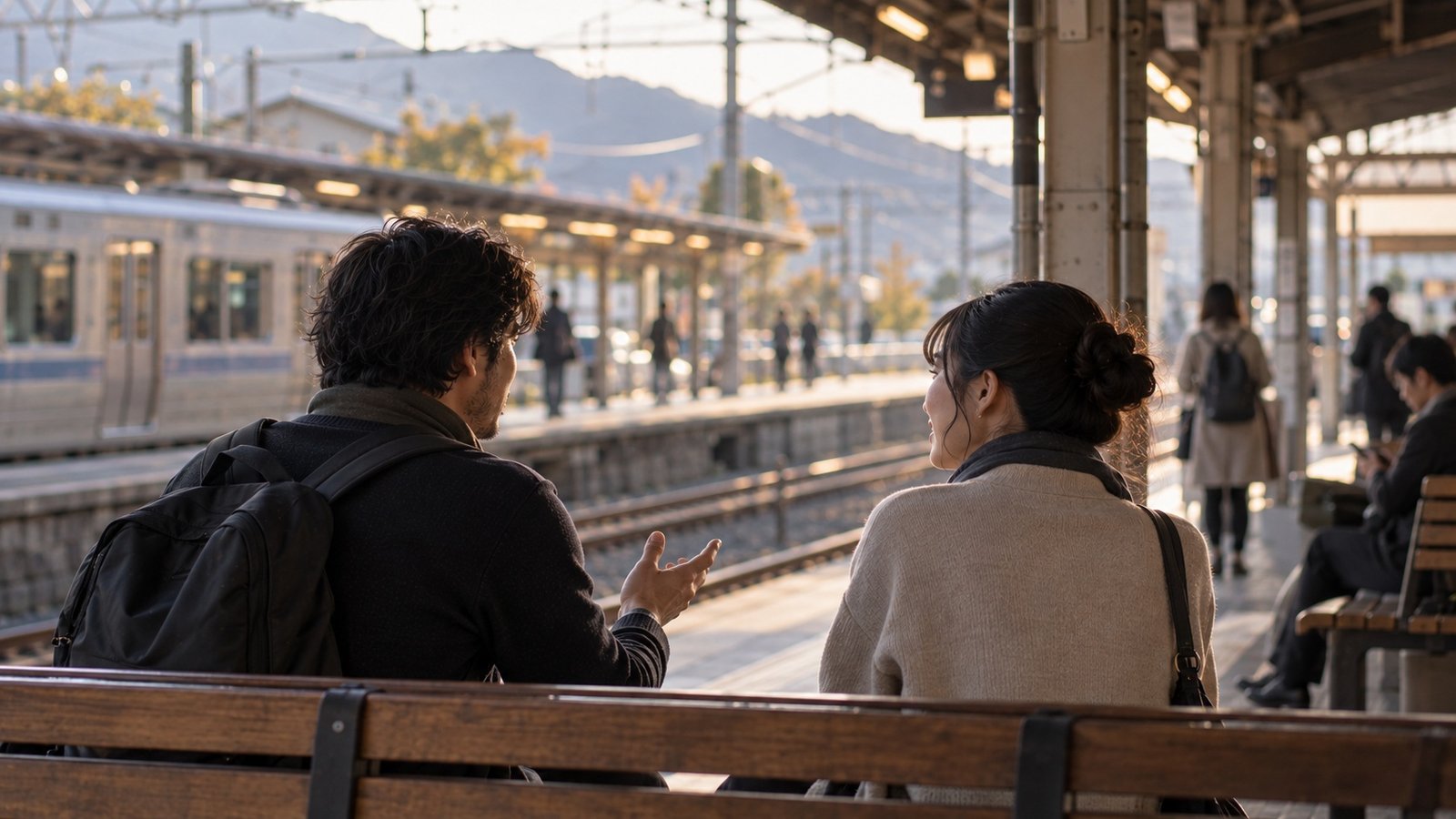
Quiet reflection on experiences in Japan
02 Event and experience

Something happened.
Something became experience.

Nihon e ikimashita.
I went to Japan.
Nihon e itta koto ga arimasu.
I have been to Japan before.

行きました tells us about an event. 行ったことがあります tells us that going there is part of your experience.

03 See the difference

A past event answers “what happened?”
Experience answers “have you ever?”

One event
I went to Japan.
→
Life experience
I have been to Japan before.

For this lesson, treat the whole pattern 〜たことがあります as one useful unit. We will keep the focus on experience rather than turning this into a large conjugation lesson.

04 Places become part of your story

Where have you been?

Kyōto e itta koto ga arimasu.
I have been to Kyoto.
Ōsaka e itta koto ga arimasu.
I have been to Osaka.
Hokkaidō e itta koto ga arimasen.
I have never been to Hokkaido.
05 Experience is not only travel

Ordinary things
become experiences too.
Sushi o tabeta koto ga arimasu.
I have eaten sushi before.
Nattō o tabeta koto ga arimasen.
I have never eaten natto.
Shinkansen ni notta koto ga arimasu.
I have ridden the Shinkansen.
Fujisan o mita koto ga arimasu.
I have seen Mount Fuji.
Yukata o kita koto ga arimasu.
I have worn a yukata.
Onsen ni haitta koto ga arimasu.
I have been in an onsen.
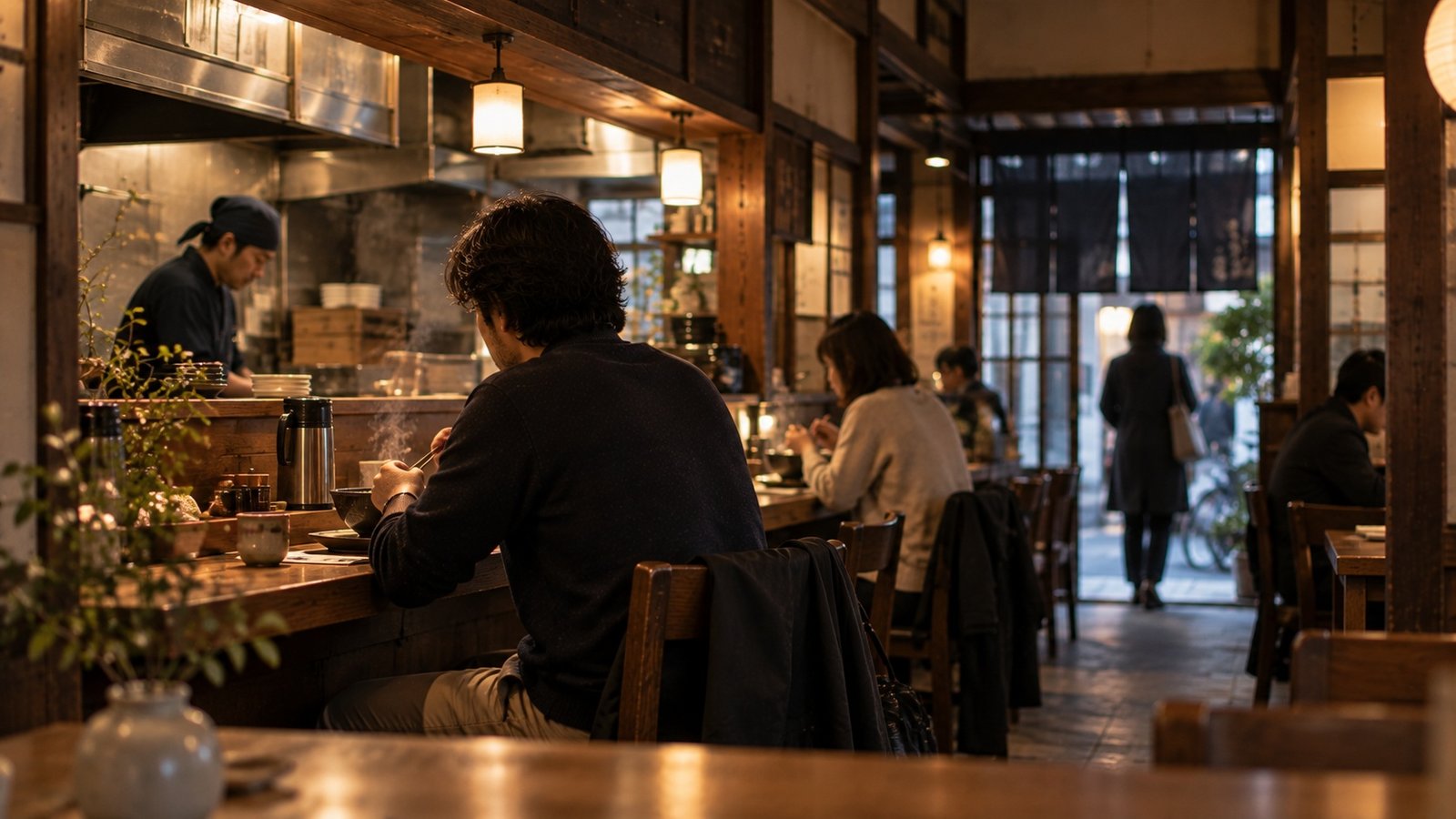
An ordinary lived experience in Japan
Two adults talking naturally while travelling in Japan
06 Ask about experience

Have you ever
been there?

Kyōto e itta koto ga arimasu ka?
Have you ever been to Kyoto?
Hai, arimasu.
Yes, I have.
Iie, arimasen.
No, I haven't.
07 Food carries experience too

Have you ever
eaten it?

Experience · yes
Sushi o tabeta koto ga arimasu ka?
Have you ever eaten sushi?
Hai, arimasu.
Yes, I have.
Experience · not yet
Nattō o tabeta koto ga arimasu ka?
Have you ever eaten natto?
Iie, arimasen.
No, I haven't.
09 Let experience open conversation

What have you
experienced?

Yes and no are useful. But open questions let another person tell you more.
Nihon de nani o shita koto ga arimasu ka?
What have you done in Japan?
Onsen ni haitta koto ga arimasu.
I have been in an onsen.
Nihon de nani o tabeta koto ga arimasu ka?
What have you eaten in Japan?
Sushi to rāmen o tabeta koto ga arimasu.
I have eaten sushi and ramen.
Doko e itta koto ga arimasu ka?
Where have you been?
Kyōto to Ōsaka e itta koto ga arimasu.
I have been to Kyoto and Osaka.
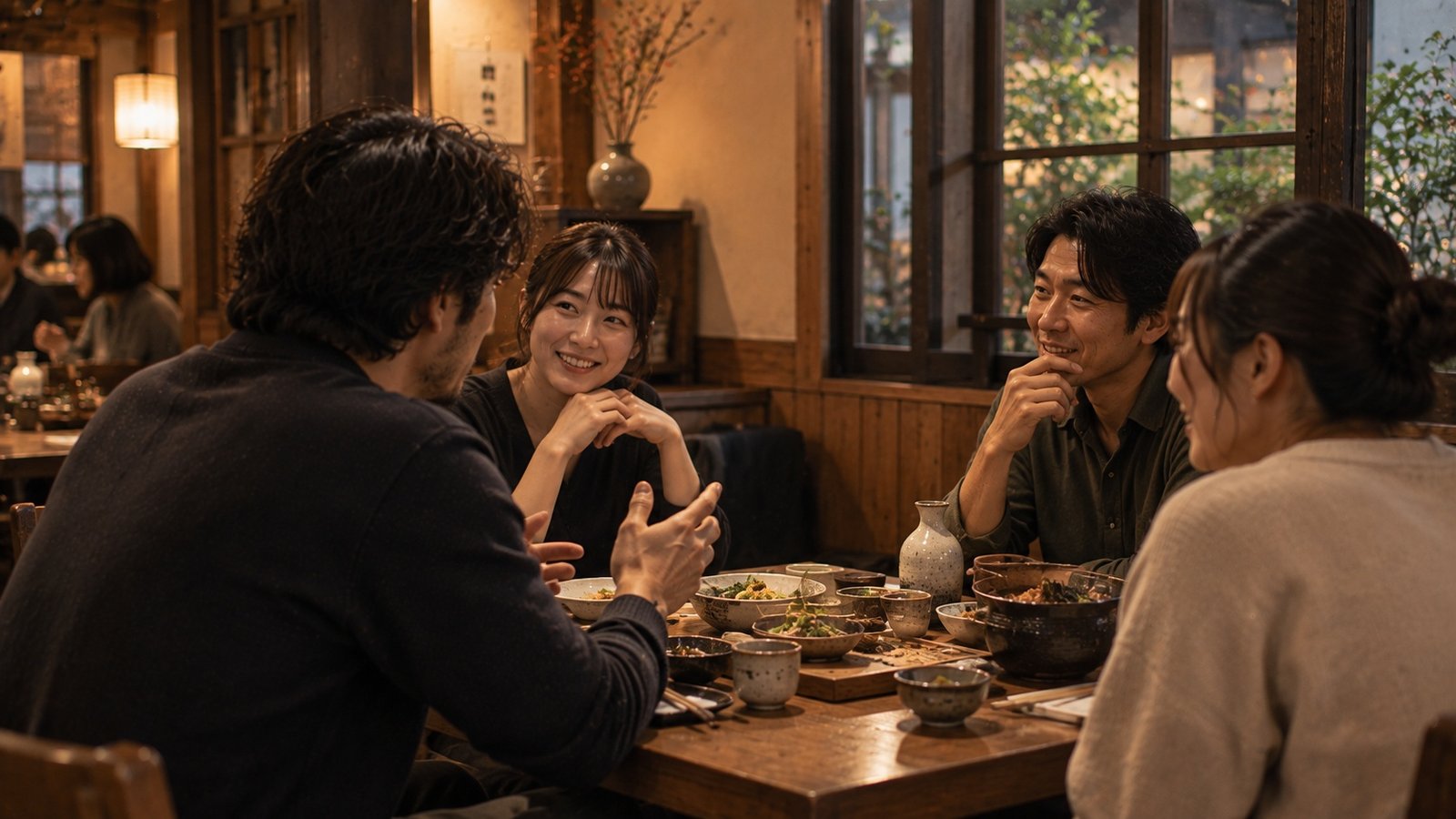
People sharing stories and experiences in everyday Japan
10 Yesterday's experience · tomorrow's possibility

Some things we have done.
Some things we still want to do.

Mada Hokkaidō e itta koto ga arimasen.
I haven't been to Hokkaido yet.
Kyōto e ikitai desu.
I want to go to Kyoto.
Kyōto e itta koto ga arimasu.
I have been to Kyoto.
IJ-0086 · desire
I want to go to Kyoto.
↔
IJ-0087 · experience
I have been to Kyoto.
11 Experience becomes conversation

Ask.
Listen.
Discover someone's story.

Each main exchange uses two different voices: a female speaker and a male speaker.

Conversation 01 · Kyoto
A
Kyōto e itta koto ga arimasu ka?
Have you ever been to Kyoto?
B
Hai, arimasu.
Yes, I have.
Hear the question in another voice
Conversation 02 · Sushi
A
Sushi o tabeta koto ga arimasu ka?
Have you ever eaten sushi?
B
Hai, arimasu.
Yes, I have.
Hear the question in another voice
Conversation 03 · Mount Fuji
A
Fujisan ni nobotta koto ga arimasu ka?
Have you ever climbed Mount Fuji?
B
Iie, arimasen.
No, I haven't.
Hear the question in another voice
Conversation 04 · Experience in Japan
A
Nihon de nani o shita koto ga arimasu ka?
What have you done in Japan?
B
Onsen ni haitta koto ga arimasu.
I have been in an onsen.
Hear the question in another voice
Language begins to hold memory
“At first, Japan is made of things you have not done. Slowly, those same things become part of your story.”

A train you once did not know how to board. Food you had never tried. A place you had never visited. A conversation you could not yet have. Experience quietly changes the language around you.

13 Your sentence world is growing

You can now speak about
more than the present moment.

Each Foundation lesson has added another dimension. IJ-0087 adds personal experience.

WHAT → WHERE → WHEN → WITH WHOM → HOW → HOW OFTEN → HOW LONG → FROM / TO → WHY / REASON → WANT / INTENTION → EXPERIENCE

14 Real Japan mission

Find three things
already in your story.

Think about your own experience. Choose a place, a food and one activity.

Where have you been?
What have you eaten?
What have you experienced?

You do not need an impressive answer. Ordinary experience is real experience.

A final thought

Things We
Have Done.

A station you once could not navigate. Food you once could not name. A conversation you once could not have.

Slowly, unfamiliar things become things you have done.