SAY · YOU
これを おねがいします。
Kore o onegai shimasu.
This one, please.
Look, ask, choose, try, pay and leave. Shopping Japanese is less about delivering speeches and more about recognising the handful of questions standing between you and the thing you came to buy.
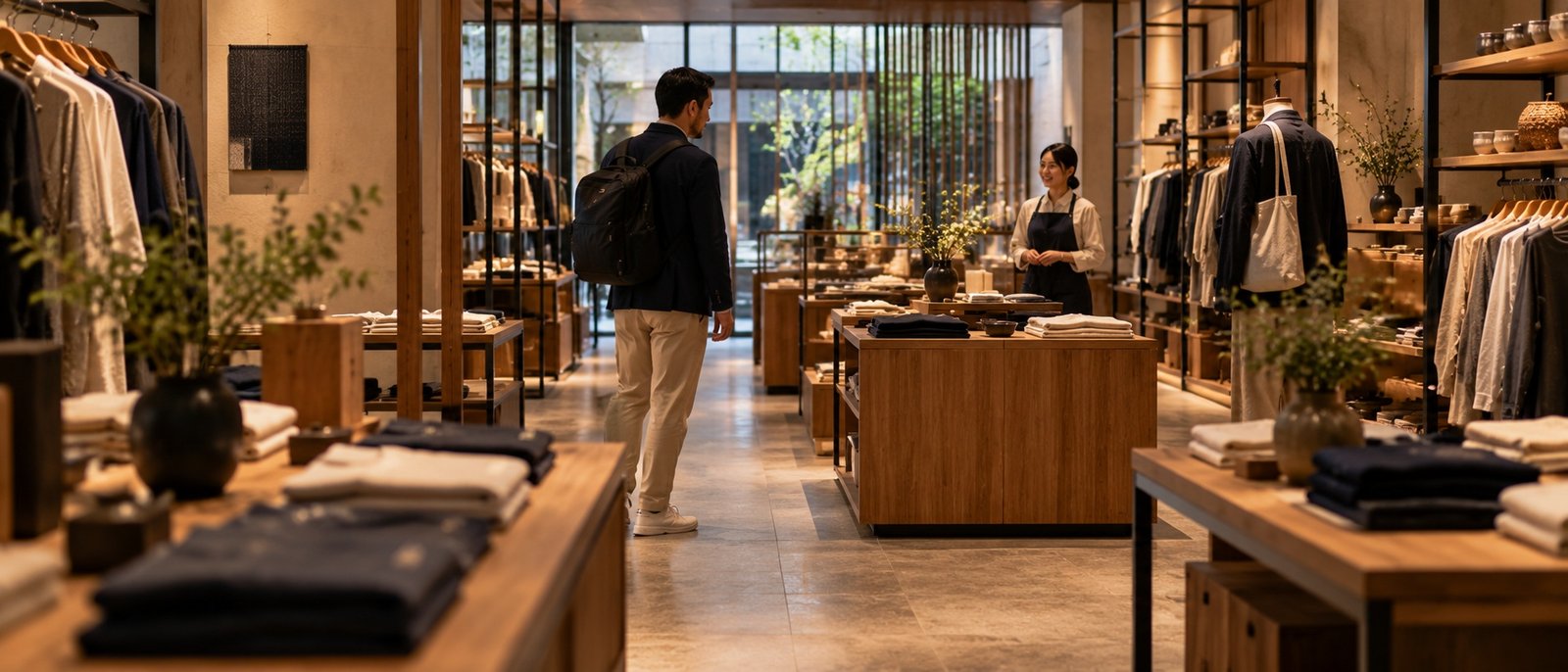
A Japanese shop can produce a surprising amount of language around a very small purchase. Fortunately, you do not need all of it. This lesson teaches the decision points: identify the item, ask about price, size or colour, try it, understand the cashier, choose how to pay, deal with the bag and receipt, and leave politely.
Scene voices: male = customer · female = shop staff.
Japanese script comes first. When useful kanji appears, READING gives the kana pronunciation. Romaji helps you say it, English confirms what it means, and the audio lets your ear meet the phrase before a real cashier does.
Do not memorise these as one long shopping speech. Each phrase solves one small problem. That is the quiet superpower of beginner Japanese.
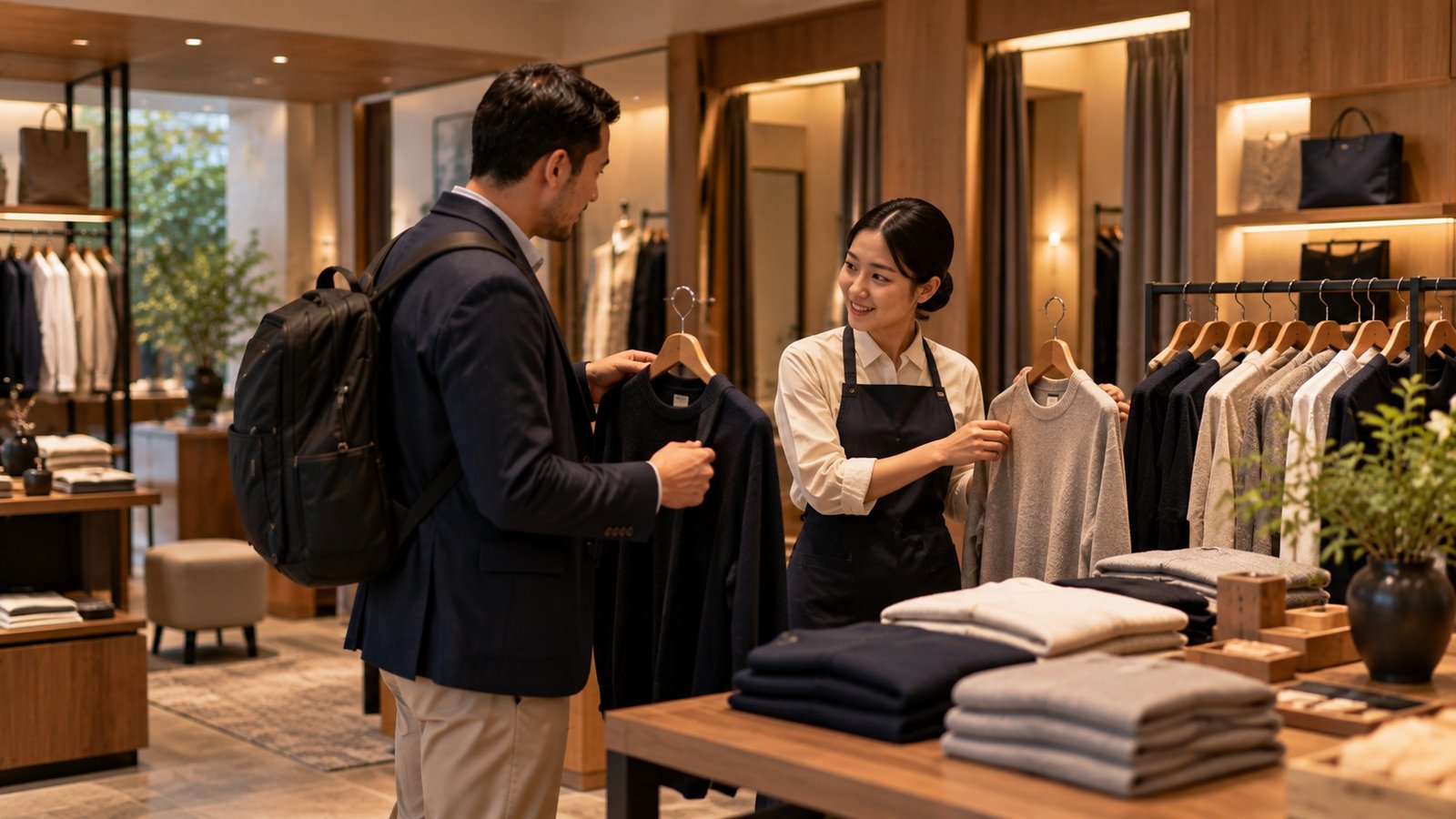
ほかの means “another / other.” Add the thing you need: サイズ for size or 色(いろ) for colour. One small pattern suddenly becomes much more useful.
Trying on clothing. 試着してもいいですか。 is literally asking whether trying it on is okay—a useful early encounter with the versatile 〜てもいいですか permission pattern.
Service language is often more polite than the Japanese you need to produce. Listen for the useful anchors rather than trying to translate every syllable while holding a wallet, a bag and your remaining dignity.
Cashier wording varies by store, chain, payment system and situation. Your goal is not to memorise one supposedly universal script. Recognise the decision: cash or card? bag? receipt? Then answer simply.
大丈夫です can decline something in context, but its meaning depends heavily on the situation. For a beginner, 袋はいりません。 — “I don't need a bag” — is clearer and teaches exactly what you mean.
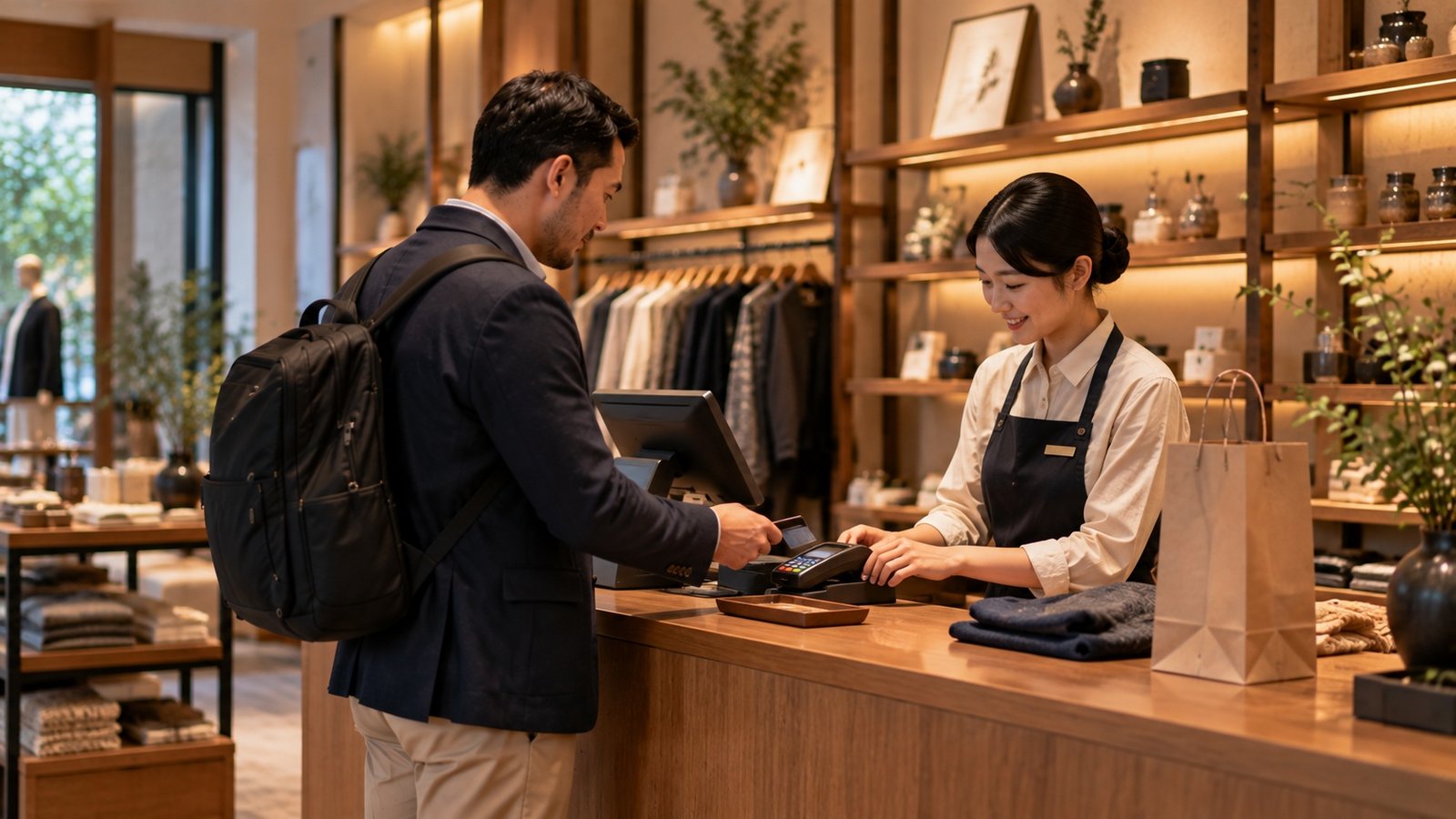
Imagine entering a shop. Choose something visible. Ask the price. Ask for another size or colour if needed. Confirm the item. At the register, recognise the payment and bag questions. Finish with ありがとうございます。
You succeed if the transaction moves forward without needing to understand the entire cashier script. Real communication is not a vocabulary exam with fluorescent lighting.
Replay the staff lines until you can recognise the decision they are asking you to make.
Now you have asked, chosen, paid and understood enough Japanese to complete the small human exchange around the purchase. The shopping bag is useful. The confidence travels considerably better.