IJ-0010 — Hiragana や・ゆ・よ | Indomura Japanese
INDOMURA JAPANESE · FOUNDATION · HIRAGANA
IJ-0010 · 38 / 46
Foundation · Hiragana 08 · IJ-0010

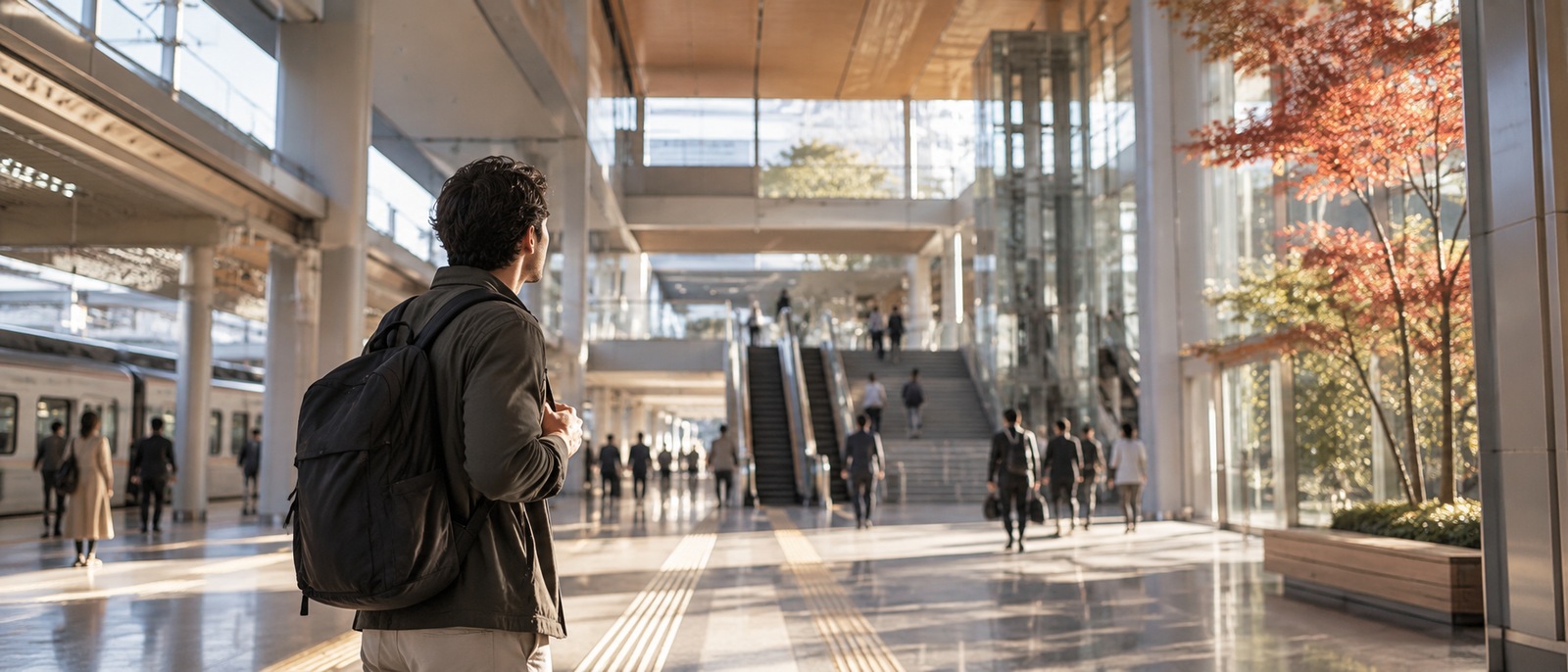
Japanese helps you find your way.

や・ゆ・よ

You can already recognise thirty-five hiragana. Today you add three more — and learn one of the most useful questions for everyday Japan: how to ask where something is.

Finding your way in Japan
01 · READや・ゆ・よThree new hiragana.
02 · WRITEStroke by strokeUse the Kana Writing Studio.
03 · ASK___ は どこですか。Ask where something is.
04 · USEReal JapanStation, city hall and everyday directions.
New sounds

Three new hiragana. Three clean sounds.

The や-row is shorter than the rows you have learned before. Listen first, then let shape and sound settle together.

や
YA
ゆ
YU
よ
YO
や ゆ よ

Hear the complete row at careful teaching speed.

Kana Writing Studio · 書いてみよう

One character at a time.

Select a kana. Play the stroke order once. Watch, trace, then write it yourself.

Ready.
や
SoundYA
Stroke count3
MethodSelect → Play → Watch → Trace → Write
Keep the first movement light, then give the final stroke enough space so the character stays open and balanced.
Words you can begin to read

New kana start living inside real words.

Read the Japanese first. Use the small romanisation only as support when you need it.

やま
YAMA
mountain
ゆき
YUKI
snow
よる
YORU
night
やね
YANE
roof
ゆめ
YUME
dream
よこ
YOKO
side / beside
Read without rushing

Keep the earlier kana alive.

New characters become useful when they connect with what you already know. Read these aloud slowly, then once again without romanisation.

やま ゆき よる やね ゆめ よこ
あさ えき ここ そと なつ はな まど
One question that opens Japan

Where is it?

Put the place or thing first, mark it with , then ask . Do not force an English word-for-word translation. Learn the whole Japanese pattern as one useful question.

PLACE / THING は どこですか。
Natural English: “Where is ___?”
Asking for directions
どこですか。
WHERE + POLITE QUESTION
Where is it?
トイレは どこですか。
TOILET + TOPIC + WHERE + POLITE QUESTION
Where is the toilet?
えきは どこですか。
STATION + TOPIC + WHERE + POLITE QUESTION
Where is the station?
しやくしょは どこですか。
CITY HALL + TOPIC + WHERE + POLITE QUESTION
Where is the municipal office?
あそこです。
OVER THERE + POLITE ENDING
It is over there.
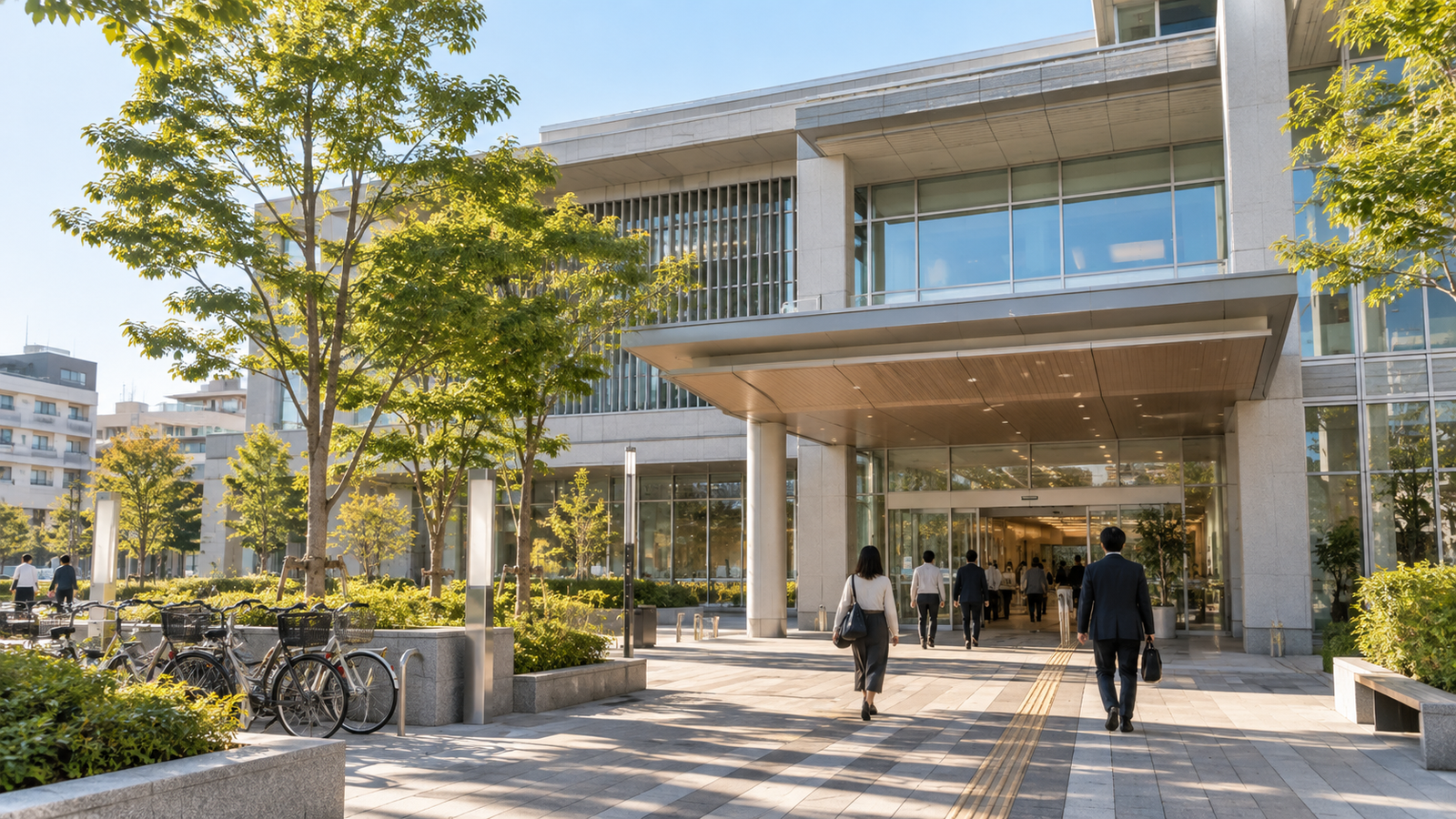
The municipal office
Use now · decode fully later. is katakana and is usually written with kanji. You do not need to master those scripts today. For now, recognise the place and learn how to ask for it. We show together so the real-world form can gradually become familiar.
Mini conversation

One short exchange you can actually use.

Listen line by line, then play the complete exchange.

A
すみません。トイレは どこですか。
Excuse me. Where is the toilet?
B
あそこです。
It is over there.
A
すみません。えきは どこですか。
Excuse me. Where is the station?
B
あそこです。
It is over there.
A
ありがとうございます。
Thank you very much.
B
いいえ。
Not at all.

ありがとうございます。 · Thank you very much.

Life in Japan

Finding a place is also learning how Japan works.

A useful language course should help you recognise the places around you, not only memorise sentences.

Municipal office
EVERYDAY CIVIC JAPAN

The municipal office

For people living in Japan, the municipal office is an important practical place for many local administrative procedures. Official names differ by municipality, but recognising and being able to ask where it is can be immediately useful.

市役所 · しやくしょ · city hall / municipal office
Koban neighbourhood wayfinding
HELP IN THE NEIGHBOURHOOD

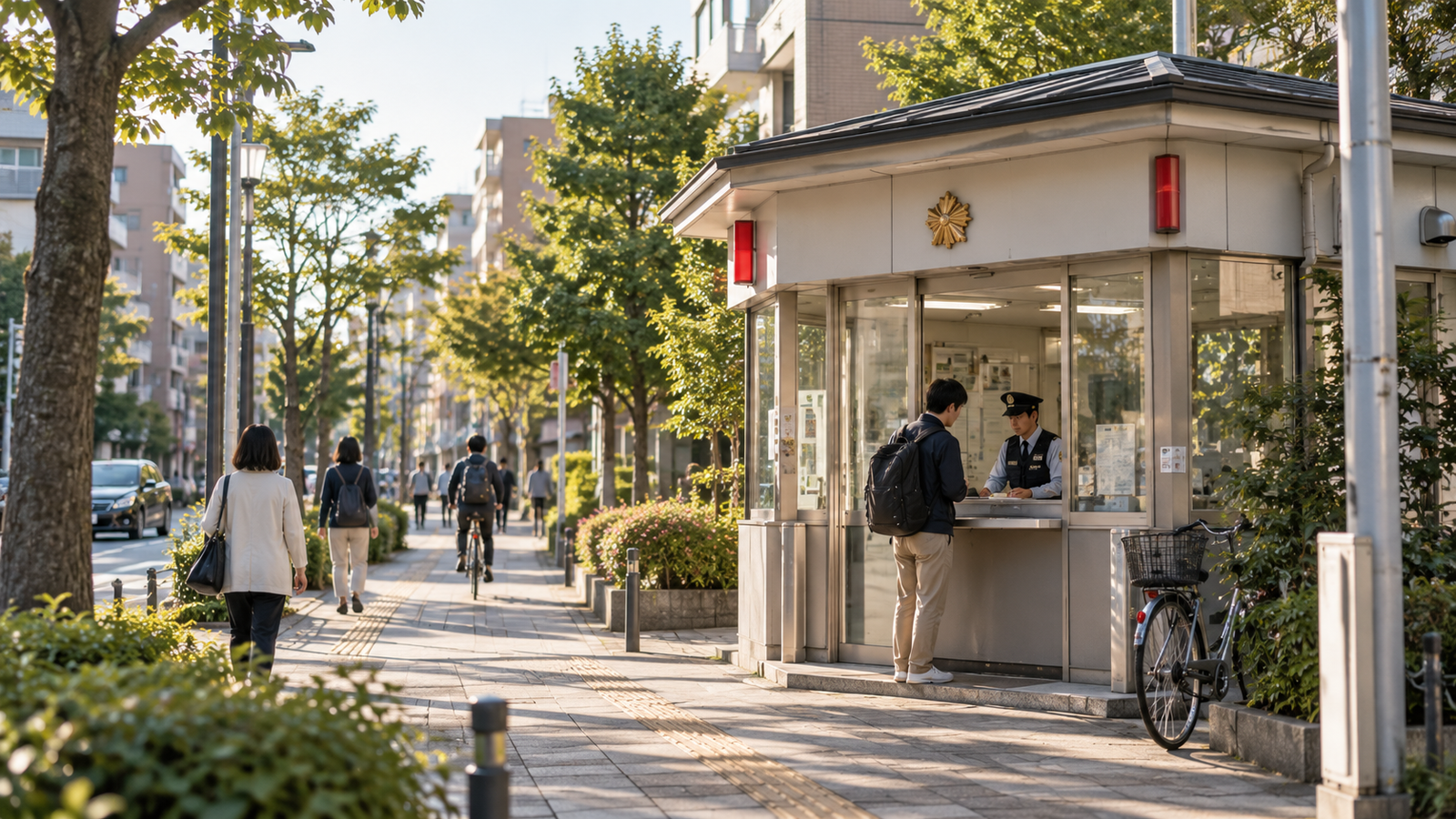
Kōban — a familiar local point

A is a neighbourhood police box. Kōban are familiar local landmarks and can be useful places to seek assistance when you are unsure where something is. Recognise the word now; detailed kanji study can come later.

交番 · こうばん · kōban / police box
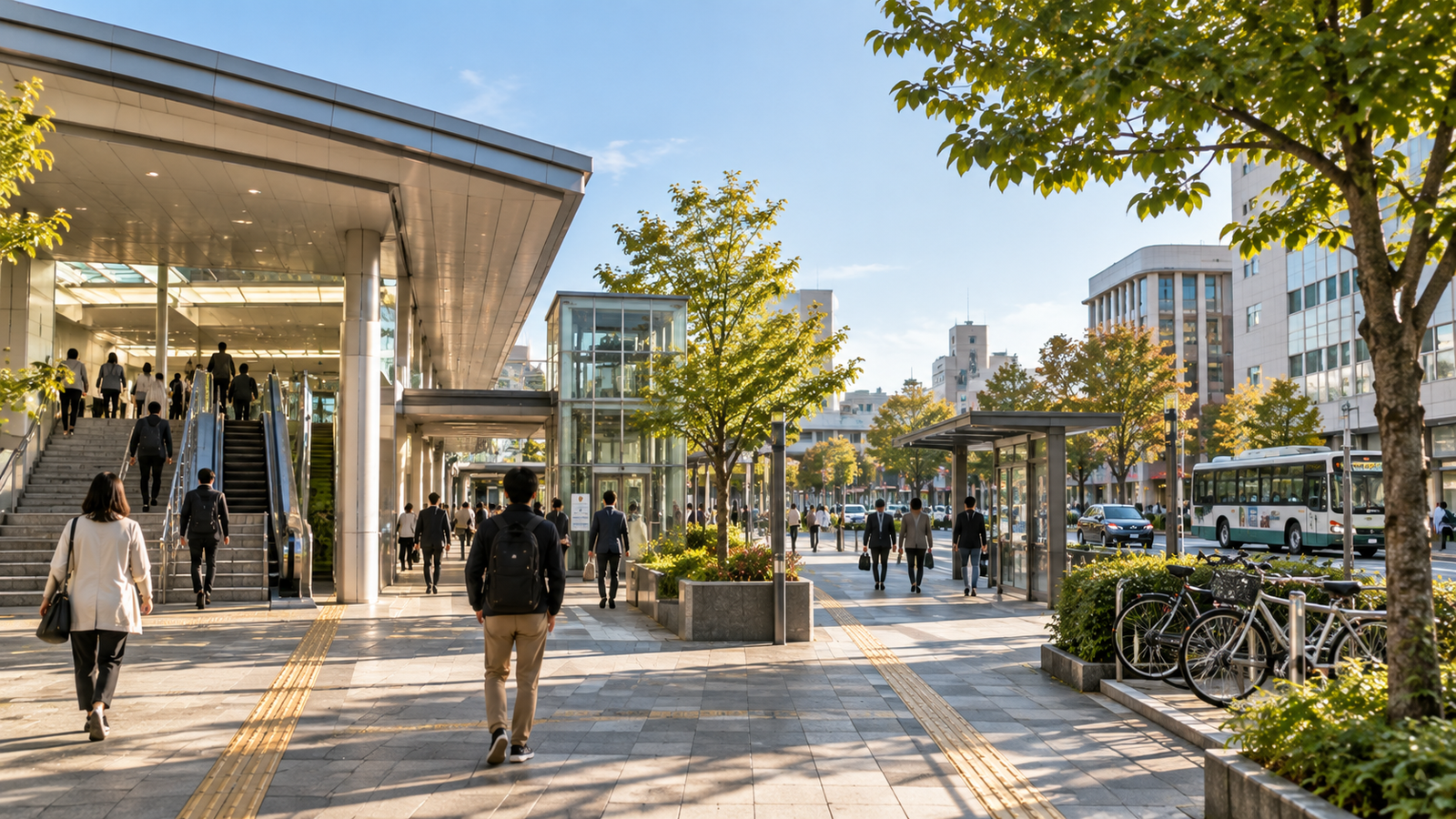
Real Japan mission

You need to find the station. What would you say?

Imagine you are standing here and are not sure which way to go. Choose the Japanese that would solve the problem politely.

The goal is not perfect grammar analysis. The goal is being able to act.

Real Japan mission
Listening laboratory

From careful Japanese to the speed you will actually hear.

Careful → natural

Hear the same useful question twice: first the tutor version, then a natural-speed voice.

Listen & choose

Play the word, then choose what you heard.

Contrast & retrieve

Hear first. Look second. Can you distinguish ゆ from よ?

Cumulative kana review

Thirty-eight basic hiragana are now unlocked.

Keep every earlier character active. Today’s three new kana are quietly marked at the end.

あ
い
う
え
お
か
き
く
け
こ
さ
し
す
せ
そ
た
ち
つ
て
と
な
に
ぬ
ね
の
は
ひ
ふ
へ
ほ
ま
み
む
め
も
や
ゆ
よ
38/ 46 BASIC HIRAGANA
What I can do now

I can ask where something is — and use Japanese to find my way.

Recognise 38 basic hiragana.
Write や・ゆ・よ in stroke order.
Read words such as やま・ゆき・よる・ゆめ.
Ask “___ は どこですか。”
Understand “あそこです。”
Recognise useful real-world words such as 市役所 and 交番 without needing to master their kanji yet.
Next · IJ-0011

Japanese begins to move.

ら り る れ ろ

IJ-0011 unlocks the ら-row and begins connecting actions with the places and situations you can already recognise.