INDOMURA JAPANESE LANGUAGE • LIFE • CULTURE
FOUNDATION · HIRAGANA 04 · IJ-0006
Foundation · Hiragana 04

Japanese begins
with people.

Today Japanese moves beyond objects and questions. You will learn five new hiragana, practise two important sounds, and begin using greetings that belong to real moments in everyday Japanese life.

た・ち・つ・て・と GREETINGS DAILY LIFE POLITENESS CONVERSATION
た
ち
つ
て
と
つ
Today you'll learn

Reading, writing — and acknowledging another person.

Lesson 06 continues the hiragana foundation, but it also begins a new part of the course: learning how Japanese belongs to daily life, social situations and human relationships.

01 · KANA

Read five more.

Recognise and pronounce た・ち・つ・て・と.

02 · SOUND

Hear CHI and TSU.

Learn why ち and つ deserve special attention.

03 · LIFE

Greet someone naturally.

Match Japanese greetings to morning, daytime and evening.

04 · CONTEXT

Choose the right tone.

Notice the difference between casual and polite morning greetings.

Five new sounds

た ち つ て と

Three sounds follow the pattern you might expect. Two deserve special listening: ち = CHI and つ = TSU.

た
TA
T + あ
ち
CHI
Listen carefully
つ
TSU
Listen carefully
て
TE
T + え
と
TO
T + お
Hear the row

Don't force the sounds into an English pattern.

Follow the Japanese characters. Listen carefully to the second and third sounds.

た ち つ て と
TA CHI TSU TE TO
LISTEN · FOLLOW · REPEAT
Sound laboratory

Two sounds deserve your full attention.

Don't memorise them from spelling alone. Let the Japanese audio establish the sound first.

ち

ち is CHI.

Do not read it mechanically as “ti.” Listen to the Japanese sound and imitate that.

ち = CHI
つ

つ is TSU.

Keep the T and S movement together. Avoid turning it into a simple “su.”

つ = TSU
Kana Writing Studio

One character. One movement lesson at a time.

Choose one kana. Nothing moves until you press play. Watch the stroke order once, then trace and write before moving to the next character.

Loading writing guide…
Ready. Press play when you are ready.
た
TA
Stroke count 4
Sound TA
Playback Once per press
Watch how the left side is established before the curved movement completes the character.
Practice: Select → Play → Watch → Trace → Write
Trace → write → remember

Let your hand repeat what your eyes just learned.

Use the Writing Studio first. Then trace the pale model and reproduce the character from memory.

た · 4 STROKES
た
TRACE
ち · 2 STROKES
ち
TRACE
つ · 1 STROKE
つ
TRACE
て · 1 STROKE
て
TRACE
と · 2 STROKES
と
TRACE
Words you can read

New kana join the ones you already know.

The goal is no longer to see separate kana rows. Your twenty characters should increasingly work together as one reading system.

うた
UTA
song
つき
TSUKI
moon
て
TE
hand
した
SHITA
below / under
そと
SOTO
outside
たこ
TAKO
octopus
Read it yourself

Let Japanese reach your eyes before English does.

Read each word aloud. Then tap to reveal the meaning.

Life in Japan

The language changes as the day changes.

Greetings are not merely words to translate. They belong to moments, relationships and social situations.
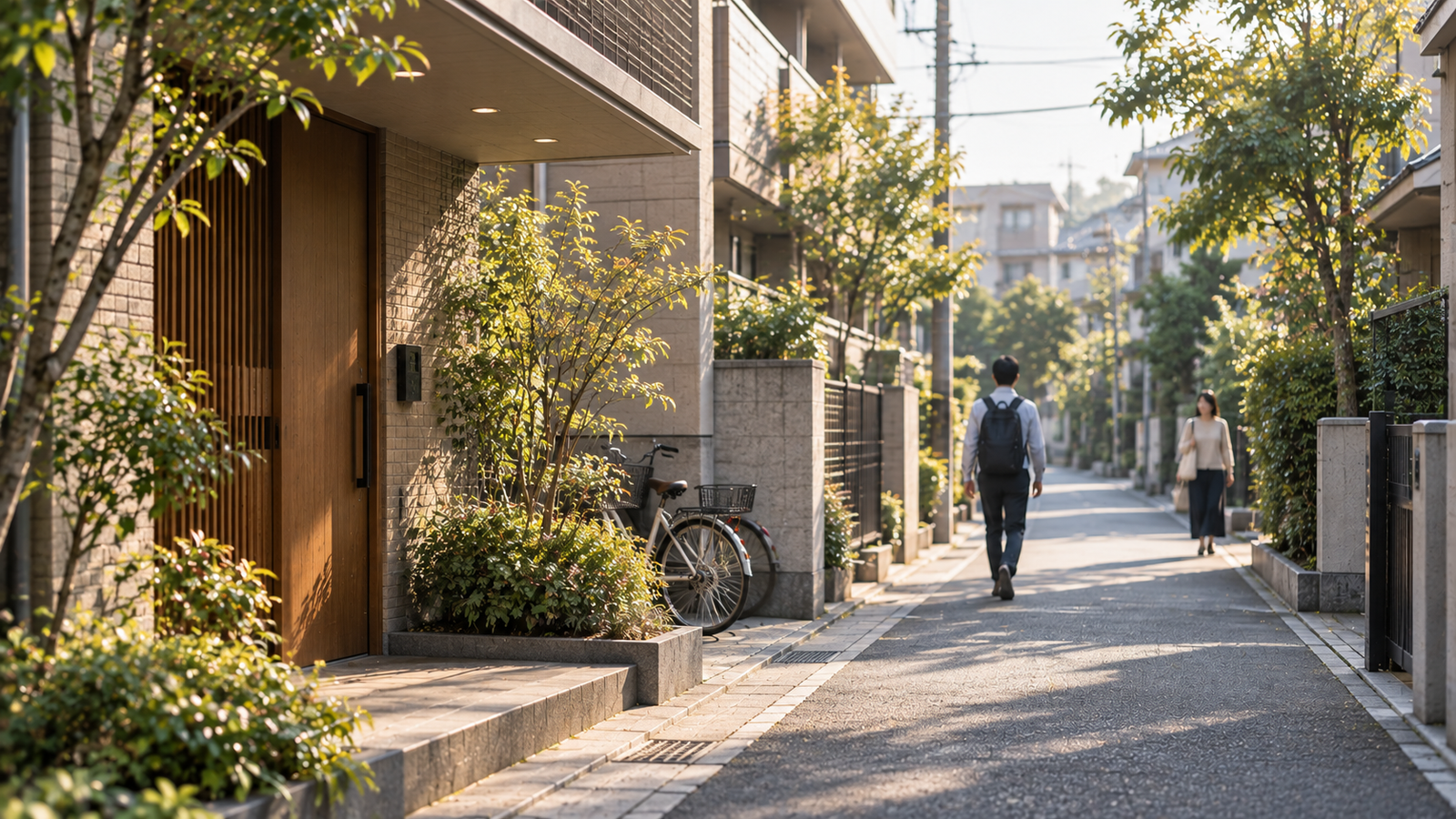
Morning greeting in a quiet Japanese neighbourhood
MORNING
おはようございます。
Good morning.

A polite morning greeting. A useful choice with neighbours, colleagues, staff and people you do not know closely.
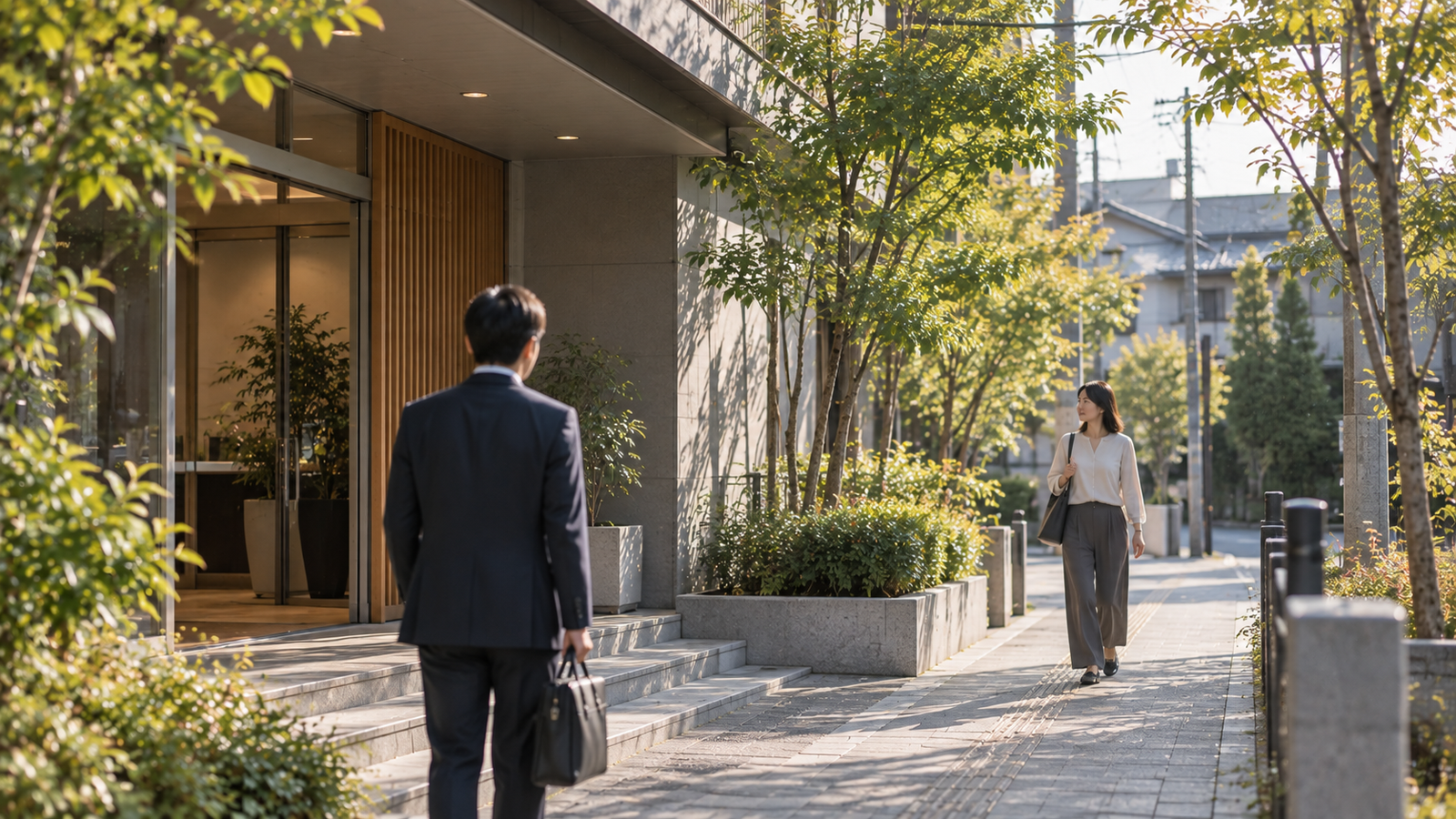
Daytime encounter in a quiet Japanese neighbourhood
DAYTIME
こんにちは。
Hello / Good afternoon.

A daytime greeting used when meeting someone. It does not function as an automatic “hi” in every possible situation.

Japanese neighbourhood at evening blue hour
EVENING
こんばんは。
Good evening.

Used when meeting someone in the evening. The time and social moment help determine the greeting.

Same morning · different relationship

Japanese notices who you are speaking to.

Both expressions below can mean “good morning.” The difference is not simply vocabulary — it is social tone.

POLITE / SAFER WITH LESS-FAMILIAR PEOPLE
おはようございます。
A safe polite choice with neighbours, colleagues and people you do not know closely.
CASUAL / FAMILIAR
おはよう。
Common with friends, family or people with whom a casual relationship is appropriate.
Time-of-day mission

Which greeting belongs to the moment?

Read the situation first. Then choose the Japanese greeting.

☀
MORNING · NEIGHBOUR
Choose the best greeting.
◯
DAYTIME · MEETING SOMEONE
Choose the best greeting.
◐
EVENING · MEETING SOMEONE
Choose the best greeting.
Everyday Japan conversation

A greeting is something two people share.

Play each speaker separately first. Then use PLAY CONVERSATION to hear the male and female voices as one natural exchange.

MORNING · NEIGHBOUR ENCOUNTER
A
MALE
おはようございます。
Good morning.
B
FEMALE
おはようございます。
Good morning.
Bring yesterday's Japanese with you

New lessons should not erase old Japanese.

Here is a conversation you already know. Listen to it now as two people rather than two isolated recordings.

Station question
LESSON 05 RETRIEVAL
A
MALE
これは えき ですか。
Is this a station?
B
FEMALE
はい、そうです。
Yes, that's right.
挨
Life in Japan

A greeting belongs to a relationship and a moment.

Vocabulary gives you words. Real communication asks another question: when does this expression belong?

Japanese greetings can change according to time of day, familiarity, politeness, workplace context and whether people are meeting, leaving or returning.

You do not need all of those rules today. For now, begin noticing that language choices are connected to people and situations.

Japanese is not only: “What does this mean?”

It is also: “When would someone actually say it?”
Listening lab

Move from careful Japanese to natural Japanese.

Listen once at learning speed. Then hear the same greeting naturally.

STEP 01 · CAREFUL

Hear every part.

Listen without trying to repeat immediately.

STEP 02 · NATURAL

Hear the greeting as one unit.

Stop chasing each individual sound. Listen for recognition.

Cumulative kana review

Twenty hiragana now work together.

Read across all four rows. Your goal is increasingly instant recognition, not mentally searching for a chart.

あ
い
う
え
お
か
き
く
け
こ
さ
し
す
せ
そ
た
ち
つ
て
と
Sound detective

Which sound is this?

つ
20
/ 46 BASIC HIRAGANA
What I can do now

Japanese is beginning to belong to my day.

You now recognise twenty hiragana, can greet someone according to the time of day, can make a polite choice, and can follow a short exchange between two speakers.

I recognise 20 basic hiragana.
I can distinguish CHI and TSU.
I can write た・ち・つ・て・と in stroke order.
I can use morning, daytime and evening greetings.
I understand polite versus casual morning greetings.
I can follow a simple male/female Japanese exchange.
Next · Lesson 07

Japanese begins describing relationships between things.

な に ぬ ね の

Next we continue hiragana and introduce one of the most useful building blocks in Japanese: の. We will begin talking about belonging, names, people and everyday relationships.