One tiny circle.
A lighter new voice.
You already know the は-row. You have heard it become ば. Today one small circle changes the same family again — and gives you five more sounds you will hear all around everyday Japan.
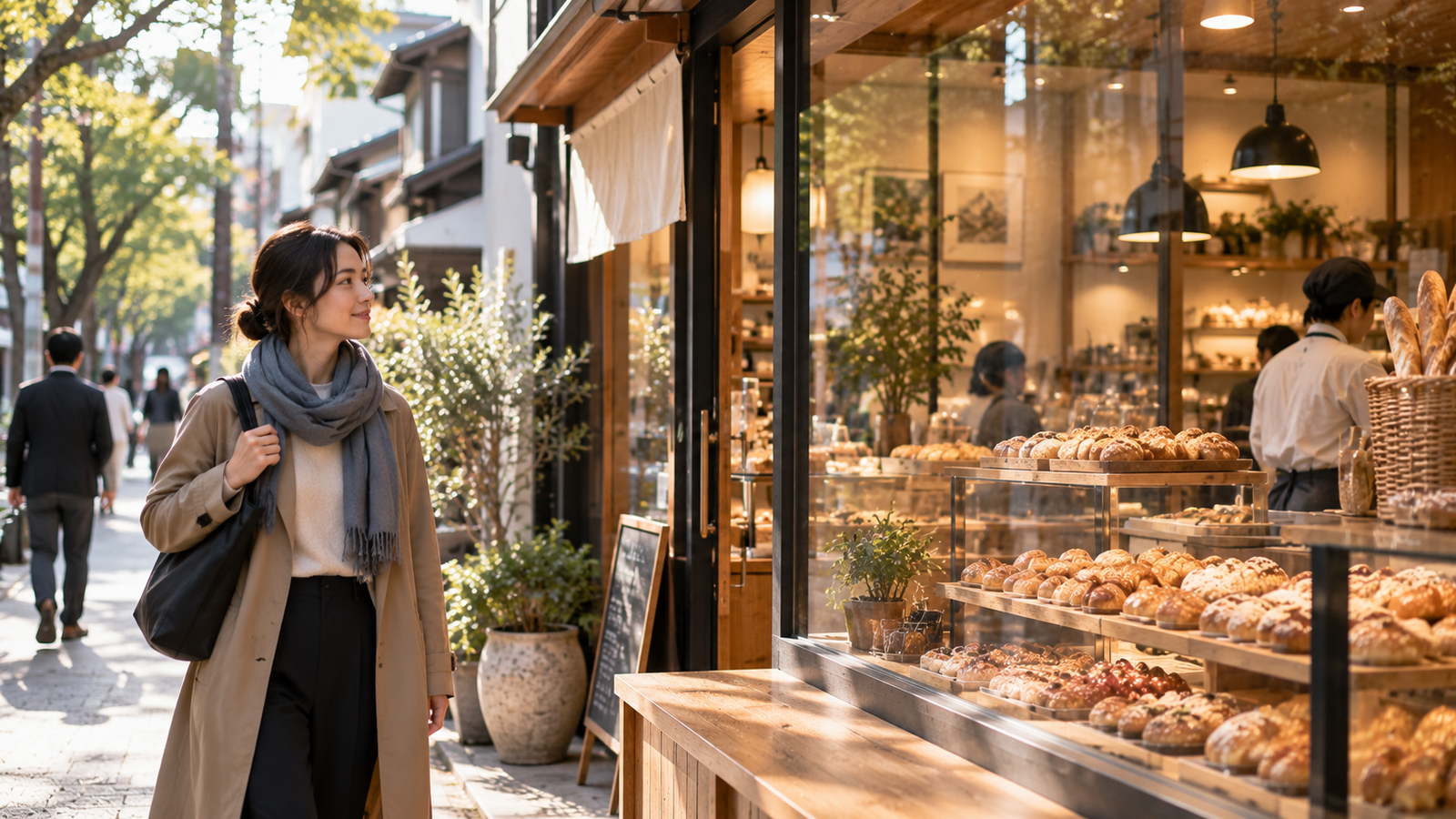
The row you know changes once more.
First you learned は. Then dakuten changed it to ば. Now a small circle — ゜ — gives the same character family a new P-sound.
The circle is called handakuten · 半濁点. You do not need to memorize a new shape from zero. Recognize the base kana, notice the mark, and let the relationship guide your reading.
A circle with a job.
Handakuten appears on the は-row and creates ぱ・ぴ・ぷ・ぺ・ぽ. Think visually: same base character, different mark, different sound.
Hear the three-way relationship.
Do not force the sounds into English labels. Listen to the familiar base, the voiced version, and the handakuten version as a family.
Five sounds. One tiny circle.
One character at a time.
This time, watch not only the character — watch the family relationship.
Recognize は first. The circle ゜ tells you to read ぱ.
The P-sounds are hiding in plain sight.
Many everyday P-sound words in modern Japanese are written in katakana. You do not need to learn that whole writing system today. For now, hear the sounds and recognize the words. Another door is beginning to open.
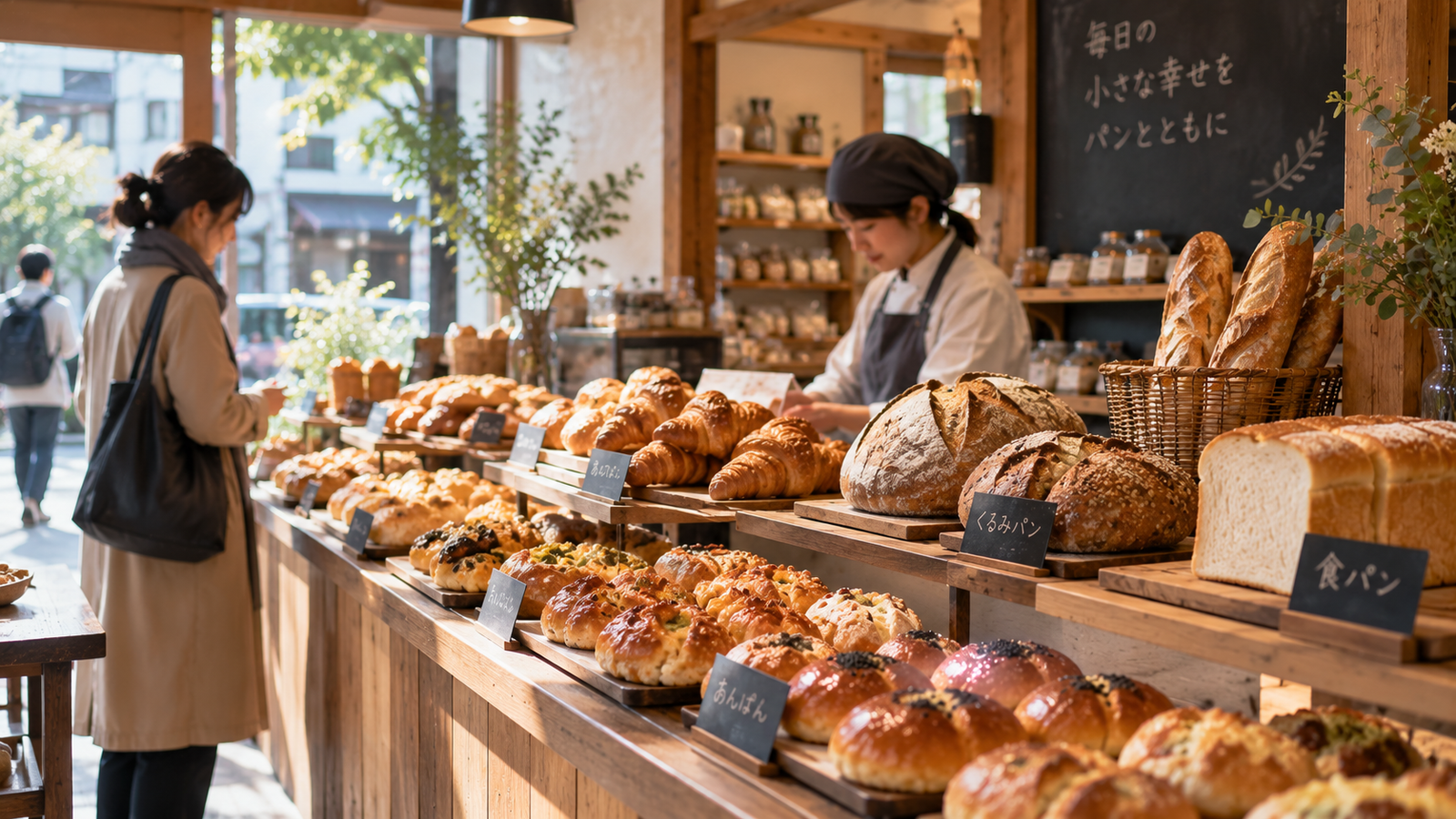
A small word you can use immediately.
Bread shops are part of ordinary neighbourhood life across Japan. You may see familiar-looking breads, filled buns, sweet pastries and savoury choices — and hear the word パン naturally around the counter.
Today, パン is useful for another reason: it gives your new P-sound a place in the real world.
A sound becomes easier to remember when you can imagine using it tomorrow morning.
First identify it. Then ask for one.
Enough for today: use it when you want one item.
You will meet the full Japanese counting system later. For now, one and two are useful immediately.
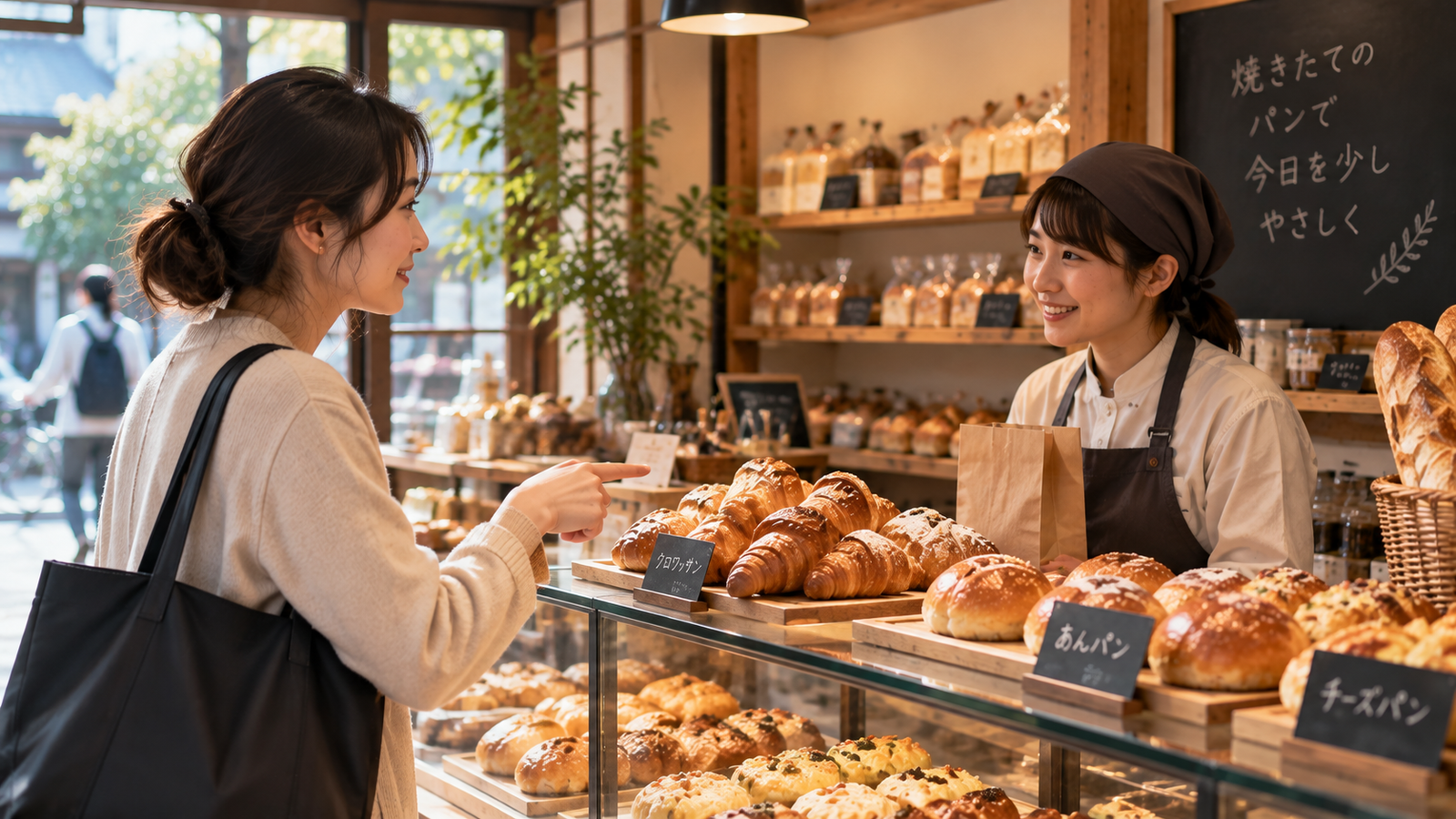
One item. One sentence. A complete interaction.
Lesson 16 gave you これを おねがいします。 — “This one, please.” Now you can be a little more specific:
パンを ひとつ おねがいします。
Progress is not always a longer sentence. Sometimes it is a more useful one.
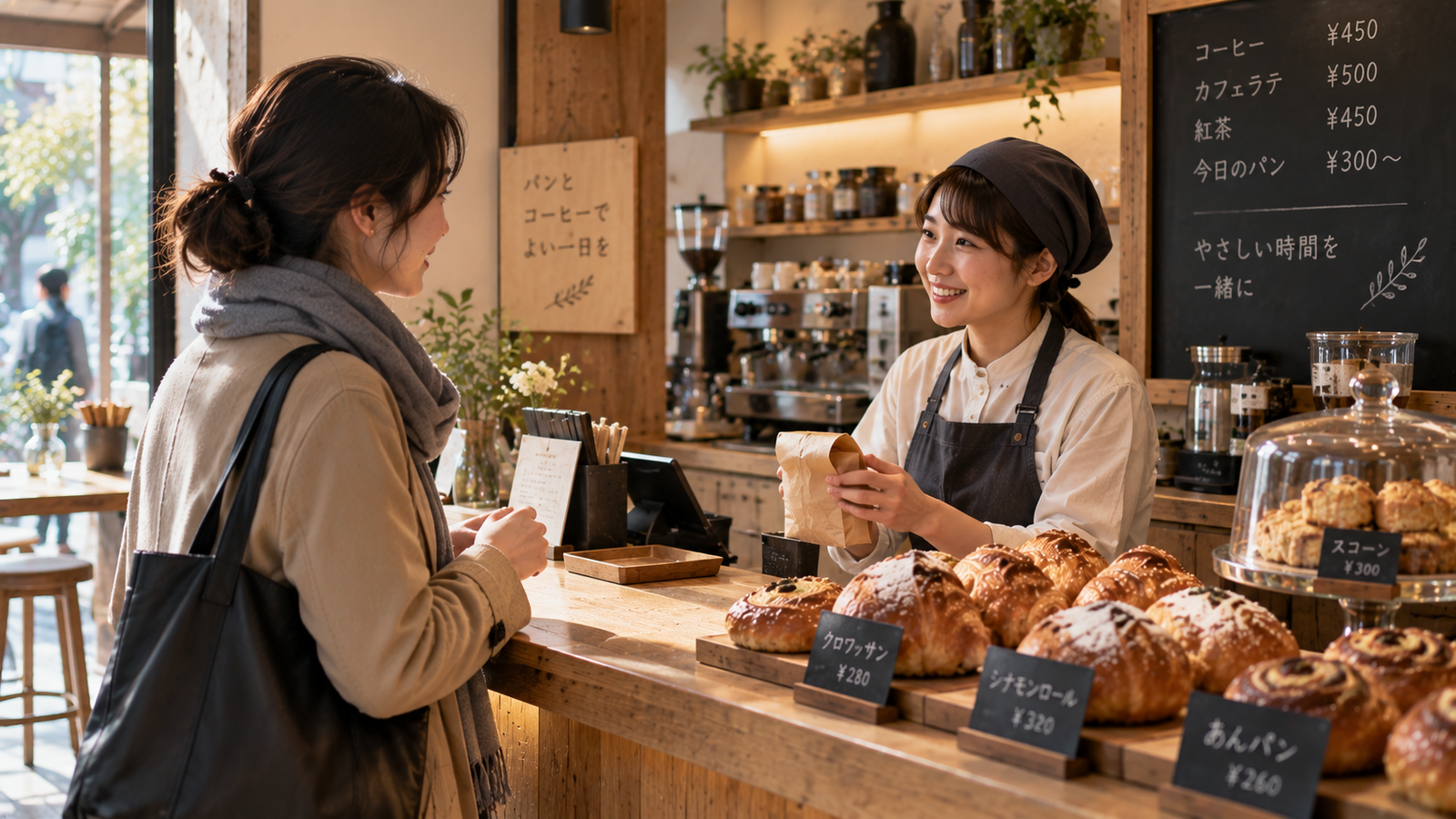
Japanese can work before it becomes fluent.
A real exchange at a bakery may be short. You request one item. The staff member confirms. You understand enough to continue. Nothing dramatic happens — and that is exactly why the moment matters.
The language is beginning to belong to ordinary life.
Three conversations you can carry with you.
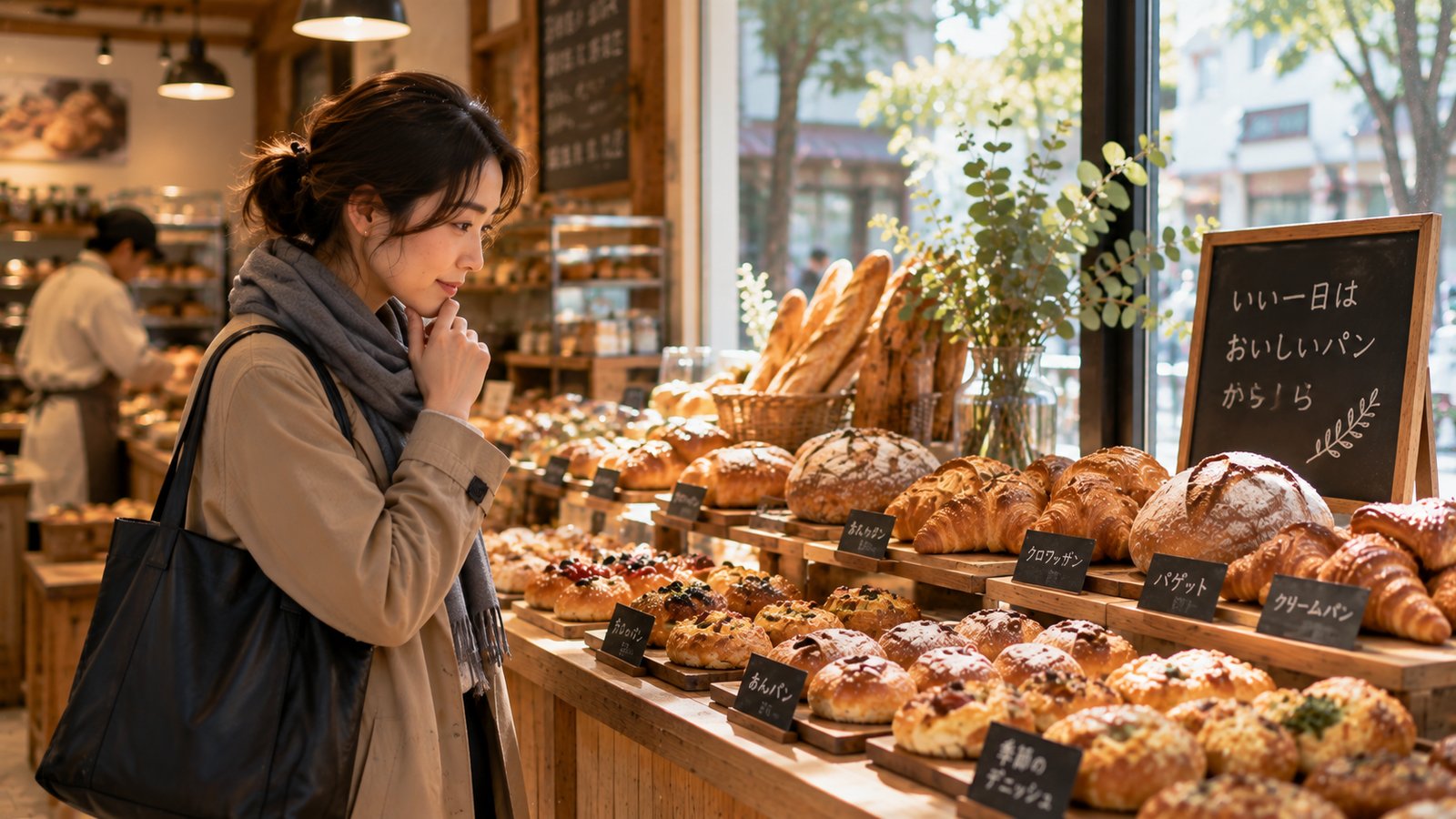
Choose one.
Next time you pass a bakery, café or food counter, notice one item you could genuinely order. You do not have to speak. Simply build the moment in Japanese.
パンを ひとつ おねがいします。
See one thing. Choose it. Imagine the sentence. That is already rehearsal for real Japan.
Can your ear separate H, B and P?
Listen for the relationship rather than translating. The shape family is visible; now let the sound family become audible.
The sound system is becoming a network.
Read across families. Your goal is no longer to recognize one row in isolation, but to notice how familiar shapes transform.
I can recognize the full basic dakuten and handakuten sound families.
Basic hiragana — 46/46 ✓
Dakuten — 20 unlocked ✓
Handakuten — 5 unlocked ✓
You can now see how one familiar kana family changes through marks — and use those sounds inside practical everyday Japanese.