が
GAINDOMURA JAPANESE · FOUNDATIONIJ-0013 · DAKUTEN
Foundation · Dakuten 01 · IJ-0013
The characters you know can change their voice.
が・ぎ・ぐ・げ・ご
You already know か・き・く・け・こ. Add one tiny mark — ゛ — and five familiar characters begin making five new sounds. Your basic Hiragana are complete. Now Japanese begins expanding them: familiar shapes gain new voices through a small mark you will see constantly in real words.

CHAPTER 2Japanese Becomes Readable
NEW DISCOVERY濁点 · だくてん
SOUND CHANGEK → G
PROGRESS5 additional sounds unlocked
Sound transformation · 濁点
One small mark. Five new sounds.
The two small marks ゛ are called dakuten · 濁点(だくてん). They mark a voiced consonant. In this row, the K sound becomes G: か → が, き → ぎ, く → ぐ, け → げ, こ → ご. You are not learning a new alphabet — you are extending kana you already know.
か+ ゛がKA → GA
き+ ゛ぎKI → GI
く+ ゛ぐKU → GU
け+ ゛げKE → GE
こ+ ゛ごKO → GO
゛
Feel the difference.
Place your fingers lightly on your throat and compare か with が. With が, you should notice vibration from the vocal folds. That physical contrast is a useful first way to feel what “voiced” means.
Hear the new row
Listen before you memorise.
Keep the familiar shape in your mind and notice the new sound. The dakuten marks are small, but they change what you hear.
ぎ
GIぐ
GUげ
GEご
GOが ぎ ぐ げ ご
Hear the complete row together.
Dakuten Writing Studio · 書いてみよう
Write what you already know — then add the voice.
Select a character. Play the stroke order once. Notice how the familiar base kana is completed with the dakuten marks.
Ready.
が
Write か with the movement you already know, then add the two short dakuten marks clearly at the upper right.
Vocabulary · read the new sounds
Five sounds immediately enter real words.
Try the Japanese first. Romanisation is still here as support, but your eyes should begin trusting hiragana before English letters.
かぎ
KAGIkey
ごご
GOGOafternoon / p.m.
えいご
EIGOEnglish language
ごはん
GOHANrice / meal
げんき
GENKIwell · energetic
がくせい
GAKUSEIstudent

Memory anchor · かぎ
A tiny sound change creates a useful everyday word.
かぎ
A key is かぎ. You already know か and き. The second character simply gains dakuten: き → ぎ. This is the important shift after 46/46: you are no longer memorising a new writing system from zero. You are learning how the system expands.
Language discovery
Japanese often places the action at the end.
The sentence patterns from earlier lessons continue working while your reading power grows. New sounds do not mean new grammar every time.
ごはんmeal / rice
→
をobject marker
→
たべますeat
ごはんを たべます。
I eat a meal / I eat rice.
えいごを べんきょうします。
I study English.
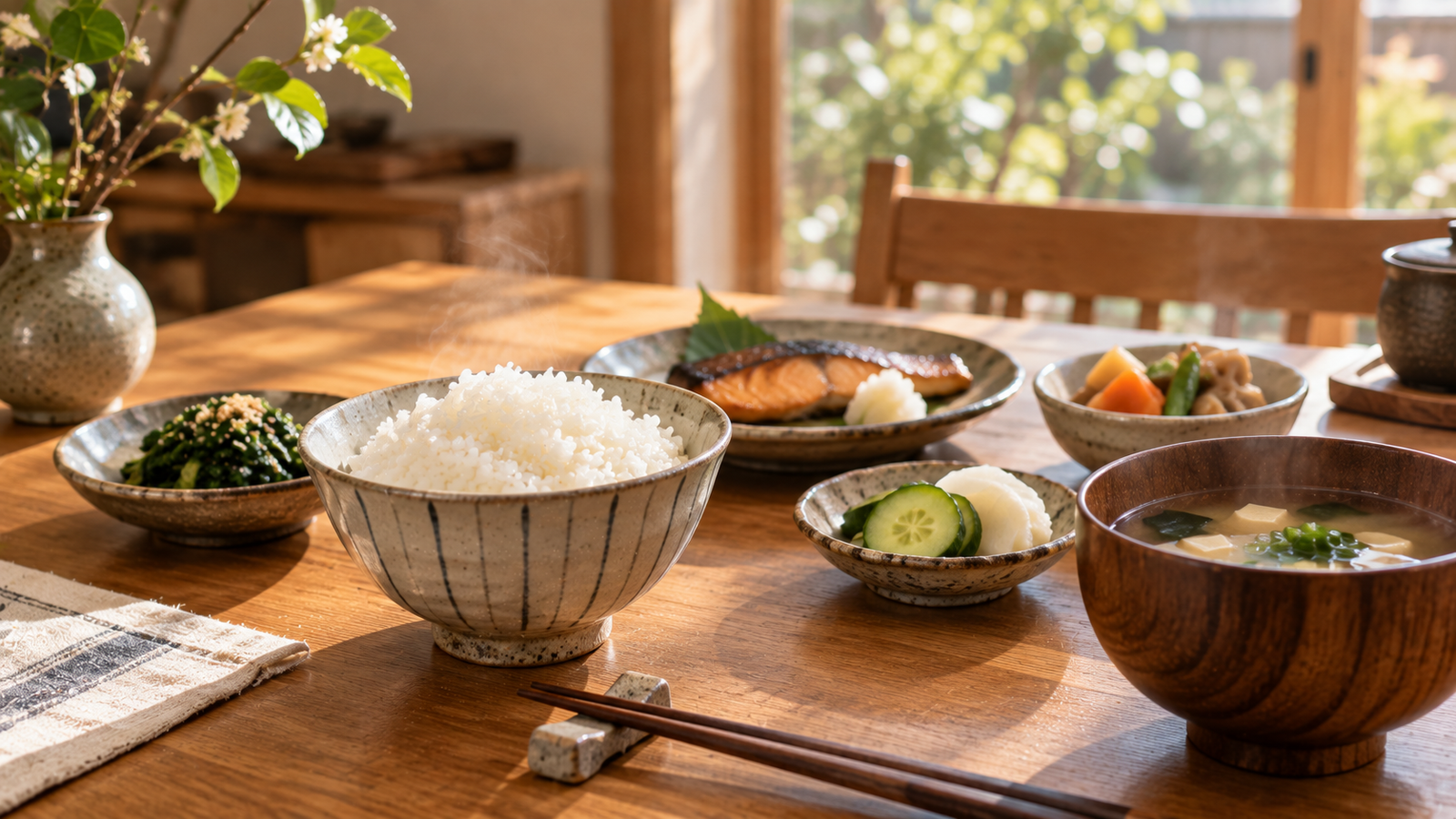
Everyday Japanese · ごはん
One word can carry more than one everyday meaning.
ごはん
ごはん can mean cooked rice. In ordinary conversation, it can also refer more broadly to a meal. Context tells you which meaning is intended. Useful Japanese is learned through situations, not isolated dictionary labels.

Life in Japan · greeting with context
“How are you?” is not a script you must use every time.
おげんきですか。
This is useful Japanese and can ask about someone’s wellbeing. But Japanese conversation does not mechanically copy the English habit of saying “How are you?” at every meeting. Relationship, situation and how long it has been since you met all matter.
はい、げんきです。
A simple answer: “Yes, I’m well.” Learn the phrase — and also learn when it feels natural.
Mini conversation · real language
New sounds join language you already know.
EVERYDAY EXCHANGE · DAKUTEN FOCUS
A
おげんきですか。
How are you?B
はい、げんきです。
Yes, I’m well.A
ごはんを たべますか。
Will you eat / Are you going to eat?B
はい、たべます。
Yes, I will.A
えいごを べんきょうしますか。
Do you study English?B
はい、べんきょうします。
Yes, I do.
Real Japan Mission
Find the voiced sound in ordinary life.
Imagine entering this everyday setting. Your mission is not to translate everything. First, notice what you can already recognise.
ごはん えいご げんき かぎ ごご がくせい
Mission habit: recognise first → sound it out → then ask what it means.
Listening laboratory
Train your ear, not only your eyes.
Careful → natural
Hear おげんきですか carefully, then naturally.
Listen & choose
Which word did you hear?
Retrieve from sound
Listen first. Can you recognise the words?
ごはん · げんき
Reading power
Your 46 basic hiragana remain complete — and five new sounds now sit on top of them.
The highlighted cards are not characters 47–51. They are additional voiced sounds created from familiar kana.
あいうえおかきくけこさしすせそたちつてとなにぬねのはひふへほまみむめもやゆよらりるれろわをんがぎぐげご
+5ADDITIONAL SOUNDS UNLOCKED
+5ADDITIONAL SOUNDS
What I can do now
I can recognise the first voiced hiragana row.
Recognise dakuten ゛ as a sound-changing mark.
Read が・ぎ・ぐ・げ・ご.
Connect K-row kana to their G-row forms.
Read かぎ, ごはん and げんき.
Use familiar sentence patterns with new words.
Hear the difference between K and G sounds.
46 / 46 ✓
Basic Hiragana
Basic Hiragana
5
Additional Sounds Unlocked
Additional Sounds Unlocked
Next · IJ-0014 · One small mark, five more sounds
The same idea moves to the S-row.
ざ じ ず ぜ ぞ
Chapter 2 continues: familiar shapes, new voices.
PREVIOUS · IJ-0012
わ・を・ん
46 / 46 basic Hiragana complete
YOU ARE HERE · IJ-0013
が・ぎ・ぐ・げ・ご
Dakuten 01 · K → G
NEXT · IJ-0014
ざ・じ・ず・ぜ・ぞ
Dakuten 02 · S → Z / J