Three sounds
that take you
somewhere.
One familiar yōon rule now opens into study, travel, inns and food. Listen first; then let the sounds attach themselves to real Japan.

Three combinations. One compact rhythm.
Normal-sized り joins a small ゃ・ゅ・ょ. Do not pronounce two separate kana: each pair becomes one compact sound.
The small kana changes what you hear.
First hear the full-size kana separately. Then hear the yōon combination as one unit.
These sounds quickly become useful words.
You do not need dozens of examples. A small set of memorable words is enough to make the sound pattern real.
りゅうがく connects Japanese to studying abroad. りょこう takes you into travel. りょかん brings you through the doorway of a Japanese inn, while りょうり brings the language to the table.
Notice the long vowel too: in りゅう and りょう, the sound continues beyond the first yōon unit.
りゅうがく · study abroad
りゅうがく means studying in another country. A person doing that is a りゅうがくせい — an international or study-abroad student.
For a beginner in Japan, this word can connect language study to a very real experience: entering a school, meeting classmates and gradually learning to live through Japanese.

Learn the word and the situation together.
Going to another country for study. The related person-word is りゅうがくせい.
A learner living and studying outside their home country.
A practical word you will meet when talking about trips, holidays and places you are going.
A Japanese-style inn. The word may become real when you arrive, remove your shoes and enter a room prepared for an overnight stay.
Used when talking about cooking and kinds of cuisine, such as Japanese cooking. Context tells you whether the focus is the act, style or food.
A useful everyday word for the amount charged for a service, facility, transport or accommodation.
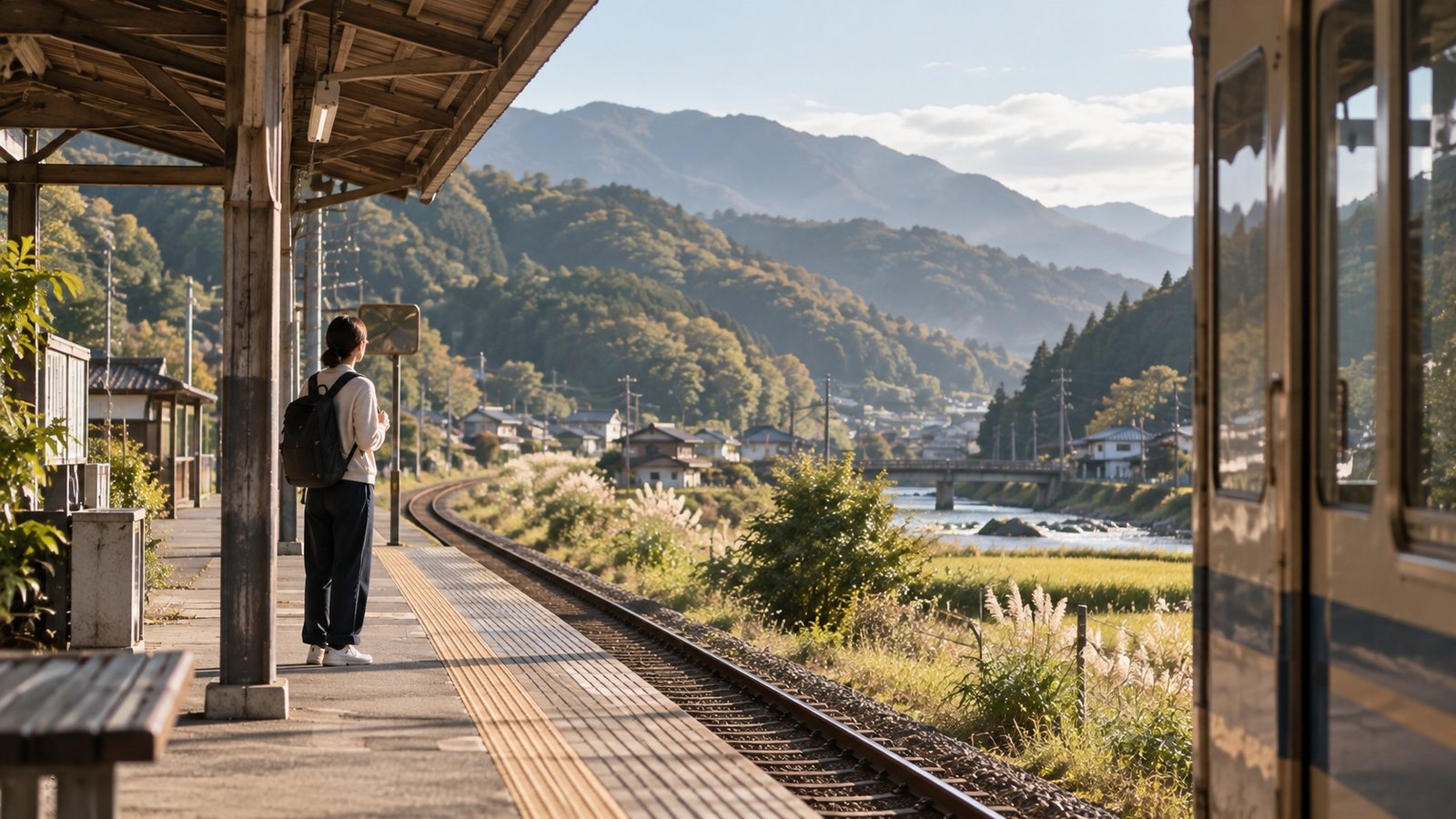
りょこう starts changing the scale of Japan.
A map may show one country, but travel reveals many Japans: local trains, ordinary platforms, neighbourhoods, fields, coastlines, mountain towns and regional rhythms.
You do not need to read every sign yet. Begin by recognising one useful word and letting Japanese accompany the journey.
りょかん · Japanese inn
A りょかん is more than a dictionary translation of “inn.” Depending on the property, the experience may include a genkan entrance, tatami rooms, futon bedding, bathing customs and meals.
For this lesson, the important thing is simpler: hear りょ clearly at the beginning and connect the word to an actual place you could enter.

A simple conversation before a journey.
Follow the meaning of the exchange first. You do not need to analyse every grammar point yet.
Listen line by line, or hear the complete exchange from beginning to end.
What happened? One person recognised that the other was travelling, then asked the destination. The answer was Kyoto. The target word りょこう is doing useful work inside an ordinary exchange.

Normal り. Smaller ゃ・ゅ・ょ.
Select a combination and watch the real kana strokes appear in order. Write り first, then keep the second kana visibly smaller.
Write り first. Then a visibly smaller や.
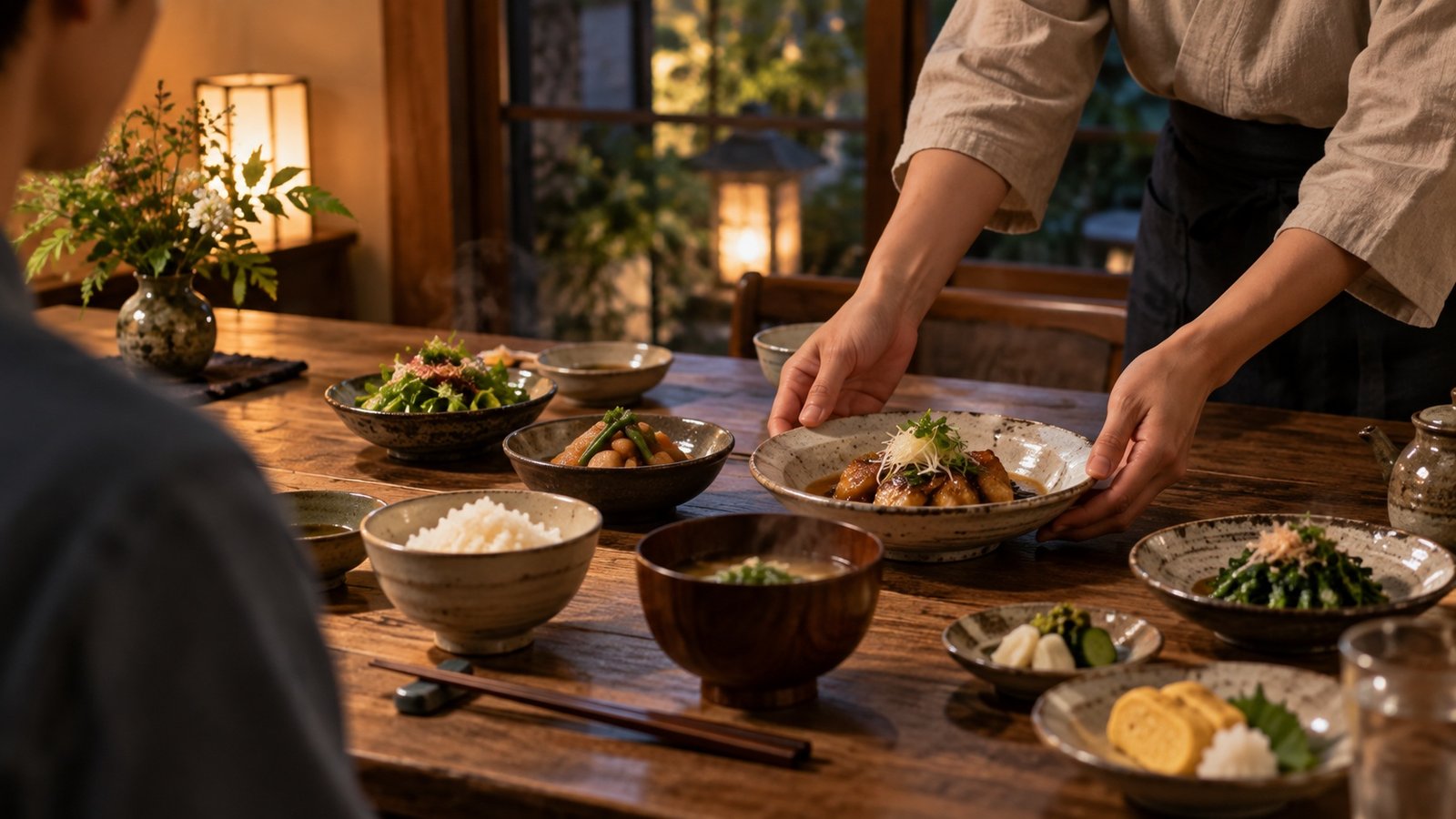
りょうり · language you can share at a table
りょうり can refer to cooking, cuisine or prepared food depending on context. It is a word that quickly becomes useful when talking about what people make and eat.
Attach the sound to a human moment: a dish arriving, someone cooking, or a meal being shared. That memory is stronger than an isolated vocabulary card.
Seven items. Listen before you look.
Try to recognise the sound family first; then connect each word to its meaning.
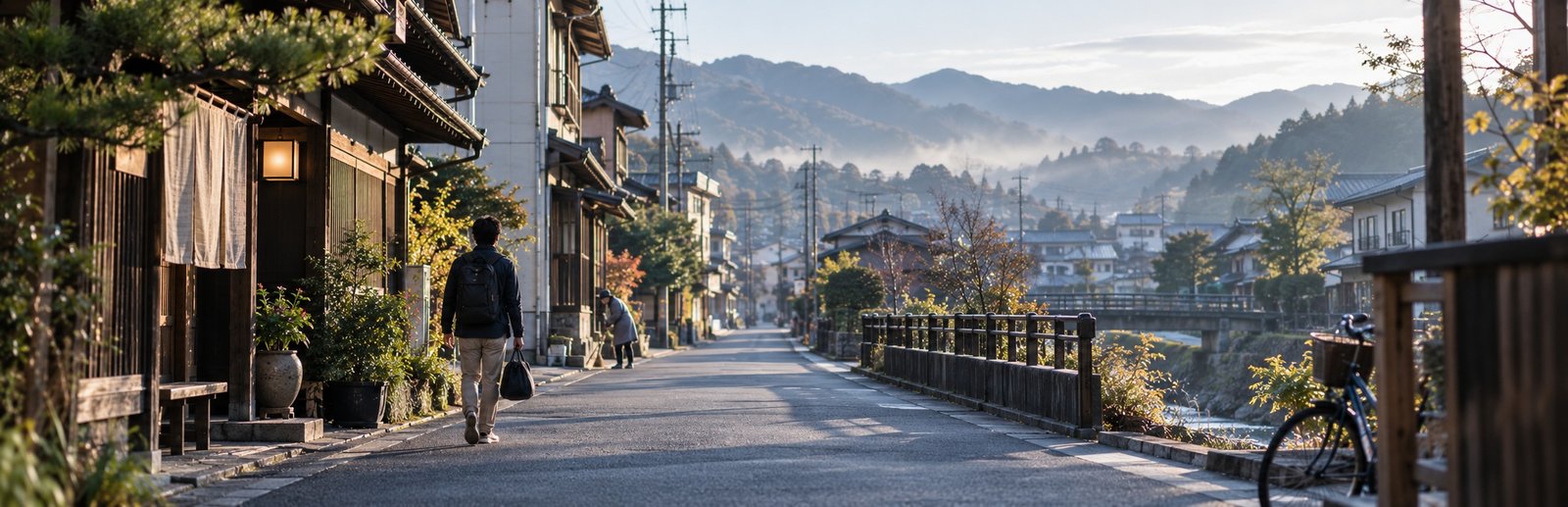
Yesterday they were kana.
Now they can take you somewhere.
You learned to hear and write りゃ・りゅ・りょ, then met them inside study, travel, a ryokan and Japanese food. The sounds are no longer floating on a chart; they have begun attaching themselves to places and experiences.