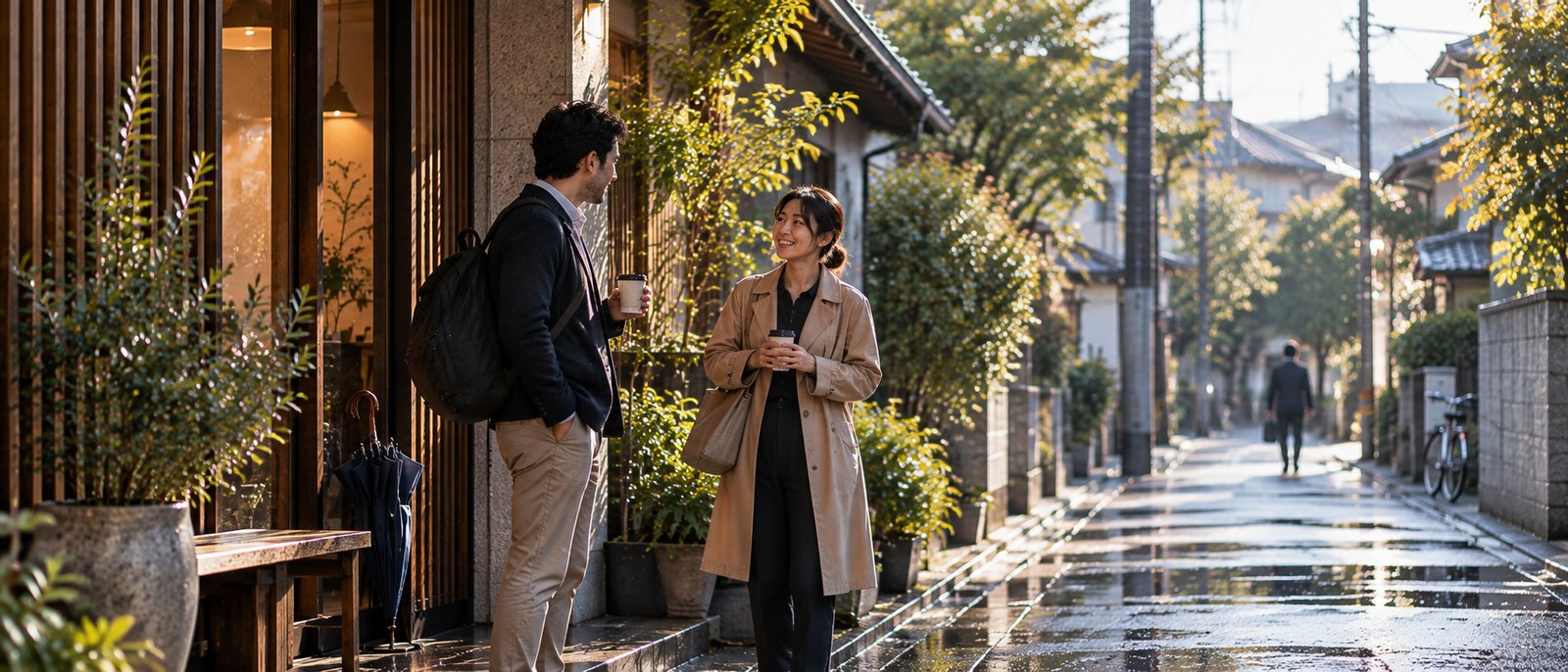
Foundation · Asking about the past · M3

Now yesterday
can answer back.

でしたか

You can already say what yesterday was. Add one small question marker and yesterday stops being a private memory. Now you can ask another person about theirs.

01 · Turn the past into a question

Was it?

Keep the polite past statement and add か. Your voice does not need acrobatics; the grammar has already marked the question.

でしたか。Deshita ka.Was it? / Were you? / Was there?
昨日は休みでしたか。Kinō wa yasumi deshita ka.Was yesterday a day off?
02 · Work

Were you working yesterday?

A tiny question can open an ordinary office conversation. Nothing glamorous. Quite useful—which is often better.

昨日は仕事でしたか。Kinō wa shigoto deshita ka.Were you working yesterday?
はい、仕事でした。Hai, shigoto deshita.Yes, I was working.
そうでしたか。Sō deshita ka.I see. / Oh, was that so?
03 · The pattern

Statement + か.

You are not rebuilding the sentence—just asking whether it was true. でした。 becomes でしたか。

The same frame travels with familiar nouns: 休み, 仕事, 雨, 会議 and 学校.
昨日は雨でしたか。Kinō wa ame deshita ka.Was it rainy yesterday?
昨日は会議でしたか。Kinō wa kaigi deshita ka.Was there a meeting yesterday?
昨日は学校でしたか。Kinō wa gakkō deshita ka.Was there school yesterday?
04 · Weather

Not every question gets a yes.

The past-negative form from the previous lesson now earns its place in a real exchange.
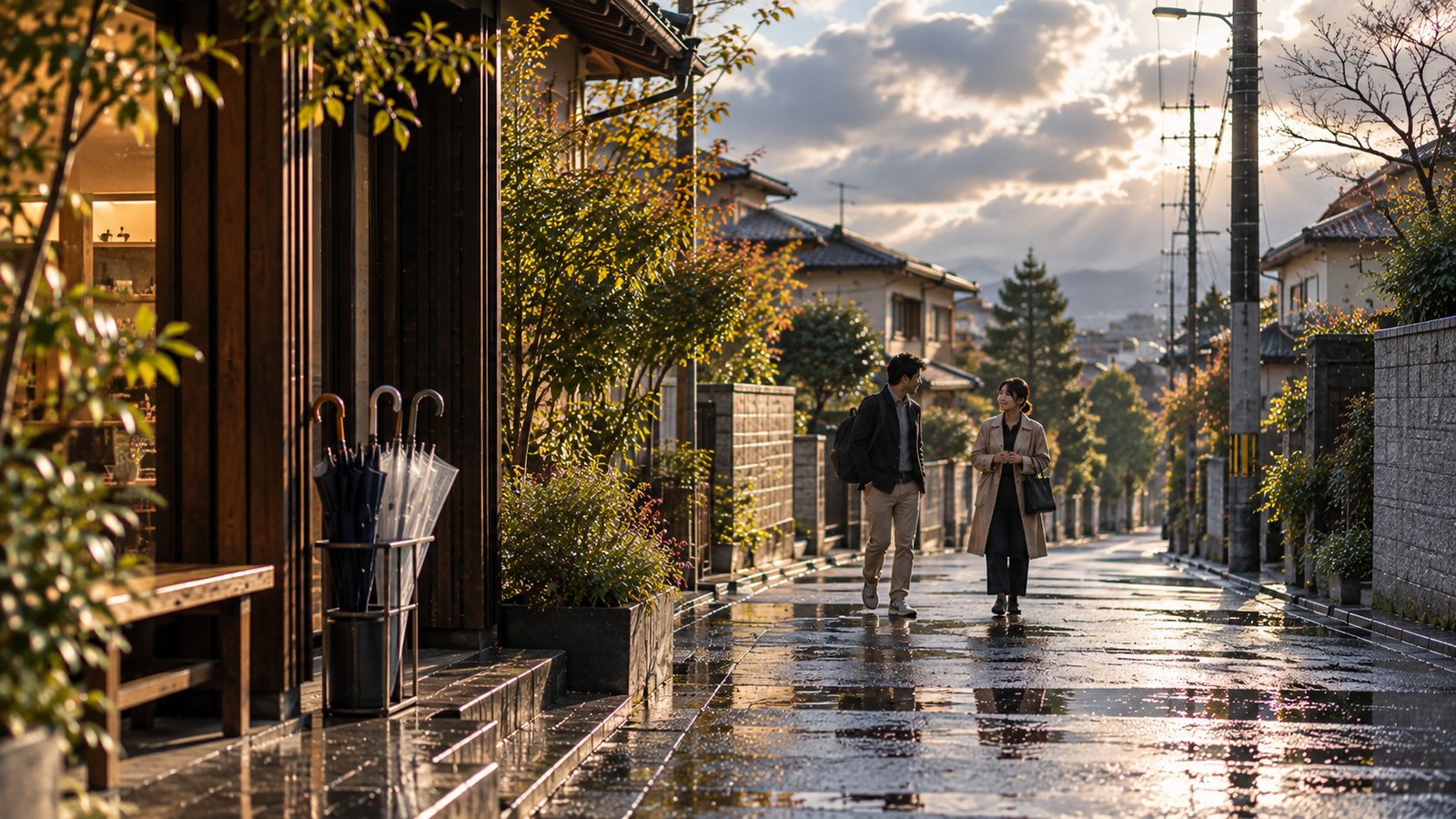
昨日は雨でしたか。Kinō wa ame deshita ka.Was it rainy yesterday?
いいえ、雨じゃありませんでした。Iie, ame ja arimasen deshita.No, it wasn't rainy.
そうですか。Sō desu ka.I see. / Is that so?
05 · Hear two people

A question is only half a conversation.

One person asks. The other answers. Then somebody acknowledges what they heard.

Yesterday's work

Female → Male → Female

昨日は仕事でしたか。Kinō wa shigoto deshita ka.Were you working yesterday?
はい、仕事でした。Hai, shigoto deshita.Yes, I was.
そうでしたか。Sō deshita ka.I see. / Oh, was that so?

Yesterday's weather

Male → Female → Male

昨日は雨でしたか。Kinō wa ame deshita ka.Was it rainy yesterday?
いいえ、雨じゃありませんでした。Iie, ame ja arimasen deshita.No, it wasn't.
そうですか。Sō desu ka.I see.
06 · Ordinary life

Meetings and school.

The nouns change while the question frame stays steady.

昨日は会議でしたか。Kinō wa kaigi deshita ka.Was there a meeting yesterday?
はい、会議でした。Hai, kaigi deshita.Yes, there was a meeting.
昨日は学校でしたか。Kinō wa gakkō deshita ka.Was there school yesterday?
いいえ、学校じゃありませんでした。Iie, gakkō ja arimasen deshita.No, there wasn't school.
07 · Listening is language too

そうですか。

Sometimes conversation needs only a small signal that says: I heard you.

そうですか。Sō desu ka.I see. / Is that so?
そうでしたか。Sō deshita ka.I see. / Oh, was that so?
These small responses do not carry enormous information. They carry attention—which is occasionally more useful.
08 · A bigger question

How was yesterday?

You do not need every possible answer yet. For now, recognise this useful question when you hear it.

昨日はどうでしたか。Kinō wa dō deshita ka.How was yesterday?
AskChoose one familiar topic and use でしたか.
ListenHear whether the answer confirms or rejects it.
RespondTry そうですか instead of immediately launching another question.
09 · Real Japan Mission

Ask one person about yesterday.

Was yesterday a workday? Was there a meeting? Was it rainy? Listen to the answer and try a simple そうですか。 You are making room for somebody else's Japanese too.
Yesterday, shared

A question makes memory social.

Yesterday belonged to one person. A small question made part of it shared. Language sometimes advances through grammar. Sometimes it advances because somebody bothered to ask.