Three small sounds. Suddenly, Japan gets busier.
You already know what a small ゃ・ゅ・ょ can do. Add dakuten to き and the sound gains a little weight: ぎゃ・ぎゅ・ぎょ. Before long, it is sitting at breakfast, sizzling in a pan, waiting in a queue and turning up on a community calendar. Kana rarely stays on the page for long.

The rule is familiar. The voice is new.
A normal-sized ぎ joins a visibly smaller ゃ・ゅ・ょ. The eye sees two kana, but the ear should catch one compact beat. Think ぎゃ, not ぎ・や.
One combined sound: gya.
One combined sound: gyu.
One combined sound: gyo.
Small kana changes the rhythm.
Hear the full-sized kana separately, then the yōon pair as one sound.
Some sounds quickly find a life outside the textbook.
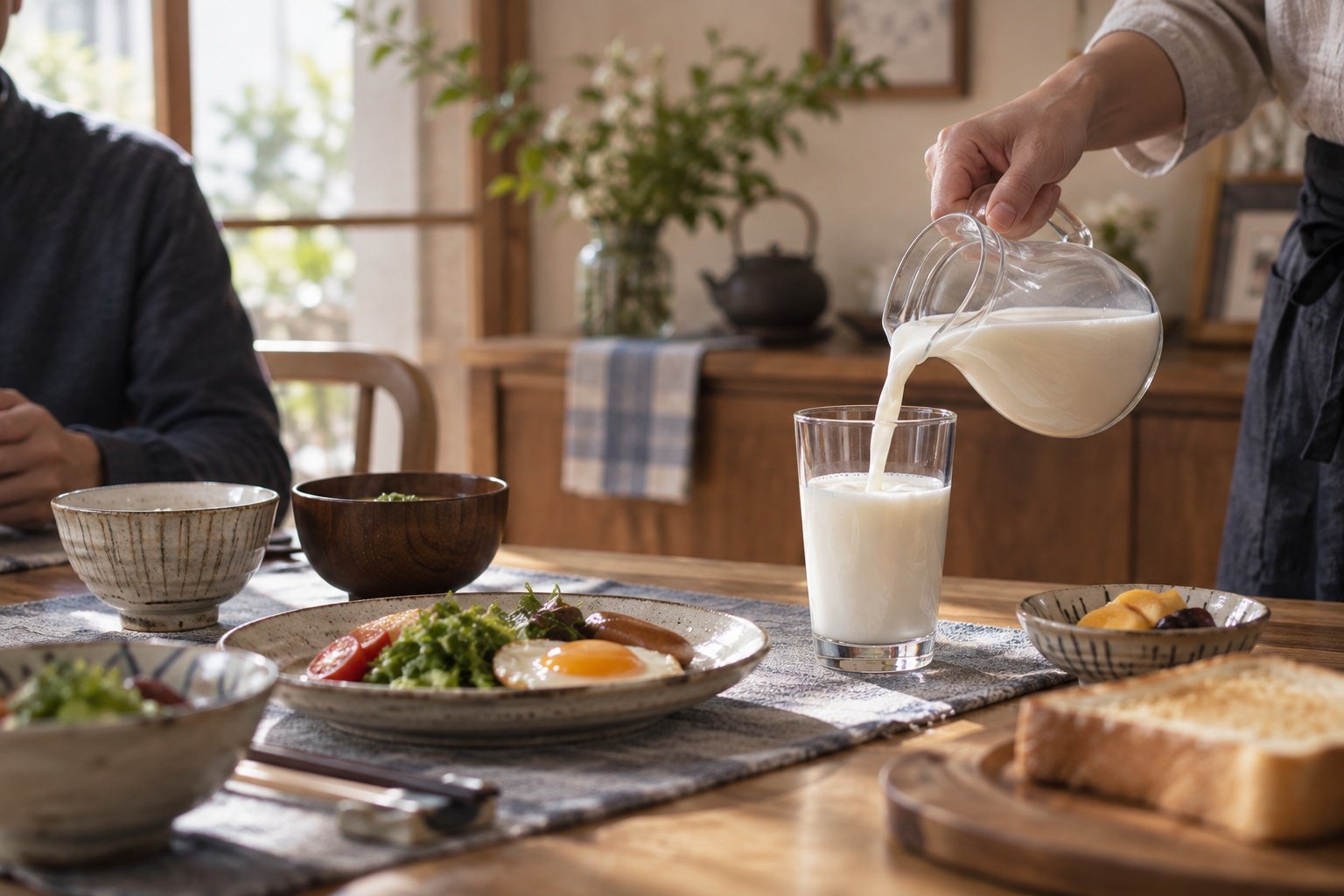
ぎゅ turns up in the very ordinary ぎゅうにゅう — milk. ぎょ / ぎょう opens several more doors: ぎょうざ at the table, ぎょうれつ outside a busy shop, and ぎょうじ on a school or community calendar.
That is the useful trick here: do not memorise three floating sounds. Give each one somewhere to live.
ぎゅうにゅう · milk
Not glamorous Japanese. Excellent Japanese. ぎゅうにゅう belongs to refrigerators, breakfast tables, school lunches and hurried mornings — exactly the sort of word that makes a language start feeling lived in.
Listen to the opening carefully: the compact ぎゅ flows into a longer う sound. Do not let the small ゅ become a separate beat.
Words that belong to real situations.
Milk. An everyday food word.
Gyoza. Common at specialist shops, ramen restaurants and home tables.
Seafood / marine products. A useful category word.
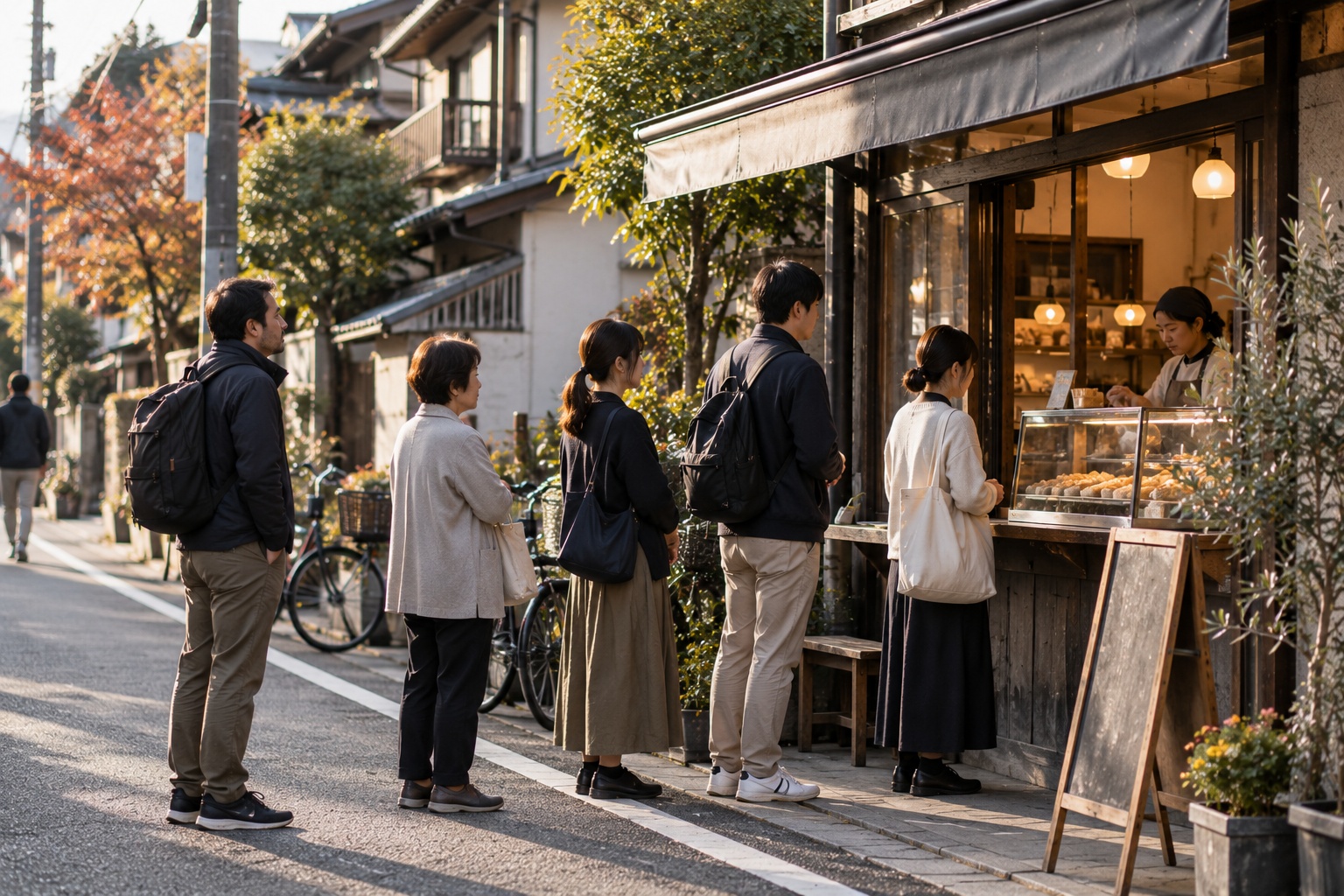
Line / queue. Connect it to people waiting for a restaurant, event or service.
Event / observance. Used for school, community and seasonal occasions.
Tightly / firmly. A mimetic expression suggesting squeezing or gripping.
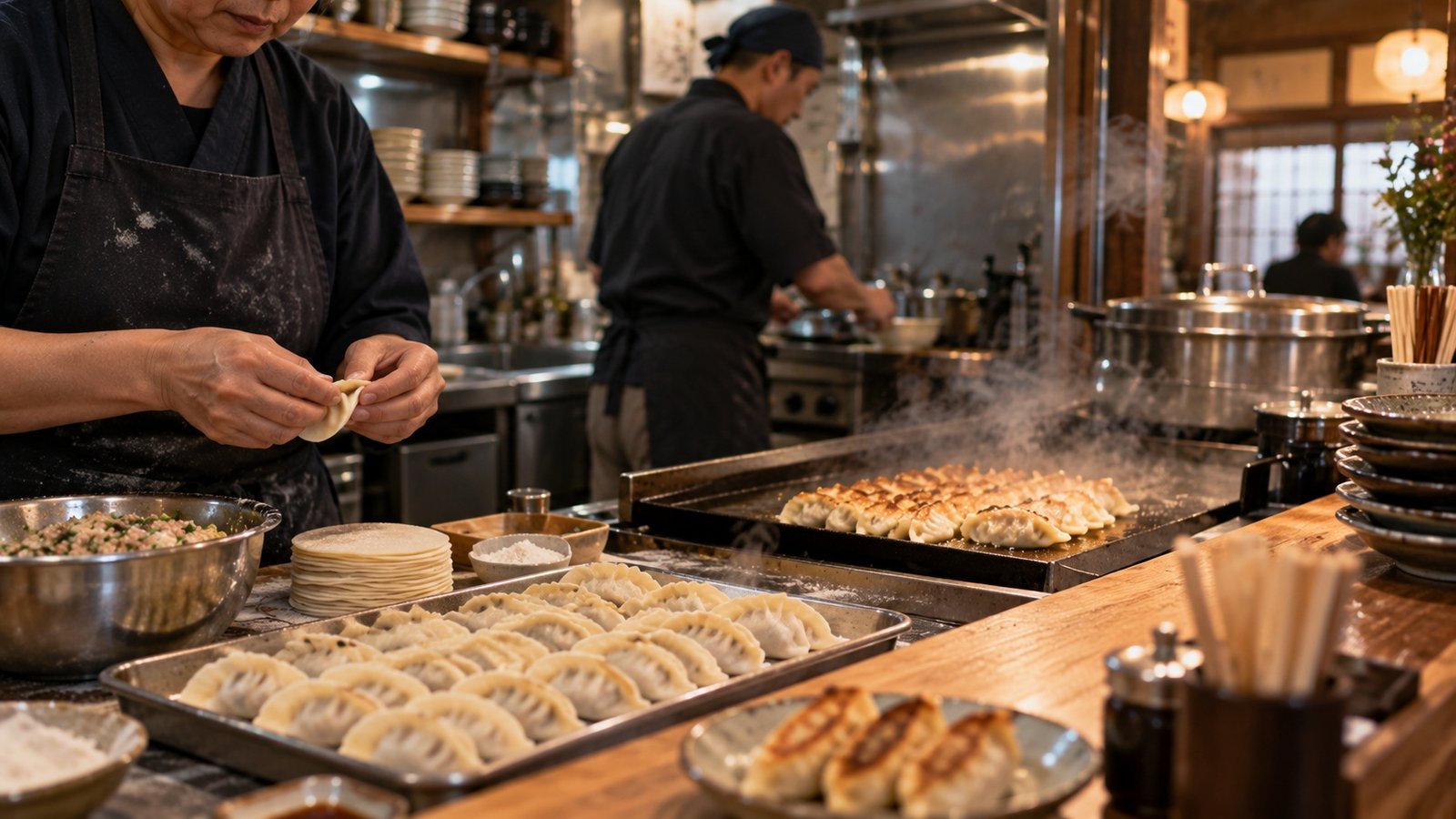
ぎょうざ · a borrowed dish that stopped feeling borrowed.
Gyoza grew from Chinese dumpling traditions, while the crisp-bottomed, pan-fried style now familiar across Japan became especially embedded in everyday eating in the postwar years.
Food is wonderfully bad at respecting borders. Japan has taken outside influences, adjusted them to local tastes, and made many of them feel completely at home. A plate of gyoza beside rice or ramen is a small, delicious example.
ぎょうれつ · the queue that quietly says, “something is happening here.”
A ぎょうれつ might form outside a ramen shop, at a seasonal event, beside a new bakery, or simply where everyone has decided that waiting twenty minutes is somehow a perfectly reasonable lunch plan.
Do not turn it into a cliché about Japan. Just notice the scene. Once ぎょうれつ has a place, some people and a little impatience attached to it, the word becomes much harder to forget.
Four lines. Lunch is already possible.
Listen for the human exchange before worrying about grammar. Someone wants gyoza. Someone checks the quantity. Nobody delivers a lecture on particles. This is how language usually behaves in the wild.
A and B make the exchange easy to follow.
What happened? A ordered gyoza. B checked “one?”, A confirmed it, and the exchange was done. Tiny conversation, useful result. The important win is not memorising four lines perfectly — it is recognising that Japanese can already carry you through a small real moment.
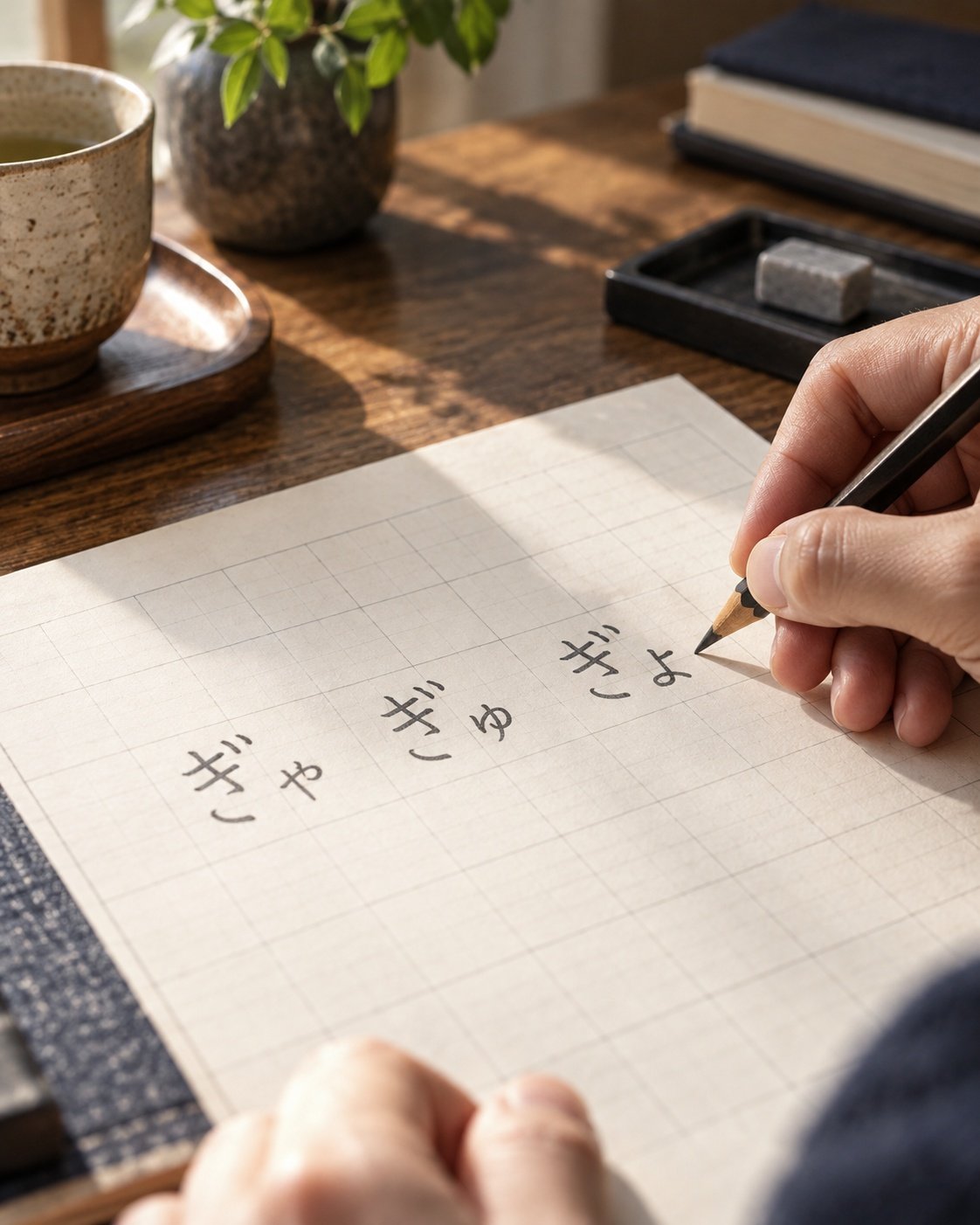
Normal ぎ. Smaller ゃ・ゅ・ょ.
Write ぎ first, including dakuten. Then add the visibly smaller second kana.
Write ぎ first. Then write a visibly smaller や.

ぎょうじ · the little markers that give a year its shape.
A ぎょうじ can be a school ceremony, neighbourhood gathering, seasonal observance or community event. Some arrive with banners and crowds; others are modest enough to be missed unless you live nearby.
These occasions matter because Japan is not experienced only through famous festivals. Much of the country’s rhythm lives in school calendars, local preparations, seasonal routines and events repeated quietly year after year. As your Japanese grows, those rhythms will become readable too.
Listen, recognise, connect.

Tomorrow, one of these sounds may be waiting for you outside.
Perhaps it is ぎゅうにゅう at breakfast. Perhaps ぎょうざ on a handwritten menu, a ぎょうれつ you did not expect to join, or a local ぎょうじ you only understand because someone mentioned it.
That is the quiet pleasure of learning Japanese: the world does not suddenly change — but you begin noticing that it has been speaking to you all along.