Not every sound
appears equally.
That is part of learning a real language. Today three valid yōon sounds step off the chart and into names, food and everyday Japan.

Three combinations. One familiar rule.
Normal-sized み joins a small ゃ・ゅ・ょ. Each pair is one compact sound.
Small kana changes the rhythm.
Real languages are not perfectly symmetrical.
All three combinations are valid, but they do not appear equally often.
みょ / みょう gives us useful words such as みょうじ and みょうが. みゃ appears in words such as みゃく and compounds. みゅ is especially noticeable in foreign-derived words, normally written later in katakana, such as ミュージック.
Pronounce all three correctly, but do not force yourself to invent equal numbers of everyday examples.
みょうじ · family name
In Japan, family names appear constantly in introductions, school, work, appointments and deliveries. みょうじ means family name or surname.
If someone is Satō Ken, Satō is the family name and Ken is the given name. Japanese contexts commonly place the family name first.

Know what the word is doing.
A practical word for the family-name part of someone's name.
This means “tomorrow,” but it is not the everyday beginner default. In ordinary conversation, あした is much more common. みょうにち belongs to more formal situations.
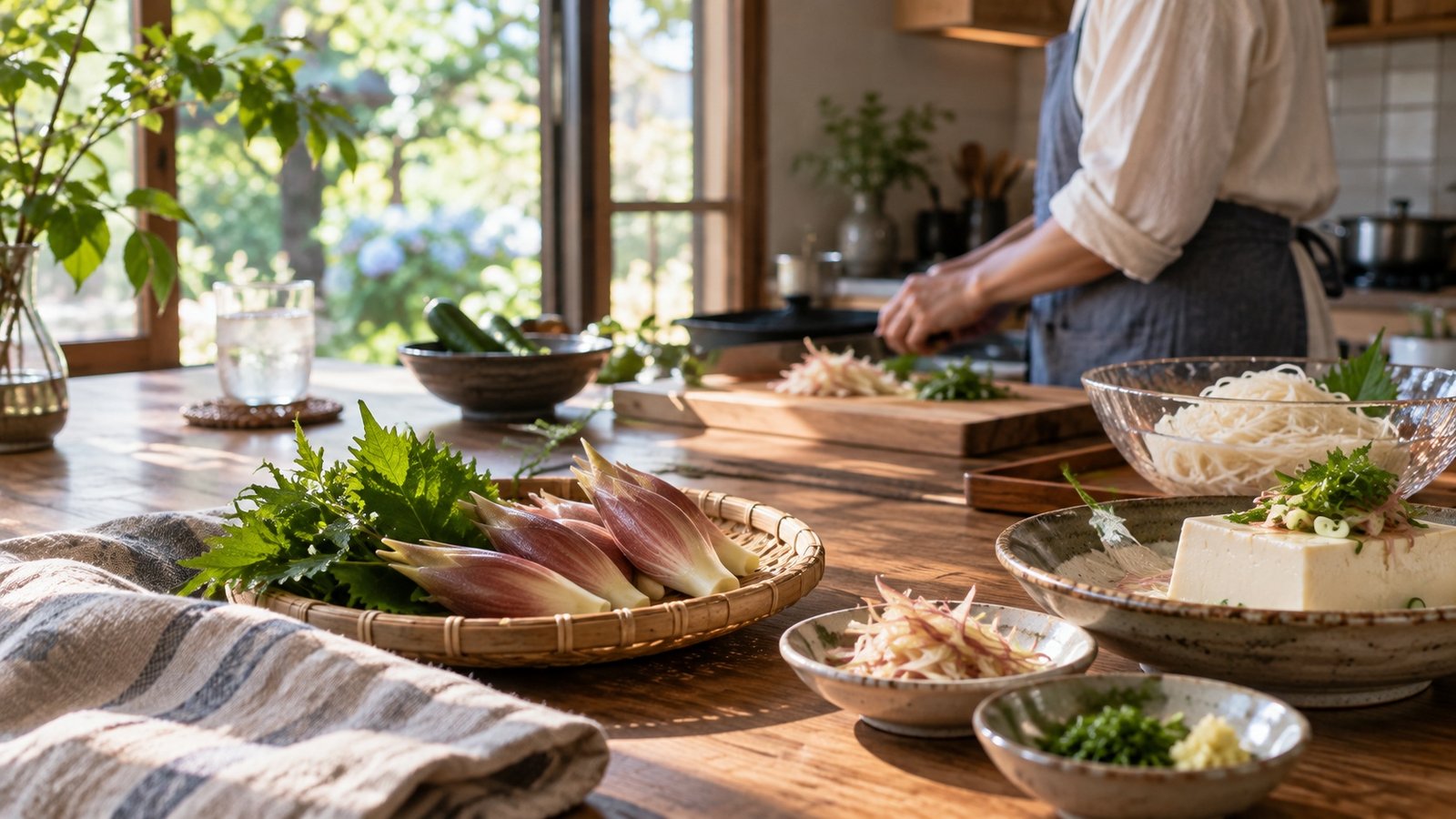
A fragrant seasonal ingredient often sliced finely as a garnish with tofu, noodles and summer dishes.
This asks specifically for the surname rather than the whole name.
Names quietly organise everyday life.
Apartment nameplates, deliveries, classrooms, workplaces and appointment desks all remind you that names are woven into daily life. You do not need to read Japanese surnames yet; begin by noticing the role family names play.

A name is being clarified.
Follow the human purpose before worrying about every grammar detail.
What happened? The staff asked for the visitor's name. He gave his full name. She then clarified which part was his family name.
みょうが · a word with a season and a taste
Myōga is an aromatic Japanese ginger bud, often finely sliced and used as a refreshing garnish. The point is not to memorize a food catalogue: it is to let みょう attach itself to something you can see, taste and remember.

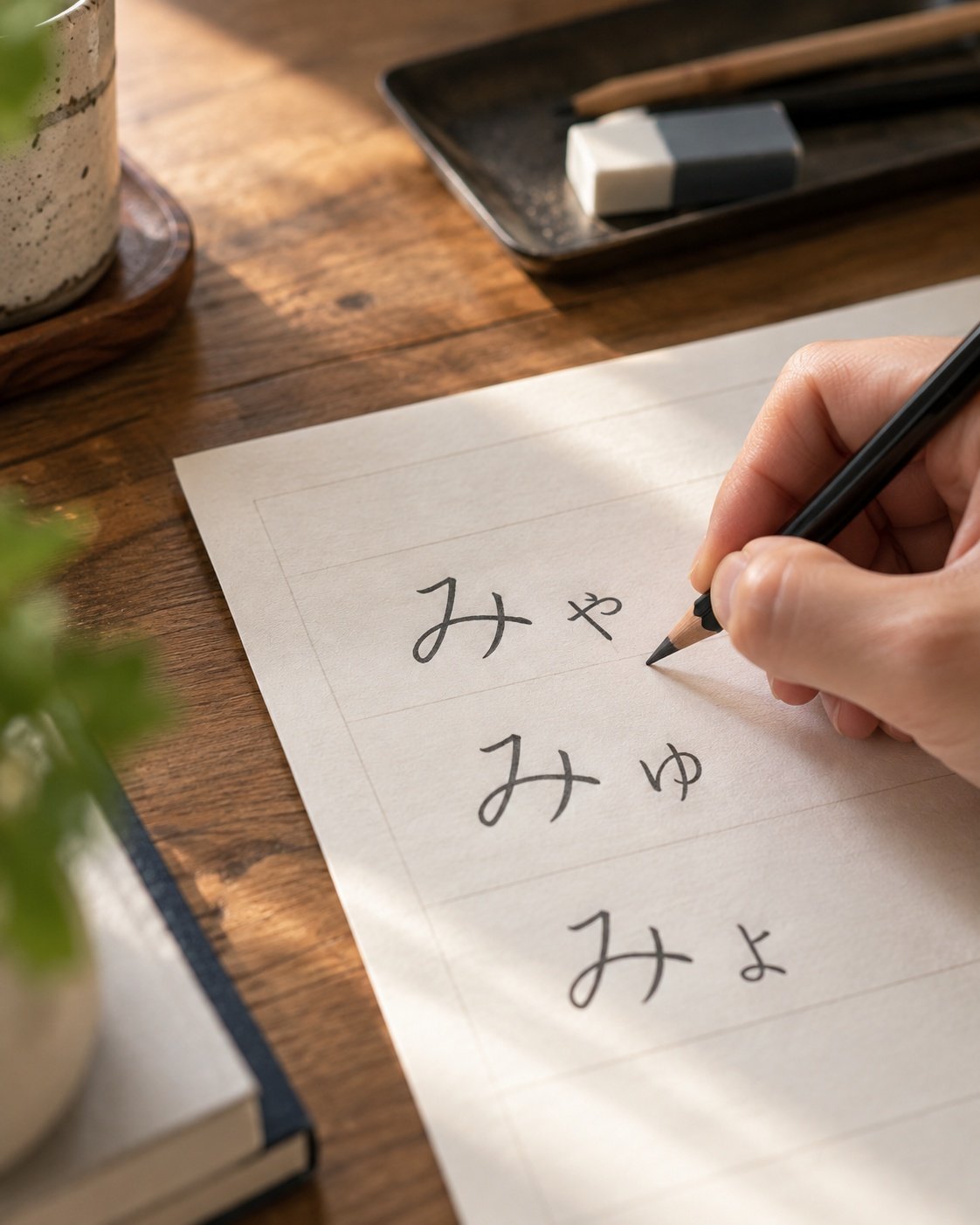
Normal み. Smaller ゃ・ゅ・ょ.
Select a combination and watch the real kana strokes appear in order.
Write み first. Then a visibly smaller や.
Vocabulary becomes easier when it has somewhere to live.
Put みょうが beside a quiet summer meal, cool tofu or noodles, and the word gains texture, season and memory.
Six items. Listen before you look.

Some sounds surround you.
Some wait quietly.
You learned to recognise みゃ・みゅ・みょ, discovered that their usefulness differs, and gave みょ a place in names, food and everyday Japan.