A softer turn
of the tongue.
Put に beside a small ゃ・ゅ・ょ and the two shapes become one combined sound. Today you will hear it, write it, and notice where it lives in Japan.
Three new sounds. One familiar rule.
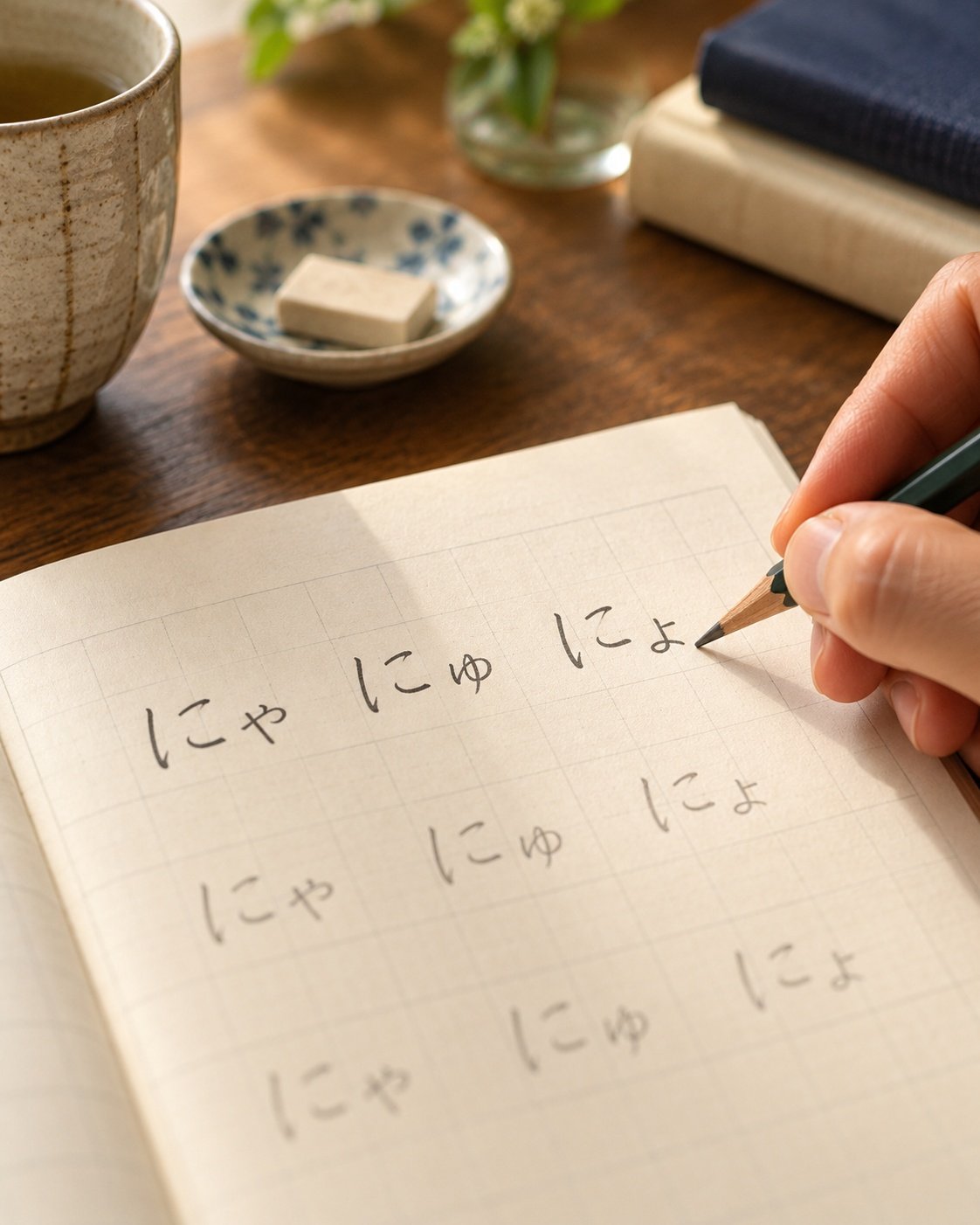
Do not say に + や as two separate beats. A small ゃ・ゅ・ょ joins に and creates one beat: にゃ, にゅ, にょ. This is the same pattern you used with きゃ, しゃ and ちゃ. Standard Japanese teaching charts classify these as yōon combinations.
Size changes rhythm.
A full-size や・ゆ・よ stays separate. A small ゃ・ゅ・ょ combines with に. The distinction matters because yōon is pronounced as one mora rather than two.
Write に first. Make the second kana visibly smaller.
にゃ
Write に at normal size. Then place the small ゃ, ゅ or ょ beside it. The pair is read together.
Select → Play → Watch → Trace → Write
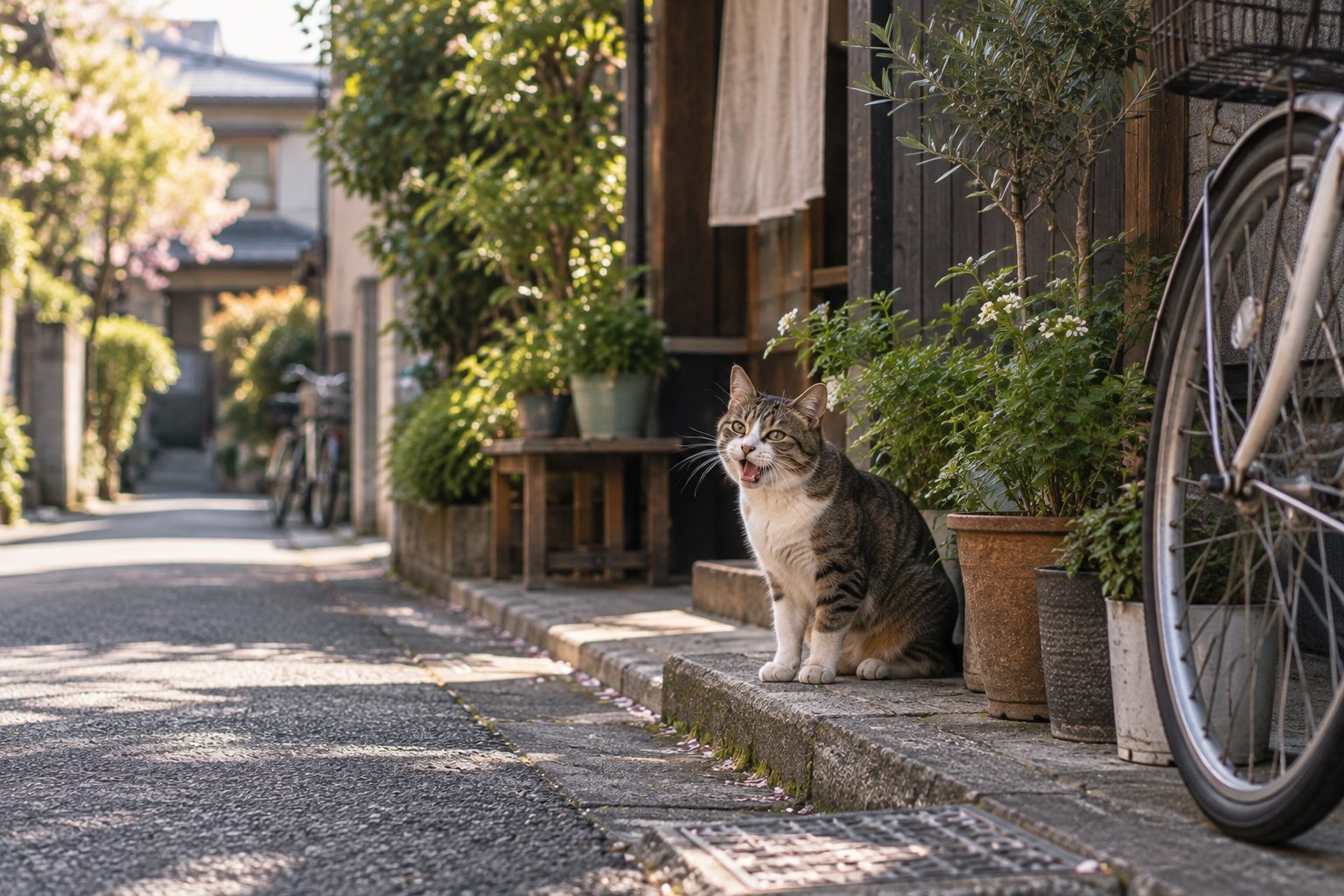
You may already know にゃ.
Japanese often represents a cat's cry as にゃー. That makes にゃ unusually easy to remember: the new combined sound is attached to something you can actually hear in everyday life.
Where these sounds actually appear.
The three combinations are not equally common. にゅ is especially useful in words built around 入 (“enter”), while にょ is comparatively uncommon in everyday vocabulary and often appears in expressive/mimetic language. We teach that difference rather than pretending every kana has the same frequency.
In Japan you may meet it in oden, simmered dishes and home cooking. It has a distinctive chewy texture and very mild flavour. For today's lesson, hear にゃ inside こんにゃく.
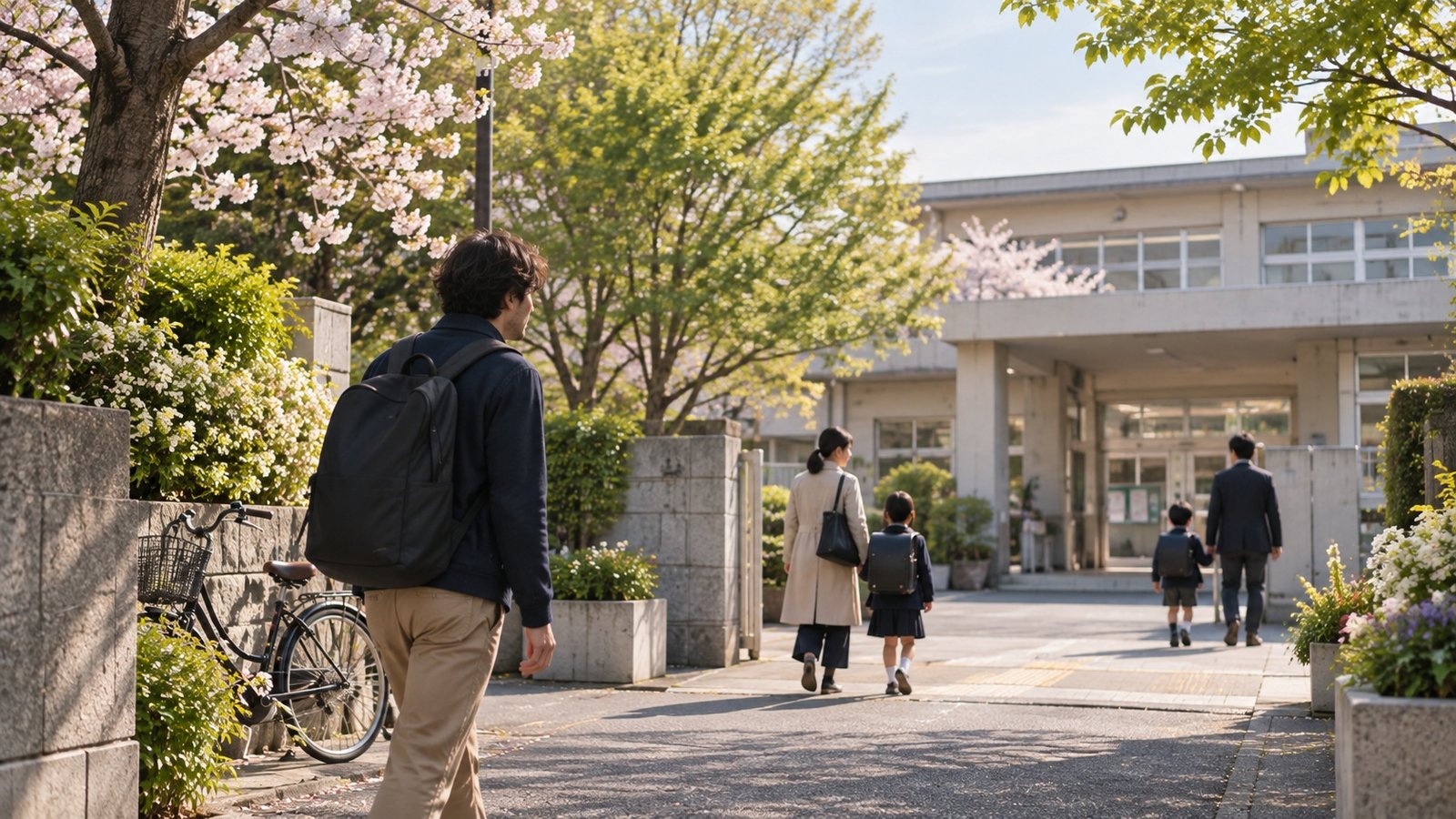
A very Japanese spring word. April brings new uniforms, entrance ceremonies and family photographs as children and students begin a new school stage. Listen for にゅ at the beginning.
You may see this on books and courses: something like “an introduction to…” or “for beginners.” The original idea is entering the gate of a new subject.
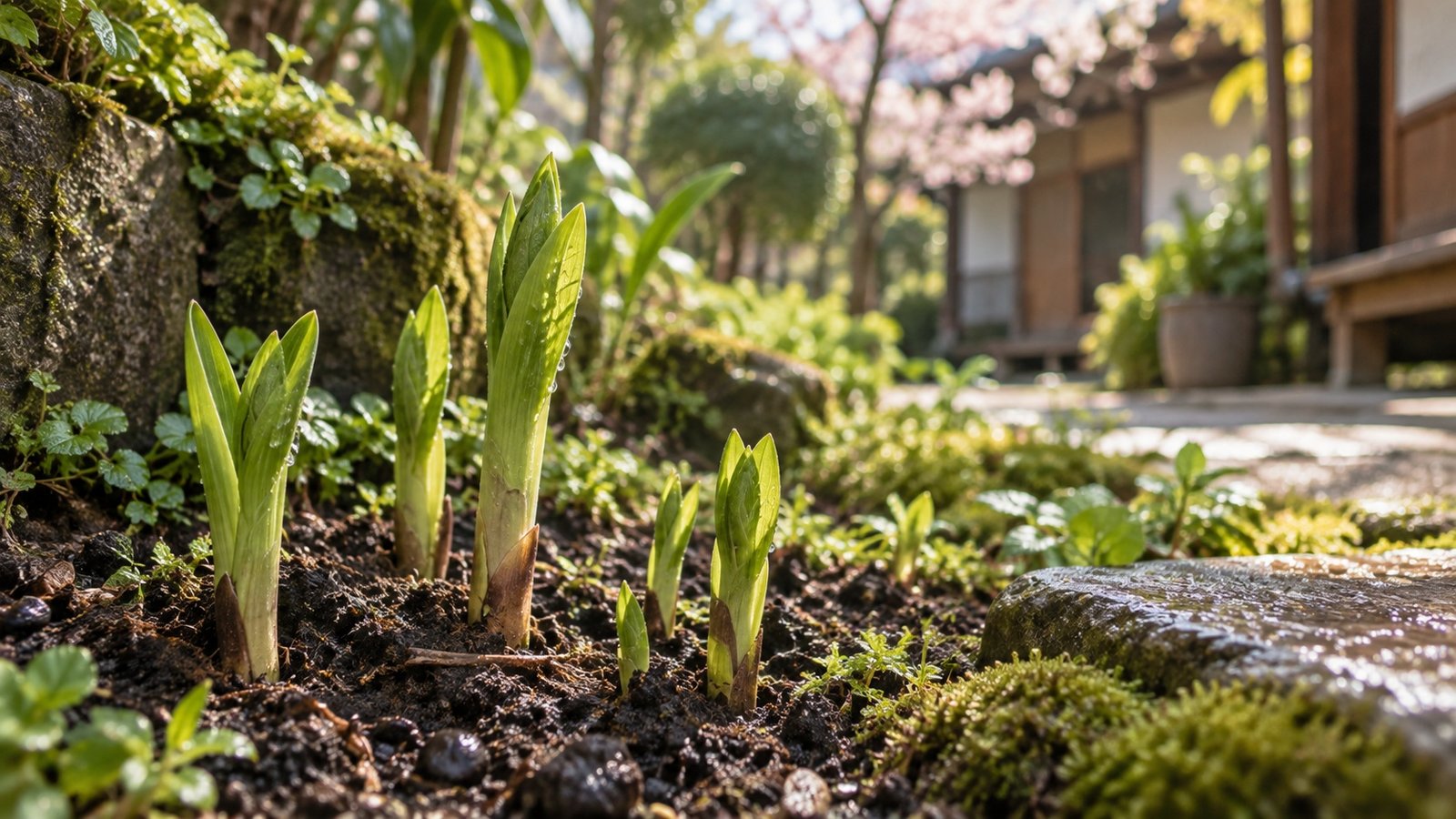
A vivid Japanese mimetic expression. Imagine bamboo shoots, mushrooms or new plants seeming to pop up quickly from the ground. The sound helps paint the movement.
Another mimetic expression: it suggests a long, flexible thing moving in a winding way, such as a snake or eel. Japanese uses many sound-symbolic words to make movement feel visible.
にゅうがく lives inside a real Japanese season.
In spring, entering a new school is a visible threshold in Japanese family life. Here the sound にゅ is no longer an abstract drill—it sits inside a word connected with beginnings.
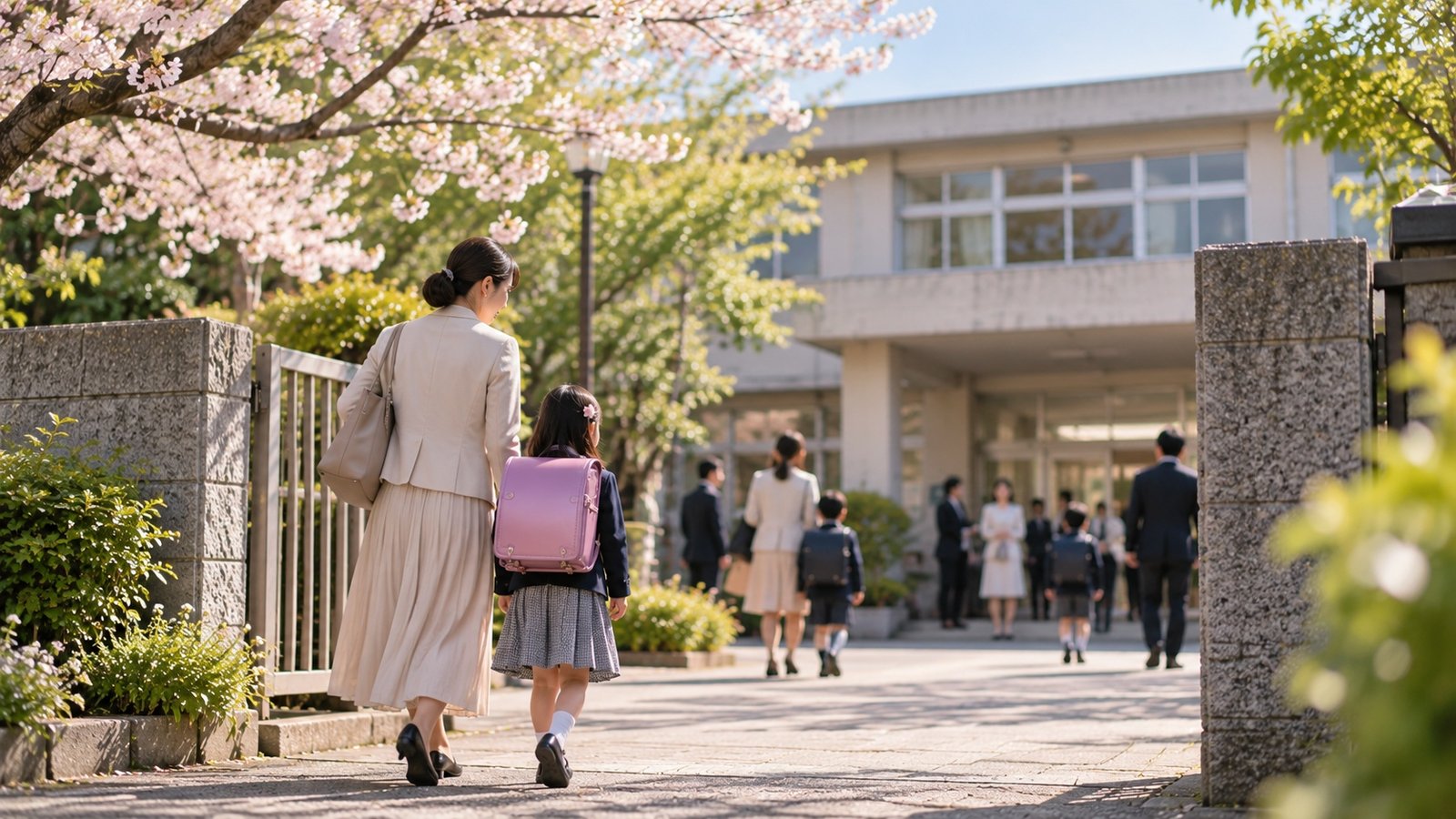
A spring congratulations.
Listen to the whole situation rather than decoding every character. A woman congratulates a man on beginning school or a course; he thanks her. Then she mentions today's entrance ceremony and he says he is looking forward to it.

こんにゃく puts にゃ at the Japanese table.
You do not need to memorize food history here. The learning goal is simpler: notice the combined sound inside a real word and hear it without breaking にゃ into に・や.
にょきにょき
This is mimetic Japanese: the sound helps evoke the way something appears or moves. にょ is less common than にゅ, so a vivid expression like this gives the rare sound a memorable home.
Listen for one sound, not every word.
Today, notice にゃ・にゅ・にょ wherever Japanese reaches you—a cat sound, a school-related word, food vocabulary, a sign you can sound out, or speech around you. Your mission is simply to recognize the combined sound before translating the whole word.

The recording contains all six items above. First listen without looking. Then play it again and follow each sound and word with your eyes.
Next combination family
We will lock the next permanent lesson only after IJ-0021 passes visual and learning QA.