日
ひ・にちday / sun · Practice writing slowly, following the stroke order.
View KanjiVG stroke order ↗The most meaningful stories aren't always the longest. Join Aoi, Mika and Ken—and learn to turn your own day into natural Japanese.
Enter the story →Follow a real sequence of moments: studying, ordering in Japanese, unexpected rain, a small kindness, and the happiness of being understood. Then write your own five sentences.
A simple structure can turn everyday life into meaningful Japanese.
五つの文で一日を伝える
Can an ordinary day become a story?


Today, I think I’ll try writing a short diary.
That sounds good. Even a short piece can be a diary.
At first, writing when, where and what you did is enough.
But can I summarize an entire day in only five sentences?
What matters is writing about events and feelings in your own words.
Five sentences seem manageable enough to write every day.
今日を思い出す
Choose a moment that matters.

First, I’ll try to remember what I did today.
Thinking from morning onward makes it easier to remember.
You don’t need to write everything that happened all day.
In the morning, I studied Japanese with both of you at the library.
That would fit perfectly as the first sentence.
It’s good to choose the scene you remember best.
Don’t describe everything. Pick the moment that mattered.
カフェでの小さな挑戦
One new phrase. One real achievement.
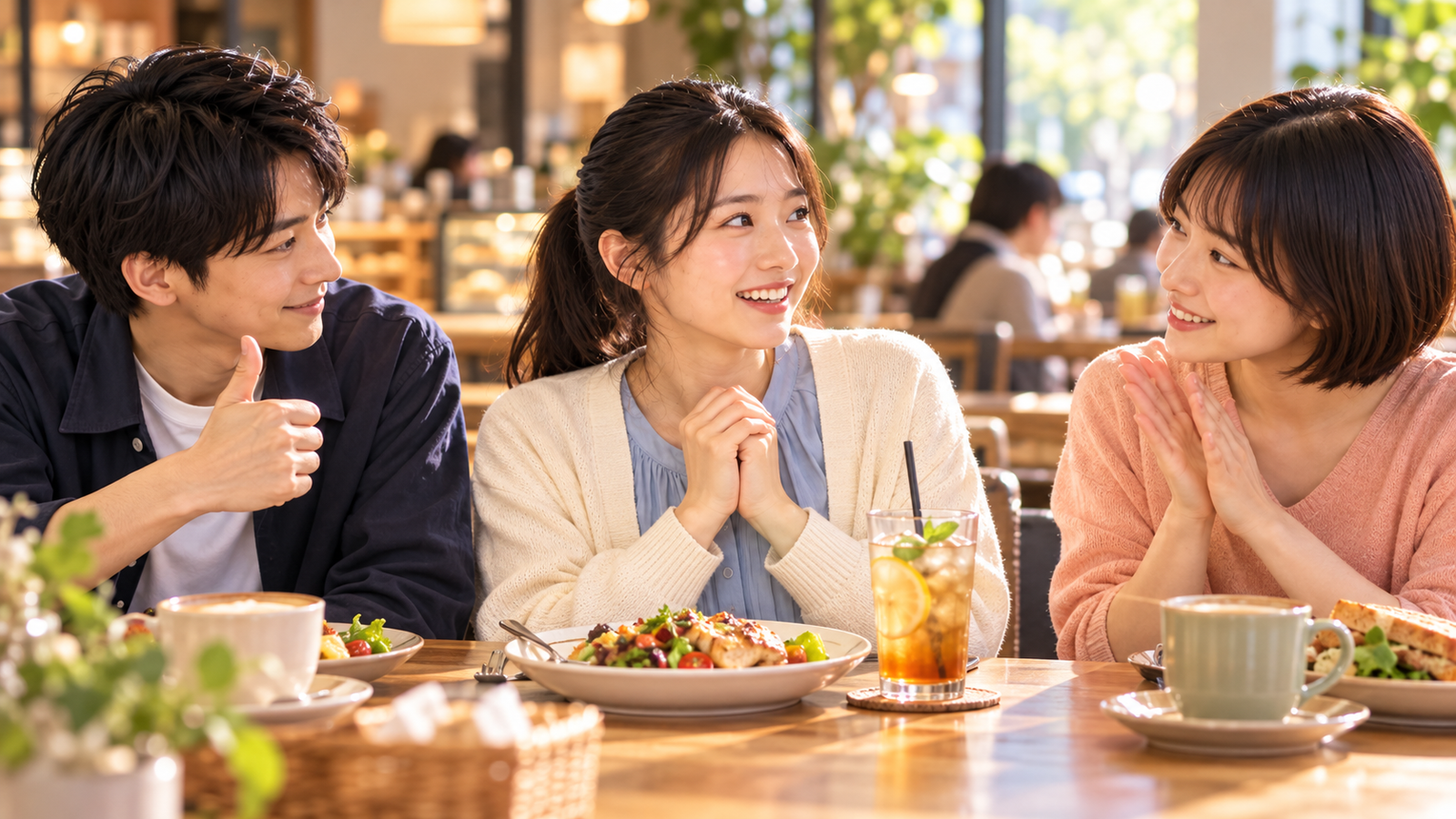

At lunchtime, we went to a café near the library.
At the café, you spoke to the staff yourself, didn’t you?
Being able to use a new expression is a big step.
I tried ordering with an expression I had just learned.
You can write not only what you did but also what you dared to try.
Try writing that experience in the past tense.
突然の雨と小さな親切
An unexpected change becomes a memory.


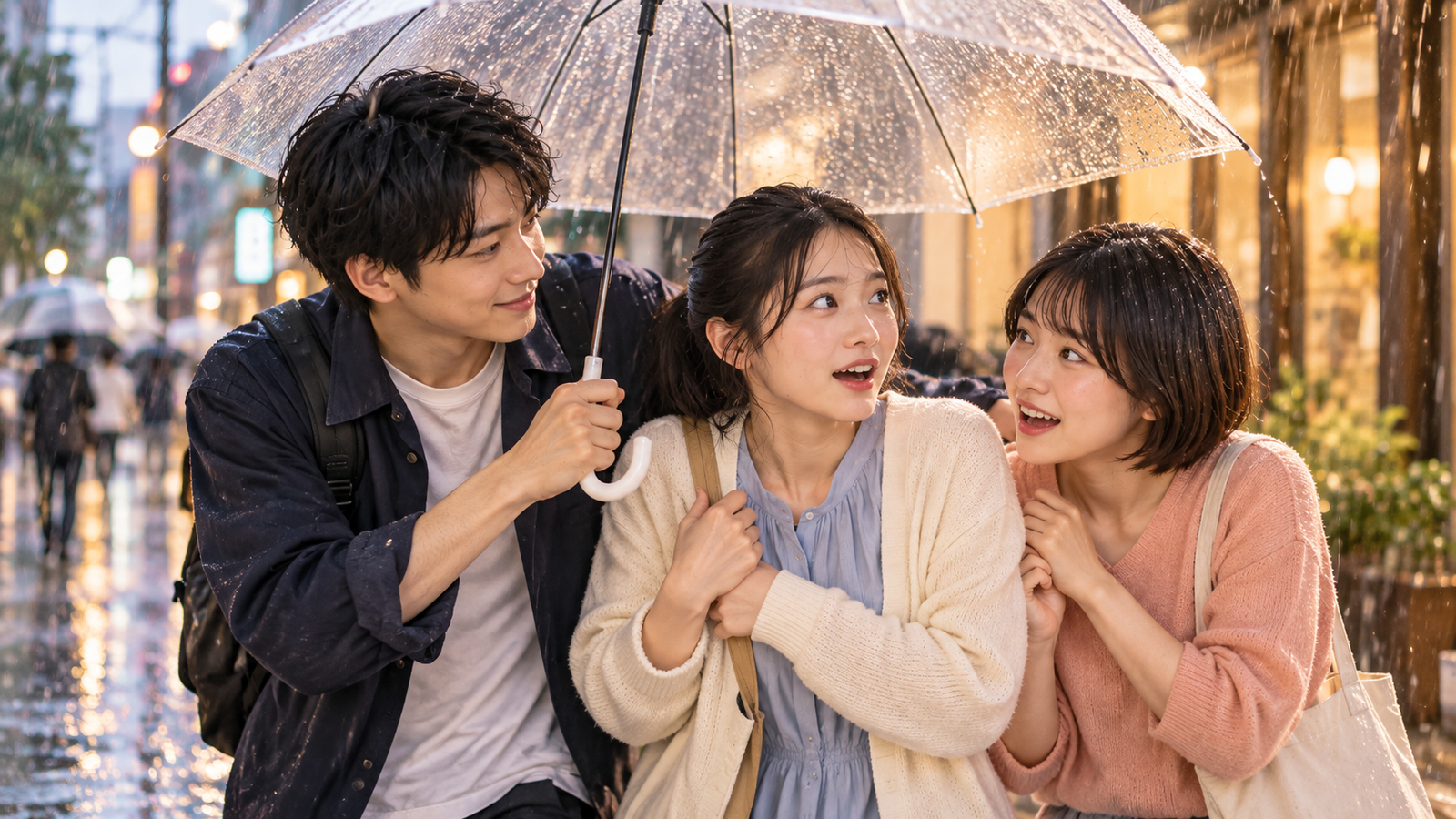
On the way home, it suddenly started raining.
The weather suddenly changed then; I was surprised.
We only had one umbrella, but we could share it.
I didn’t have an umbrella, so I was a little troubled.
But Ken lent you his umbrella.
You can express what someone did for you with “lent it to me.”
One umbrella can reveal a useful language pattern.
THE ART OF NOTICING
The smallest detail is often the story.気持ちを言葉にする
A diary is more than a list.


I was nervous when ordering, but they understood me.
You could write, “I was nervous, but I was happy.”
A change in feelings makes a diary come alive.
I also want to write about how happy I felt then.
Adding the reason communicates your feelings better.
It’s fine to separate the facts and your impressions into different sentences.
五つの文にまとめる
Make every sentence earn its place.


If I write everything that happened, it becomes too long.
Since it’s only five sentences, let’s choose what you want to communicate.
Let’s check whether we’re using the same words repeatedly.
Then I’ll combine related ideas into one sentence.
Rather than using “and then” all the time, consider how the sentences connect.
Reading aloud makes it easier to notice unnatural wording.
Feelings and reasons give facts their meaning.
完成した日記
Put the day into five connected thoughts.


The first sentence is about studying at the library.
The second is the café, and the third is the rain and umbrella.
Now, let’s read the completed five sentences in order.
For the last sentence, I’ll write something I want to try tomorrow.
In the fourth, include the happiness of being understood in Japanese.
Finally, check sentence endings and the flow of time.
明日につながる日記
The best writing habit is a small one.


Even with five sentences, I can communicate my day.
You summarized it well. You don’t need difficult words.
Even though it’s short, it’s a wonderful diary containing your own experiences.
Tomorrow too, I want to continue a short diary and expand my expressions.
Next time, try writing just one detail more than today.
Using even one new expression each day builds your ability.
Write, read aloud and save your own entry.
Write one true sentence for each part of your day. Your entry updates beside you as you type. You can copy or download it when you're ready.
Small, honest details make the best practice.
0 of 5 sentences written
01Your Japanese sentence will appear here.
02Your Japanese sentence will appear here.
03Your Japanese sentence will appear here.
04Your Japanese sentence will appear here.
05Your Japanese sentence will appear here.
Eight quick questions help you check your listening and writing decisions.
Choose an answer to see feedback.
Choose an answer to see feedback.
Choose an answer to see feedback.
Choose an answer to see feedback.
Choose an answer to see feedback.
Choose an answer to see feedback.
Choose an answer to see feedback.
Choose an answer to see feedback.
Study these useful characters in context. Open the authentic KanjiVG stroke-order reference before tracing on paper.
day / sun · Practice writing slowly, following the stroke order.
View KanjiVG stroke order ↗write · Practice writing slowly, following the stroke order.
View KanjiVG stroke order ↗record / note · Practice writing slowly, following the stroke order.
View KanjiVG stroke order ↗